Socata MS.893E Rallye 180 GT · Microsoft Flight Simulator 2024
How a Rallye owner, working with an AI coding assistant, turned a stock sim MS.893 into his own aeroplane: the same instruments in the same holes, the same engine numbers, the same hours on the tach, and a cockpit that remembers how you left it.
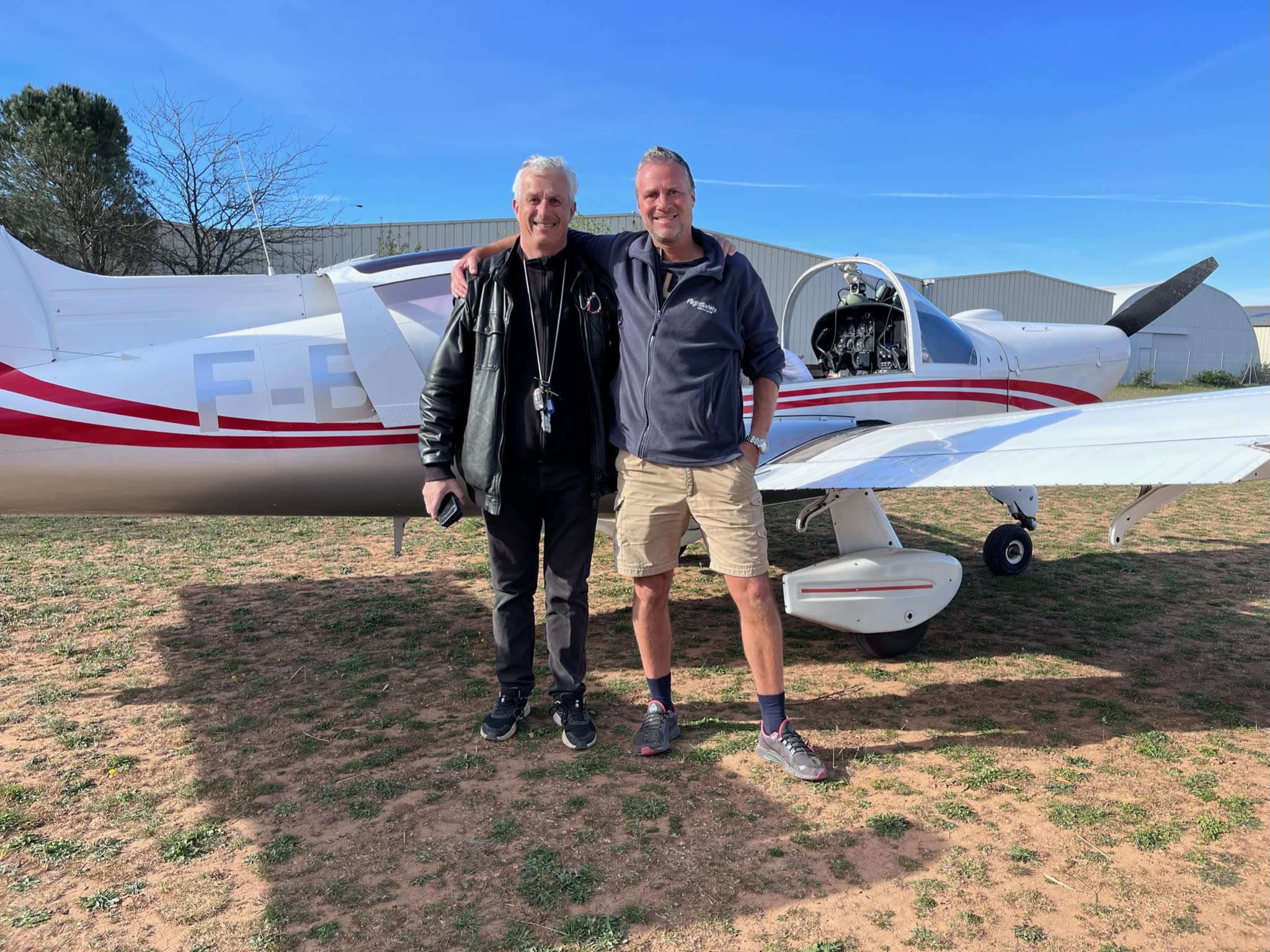
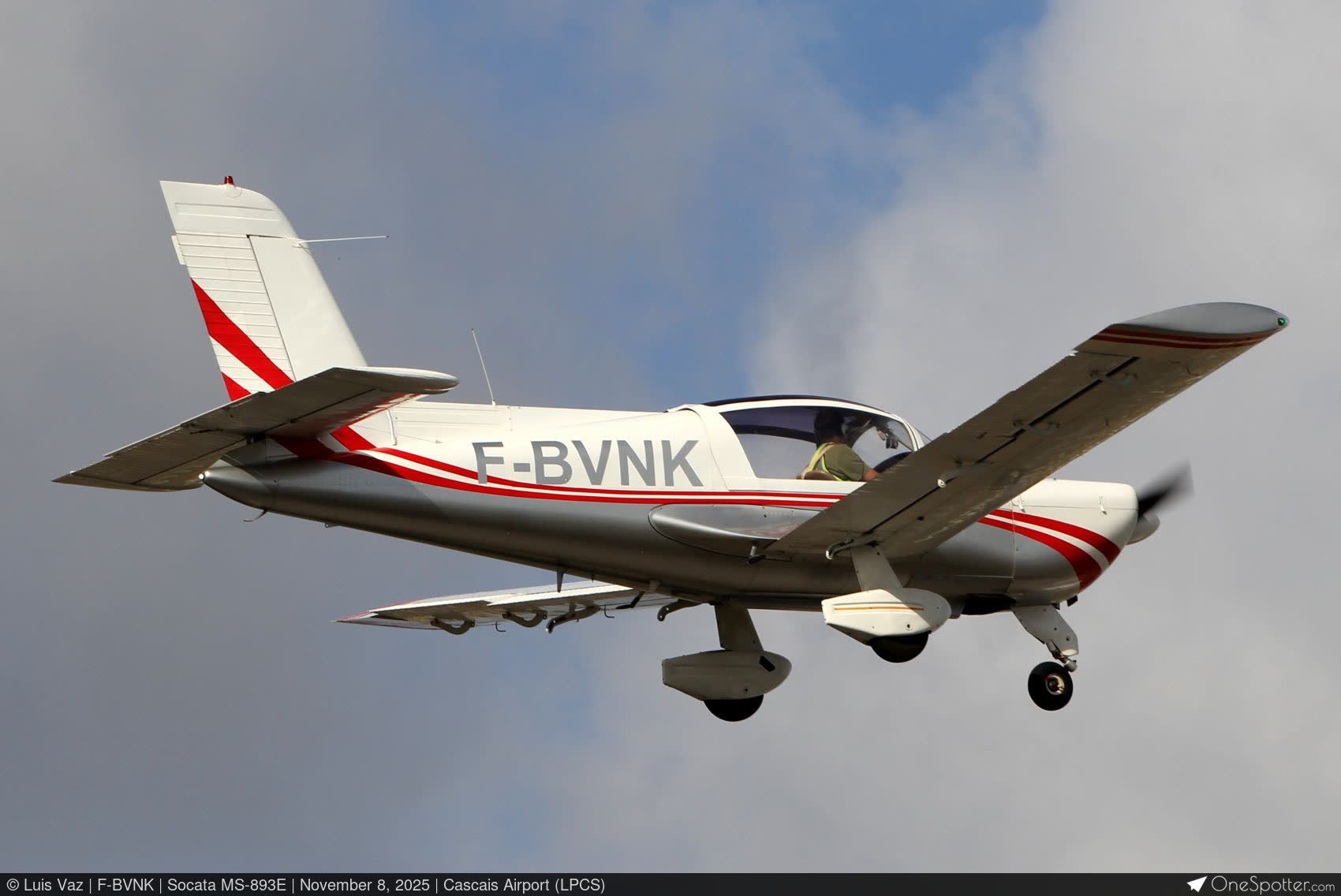
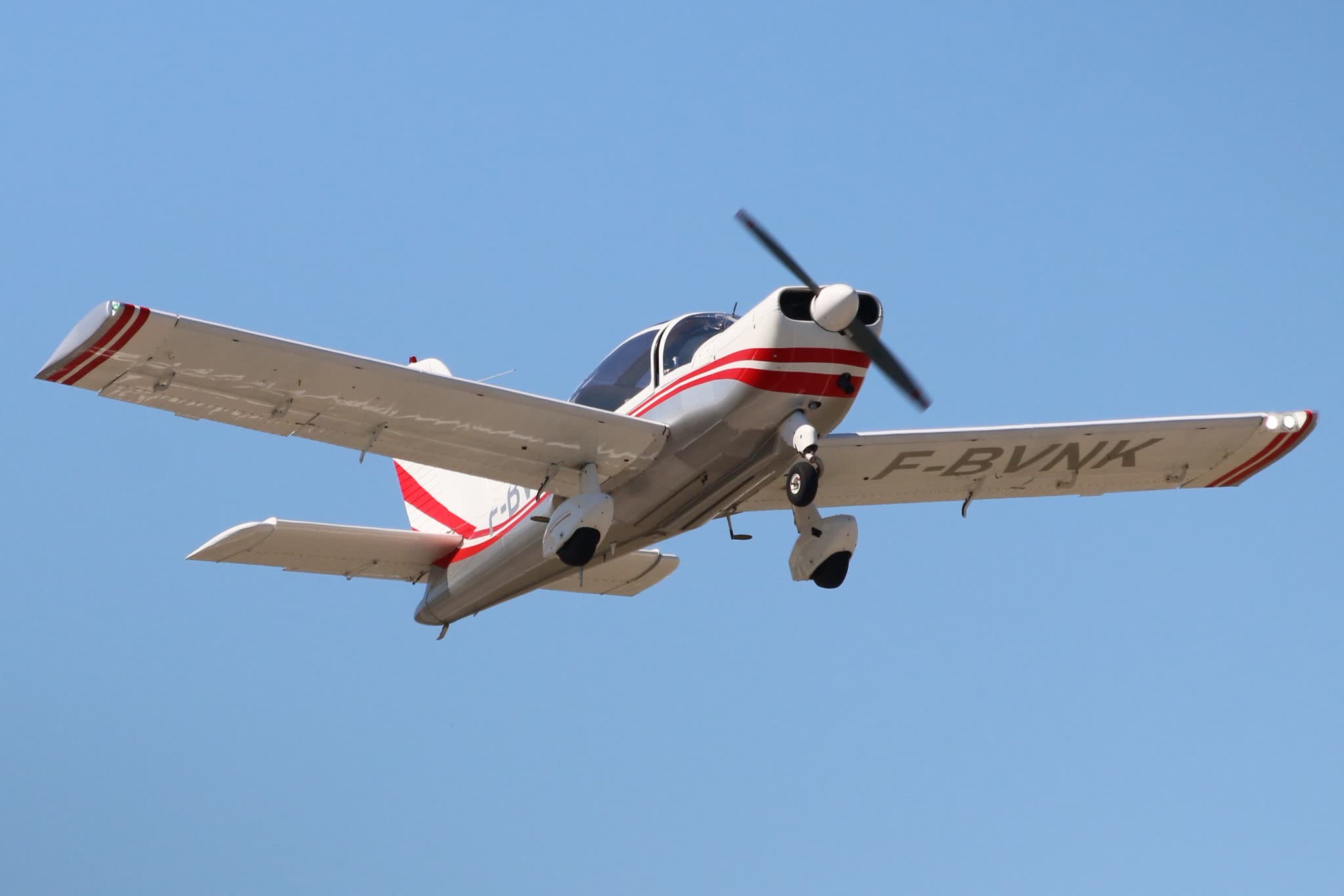
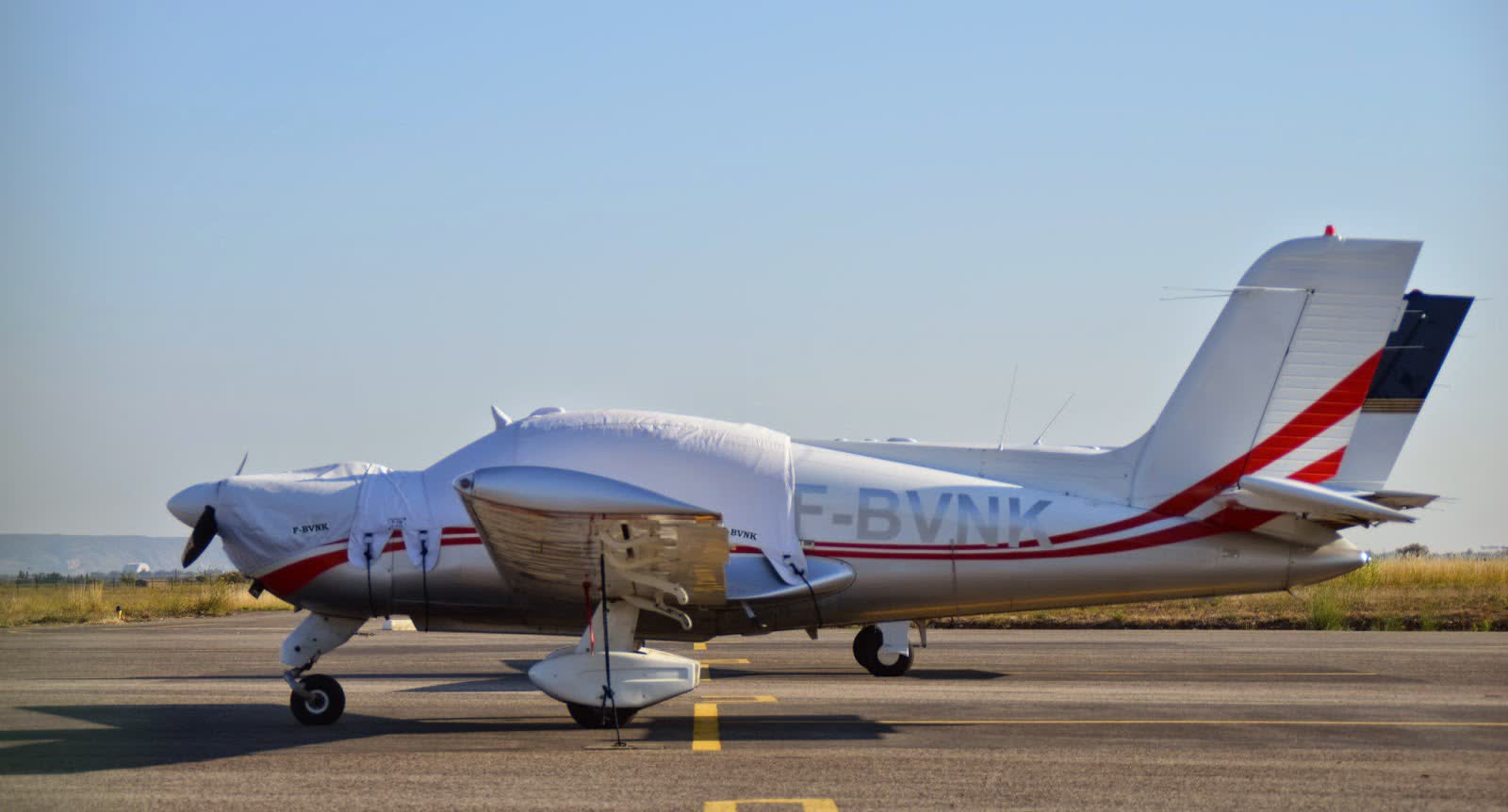
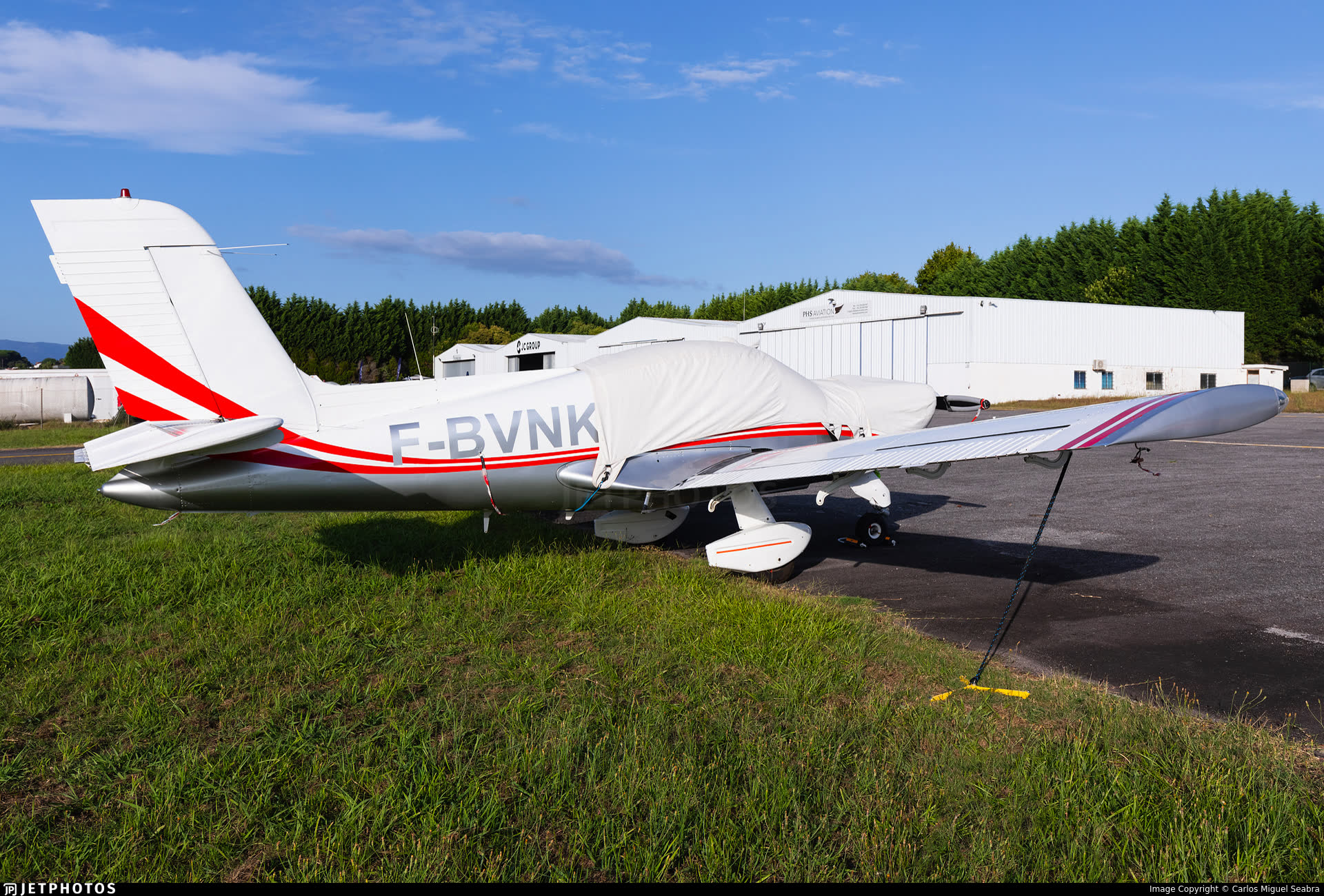
F-BVNK is a 1974 Socata Rallye, serial 12495, based at Cascais and flown by Claus Thanner, who also captains a Gulfstream G700 for a living. The stock sim Rallye is a good Rallye, but it is a type, not an individual: a Bendix King stack with an ADF that F-BVNK does not carry, a clock where her fuel computer sits, a constant-speed propeller where she has a fixed-pitch Sensenich, and an hour meter that could never read the hours in her logbook. Between the winter of 2025 and September 2026 that was changed, piece by piece, until the sim was F-BVNK down to the serial number. This page is the account of it, and everything in it is checkable: the build files, the tuning log, Claus's photographs and the aircraft's own papers.
where she started · what she is · what she became
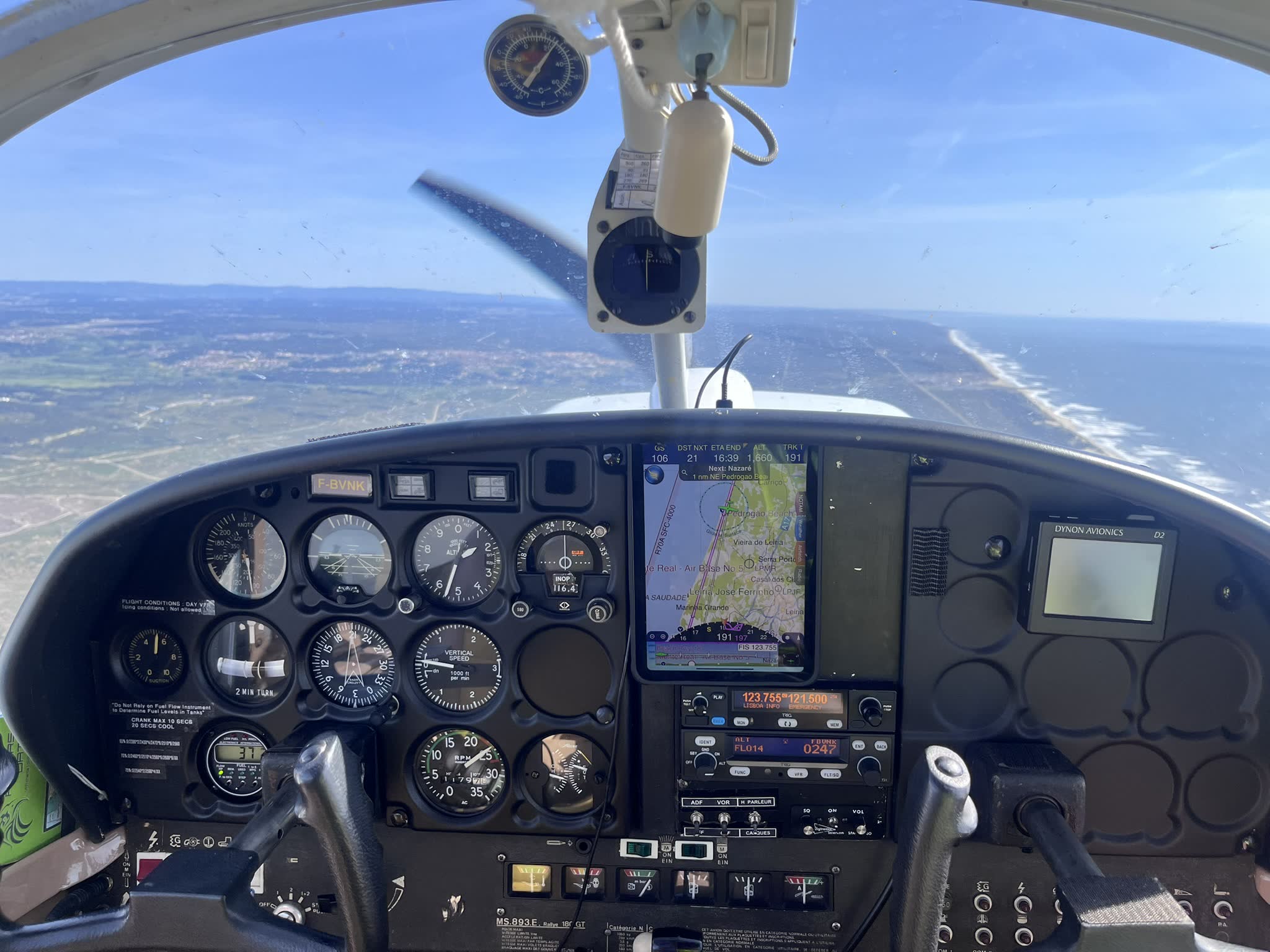
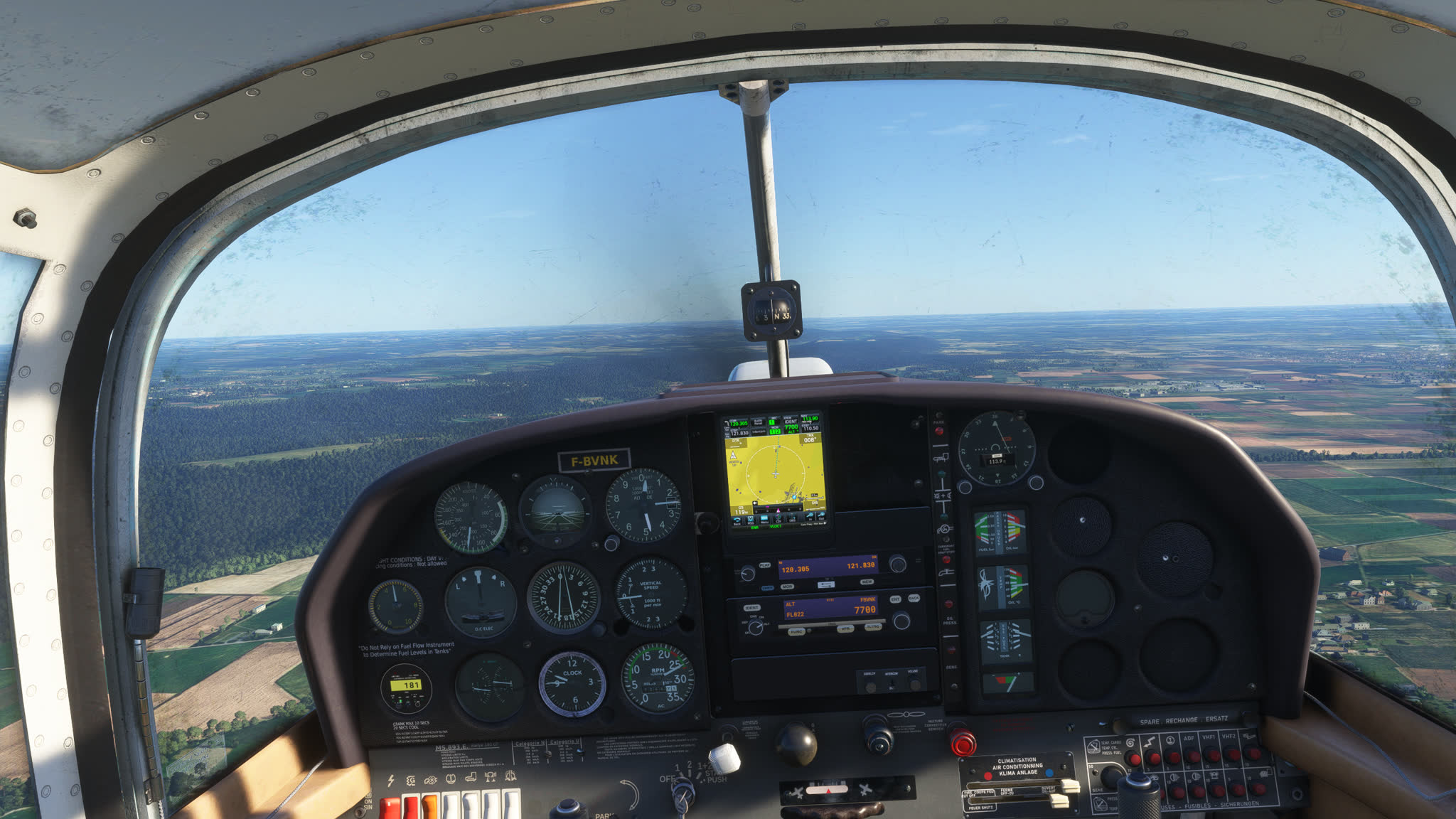
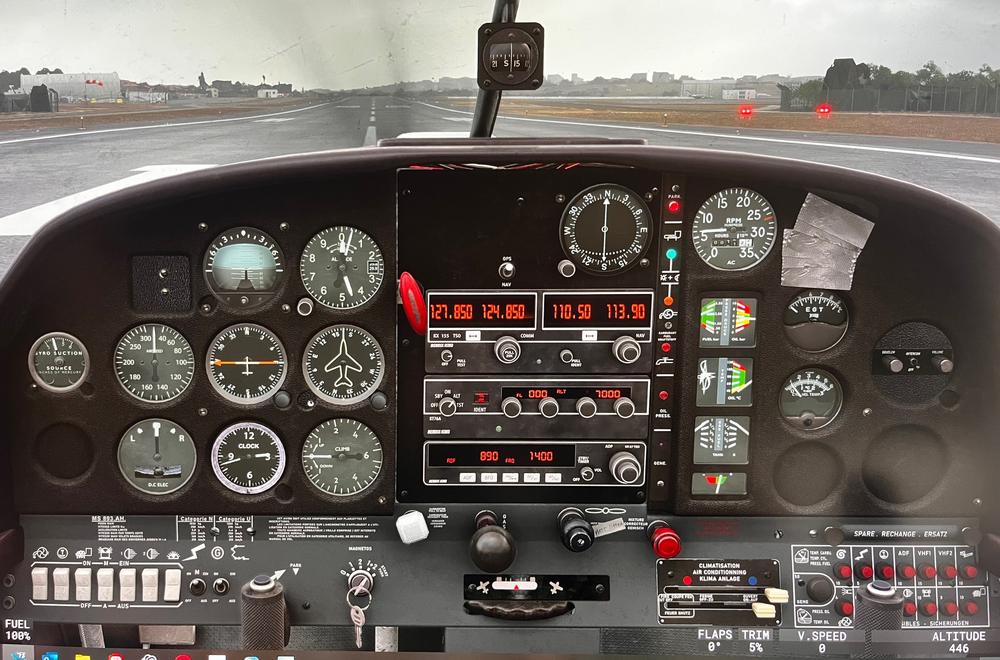
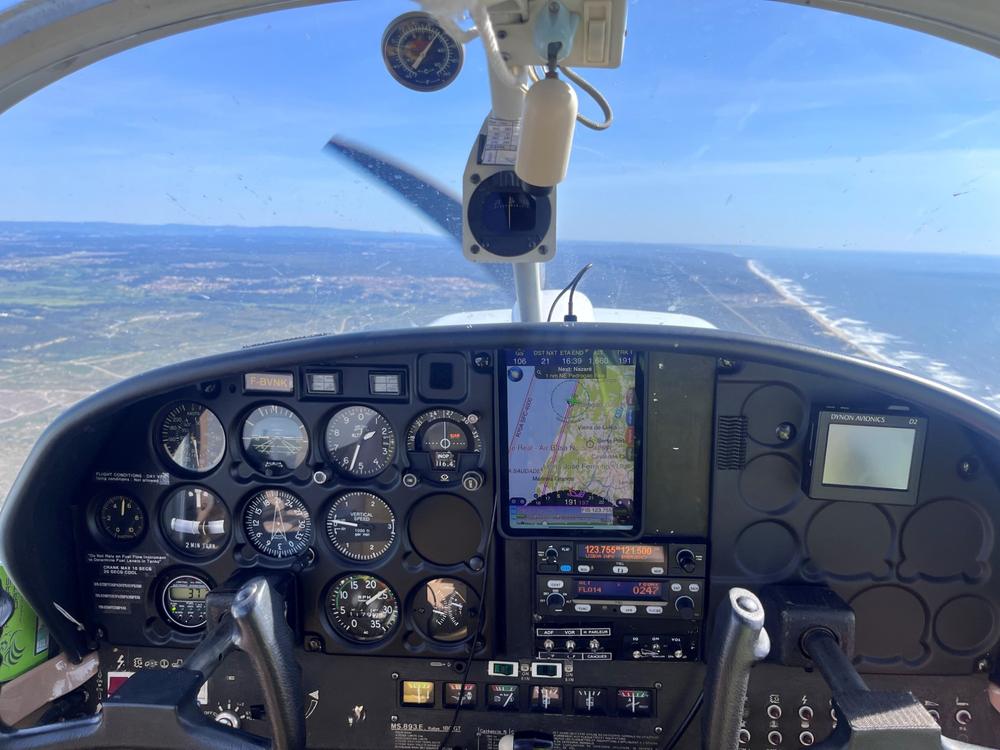
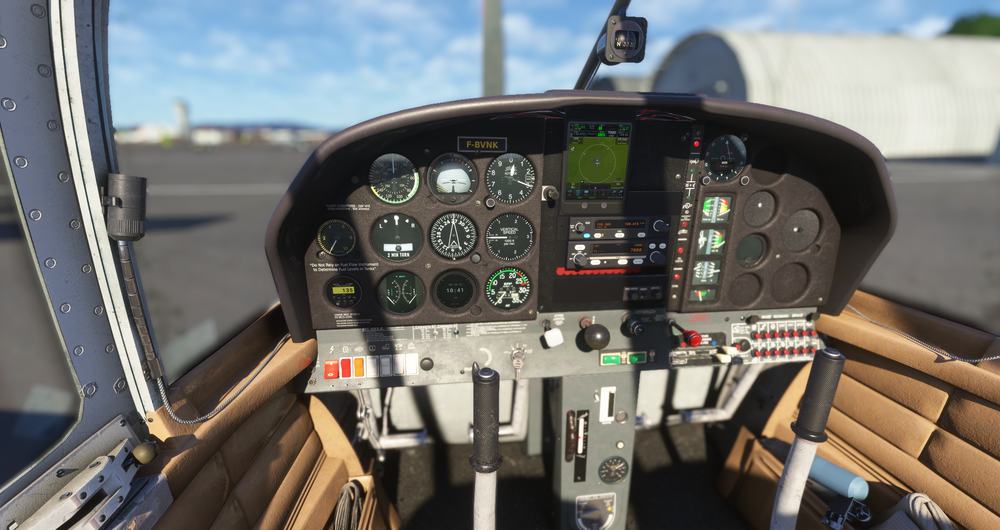
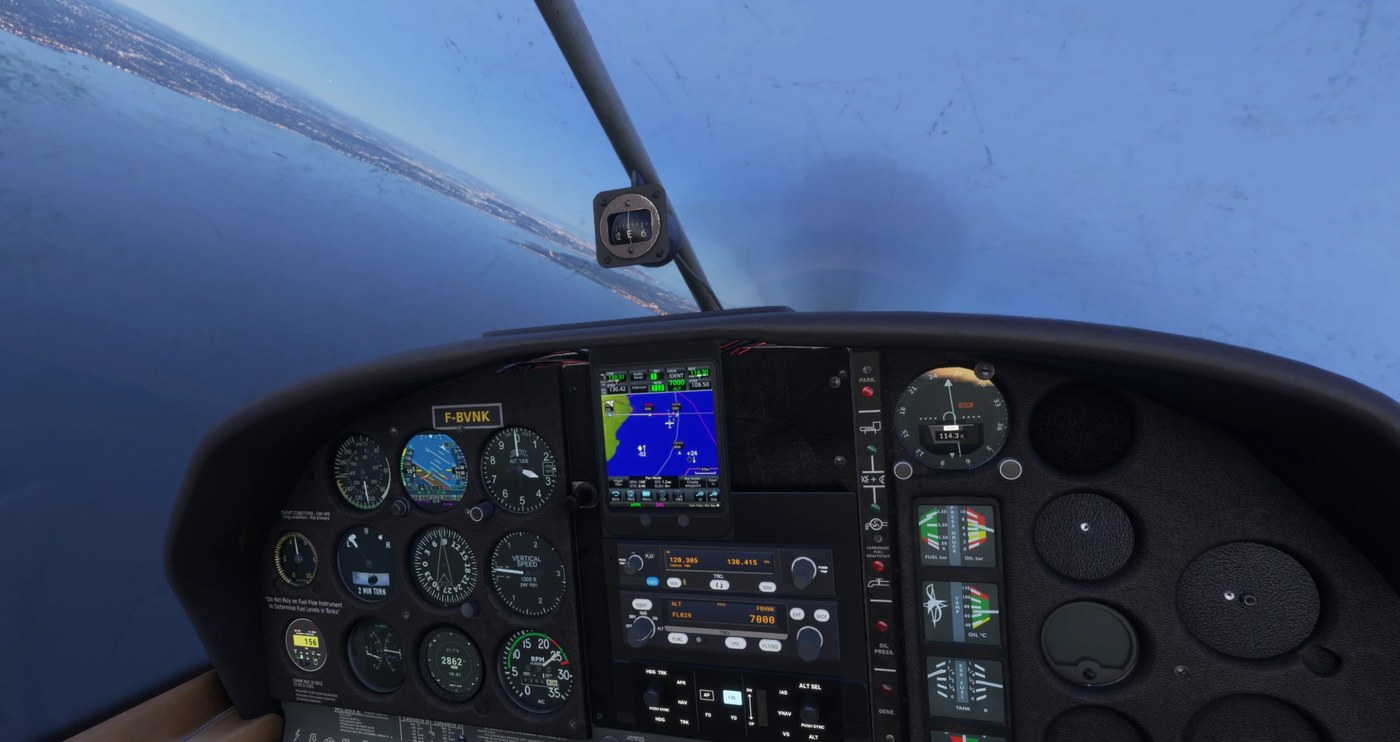
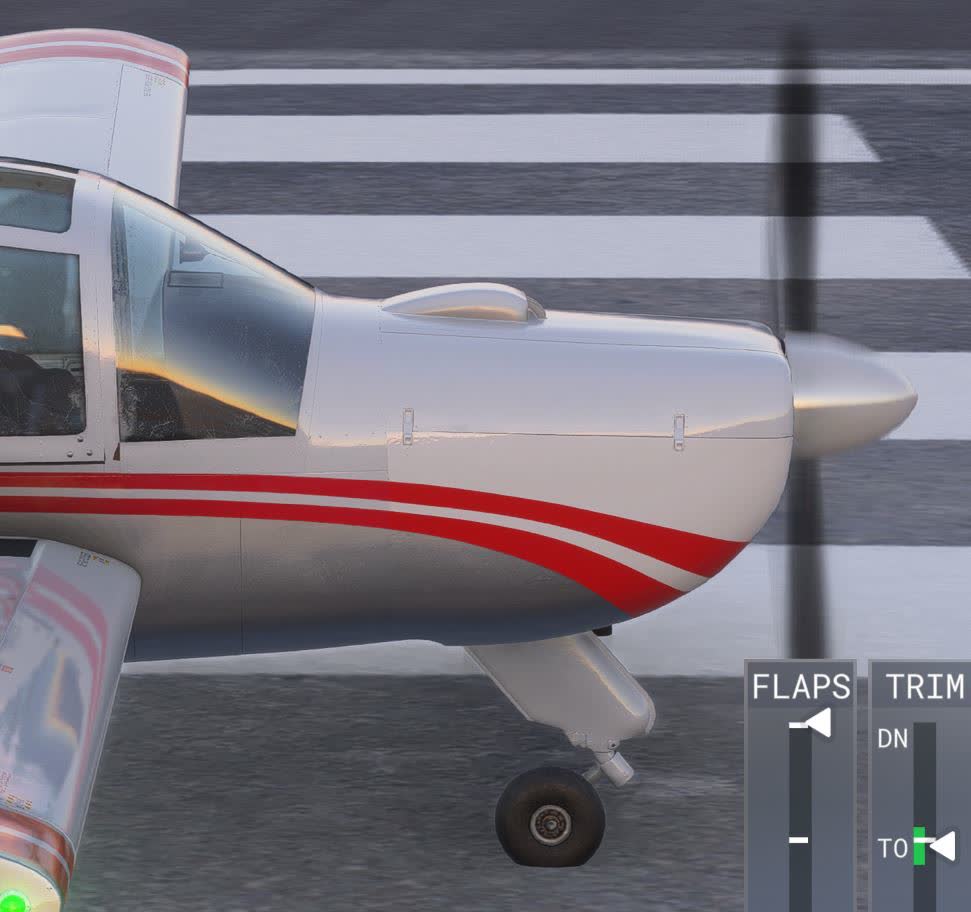
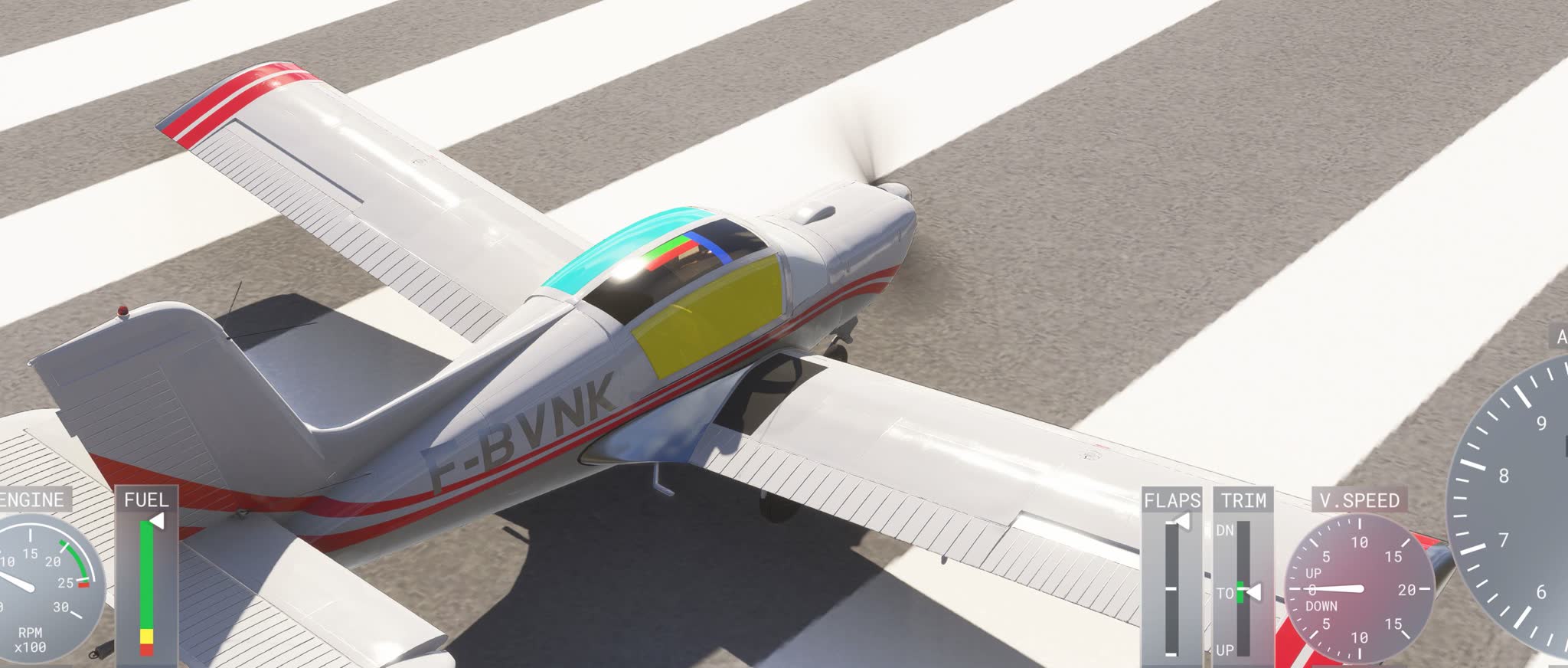
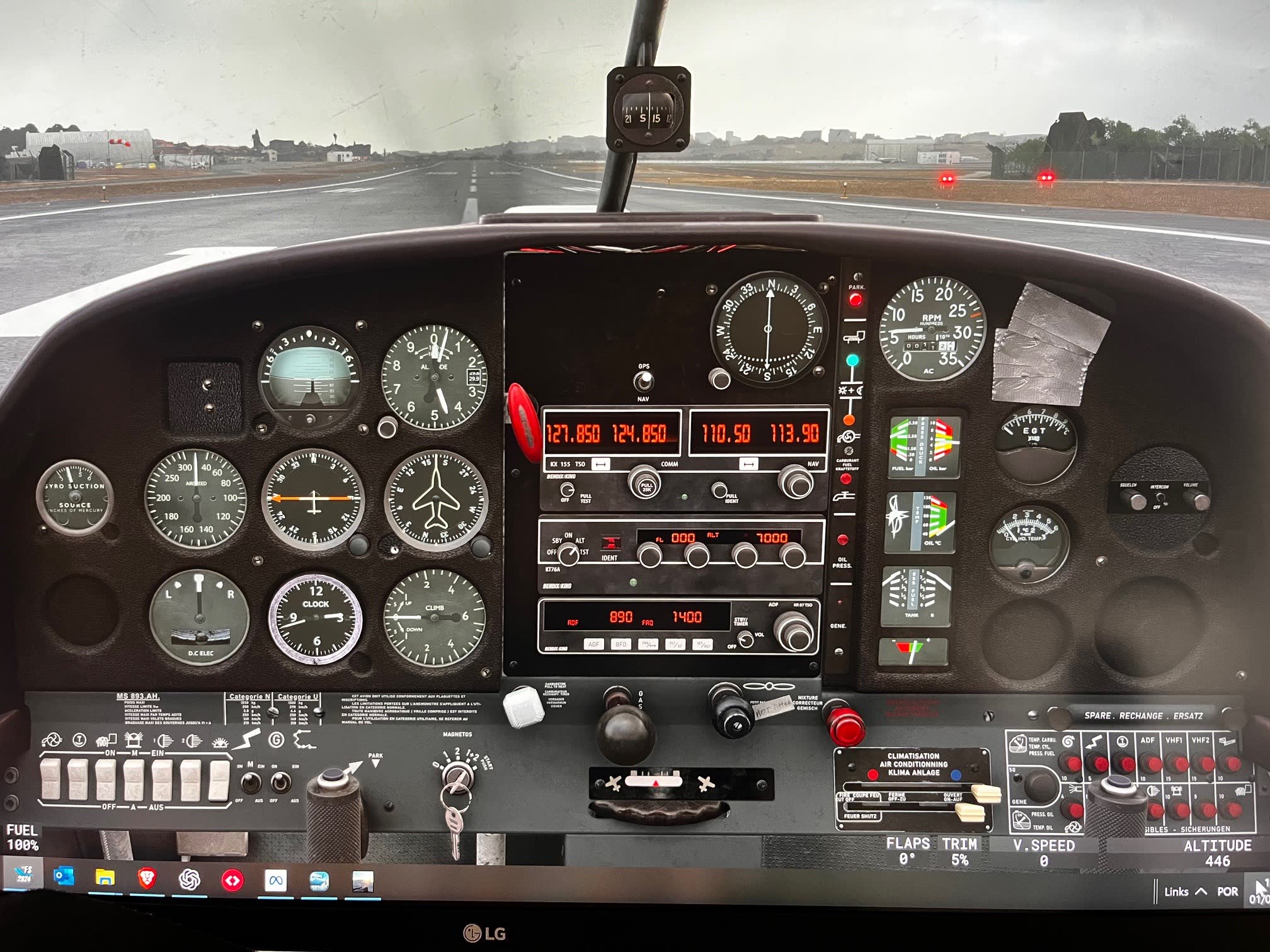
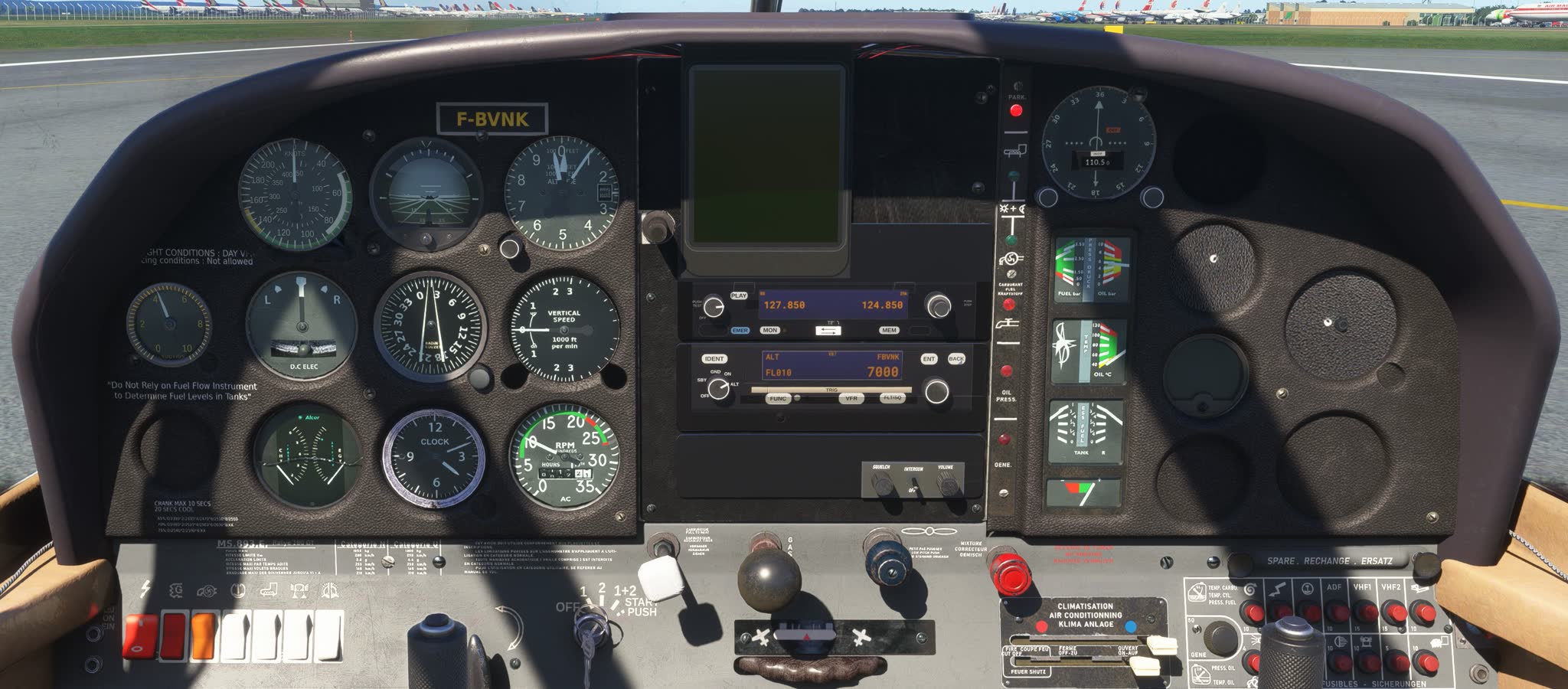
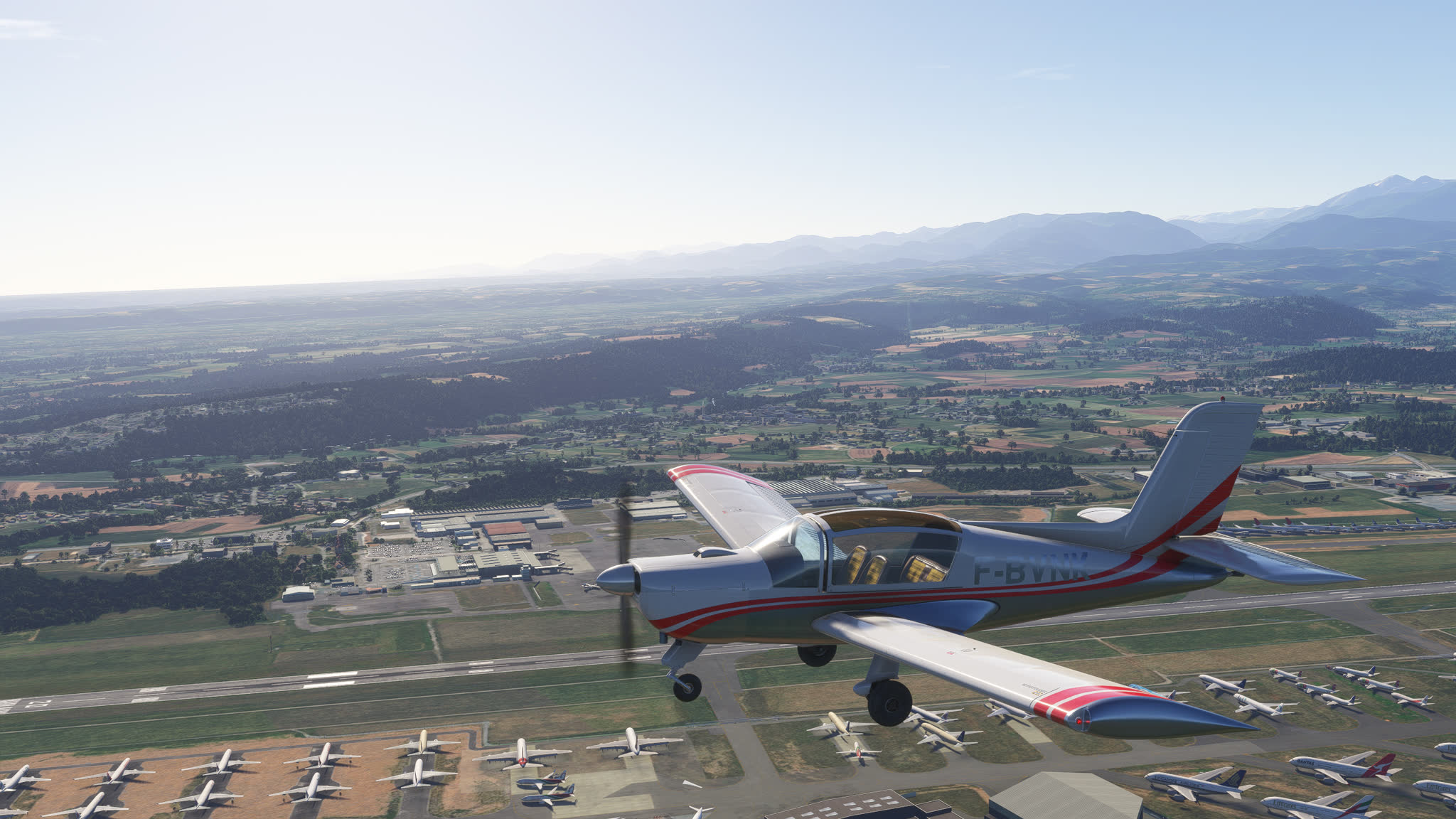
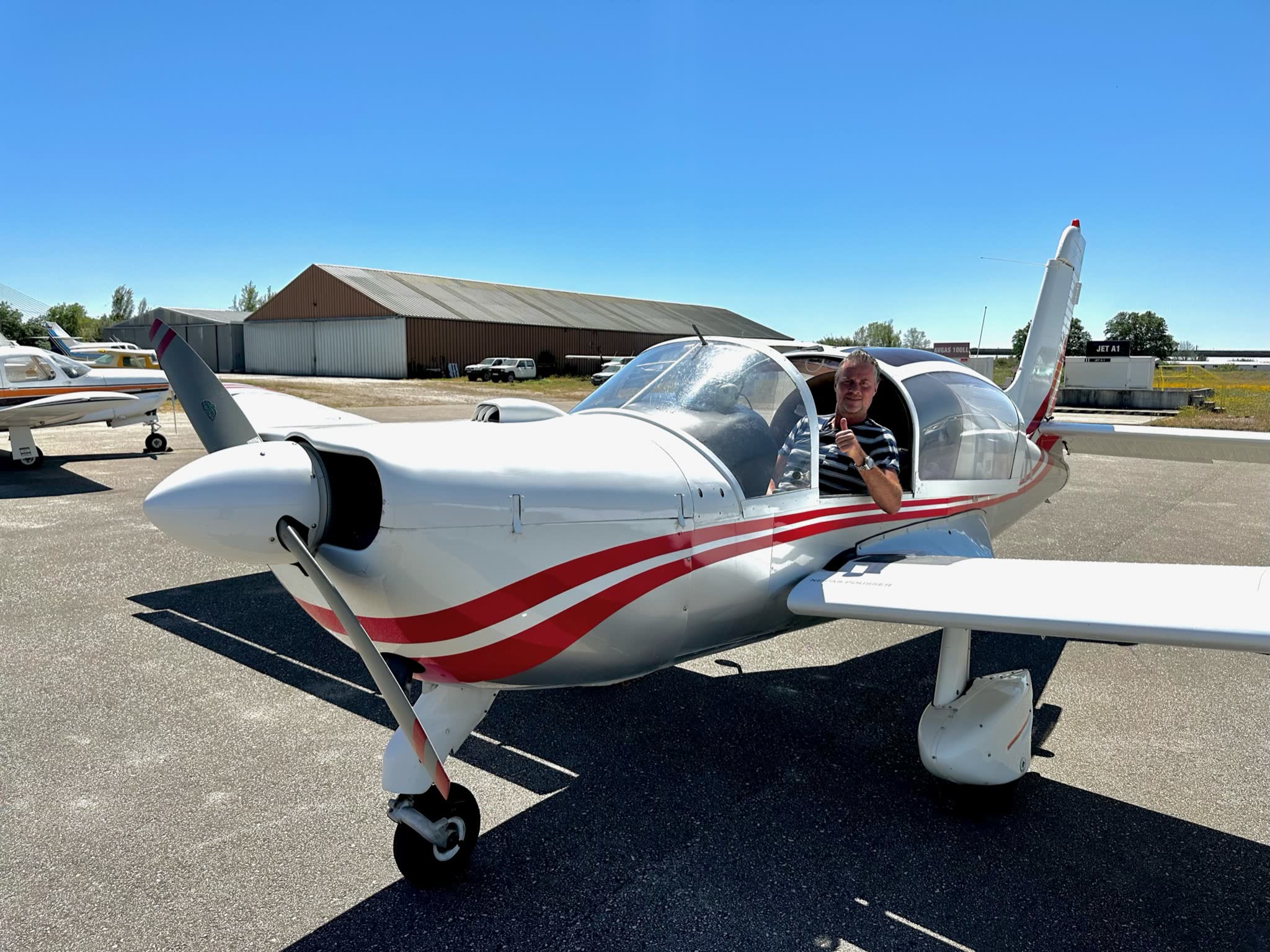
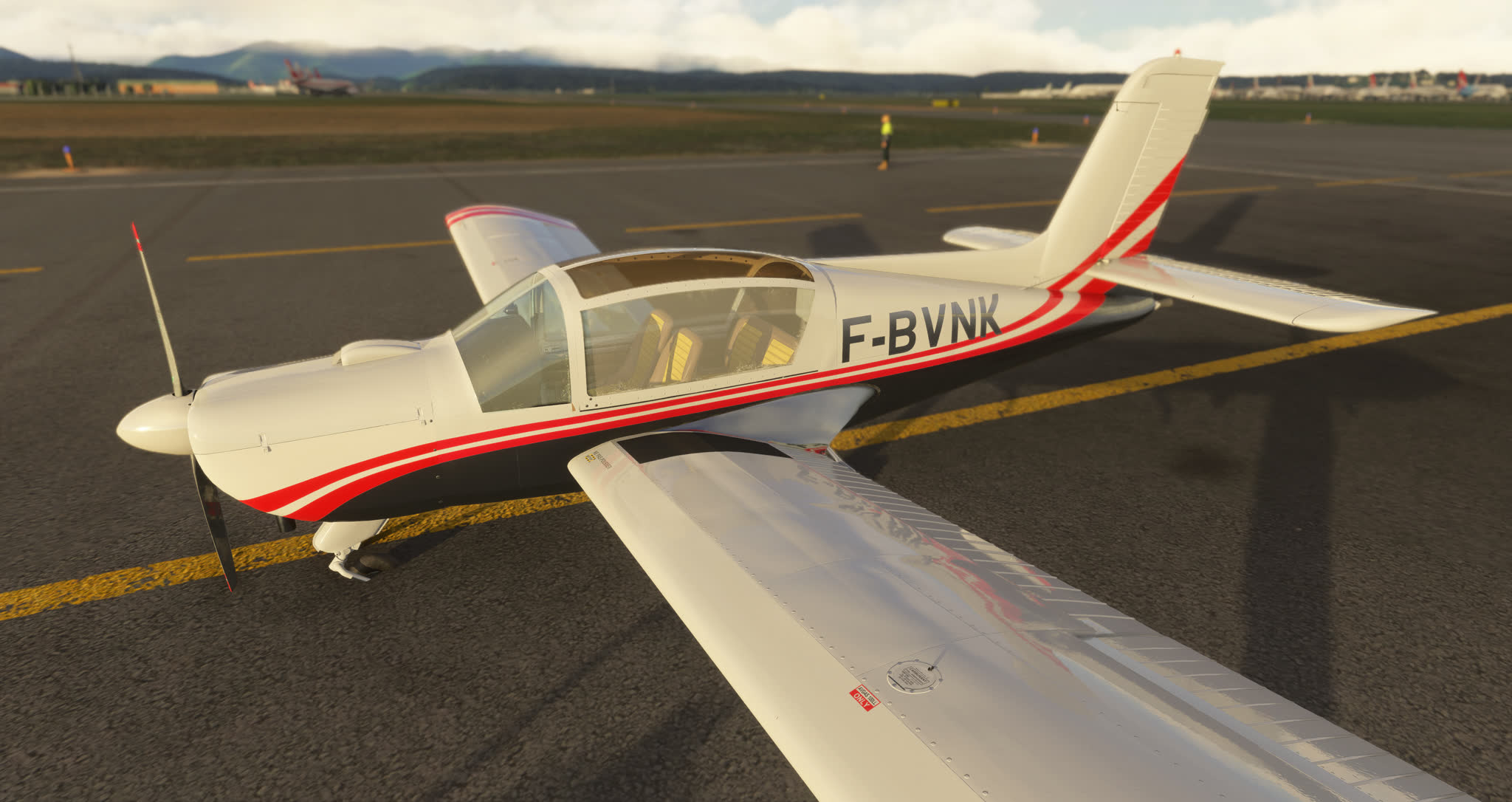
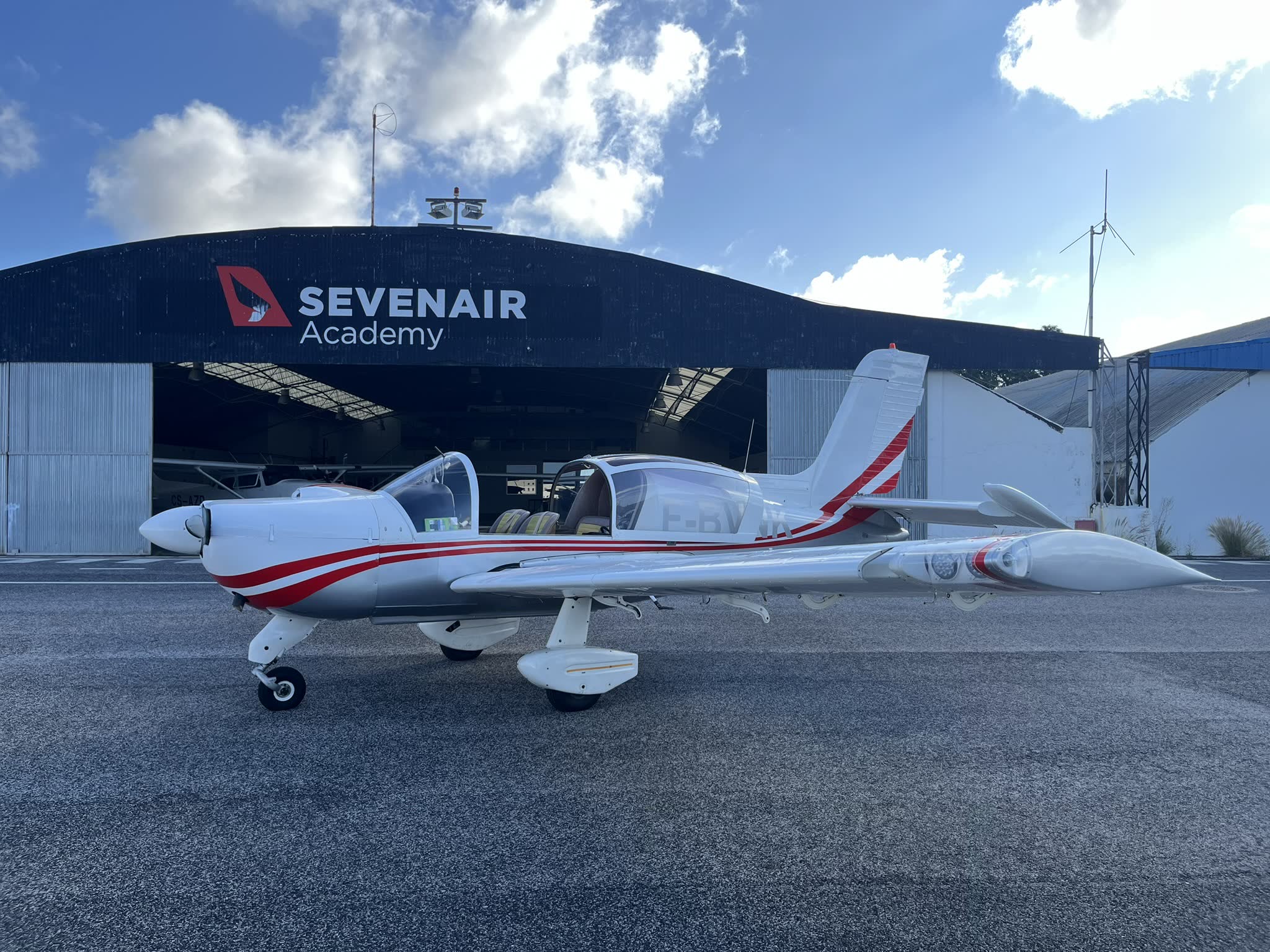
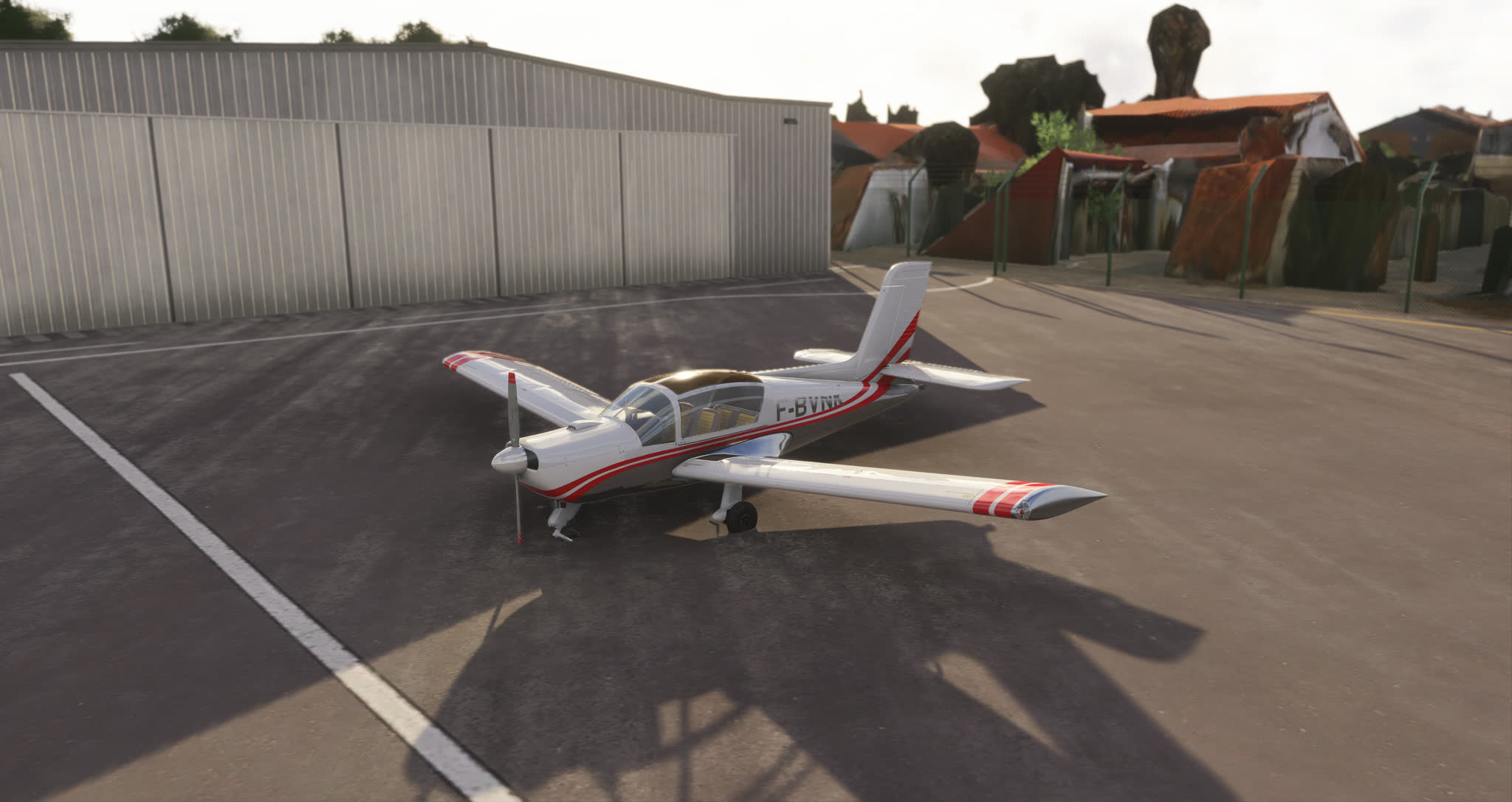
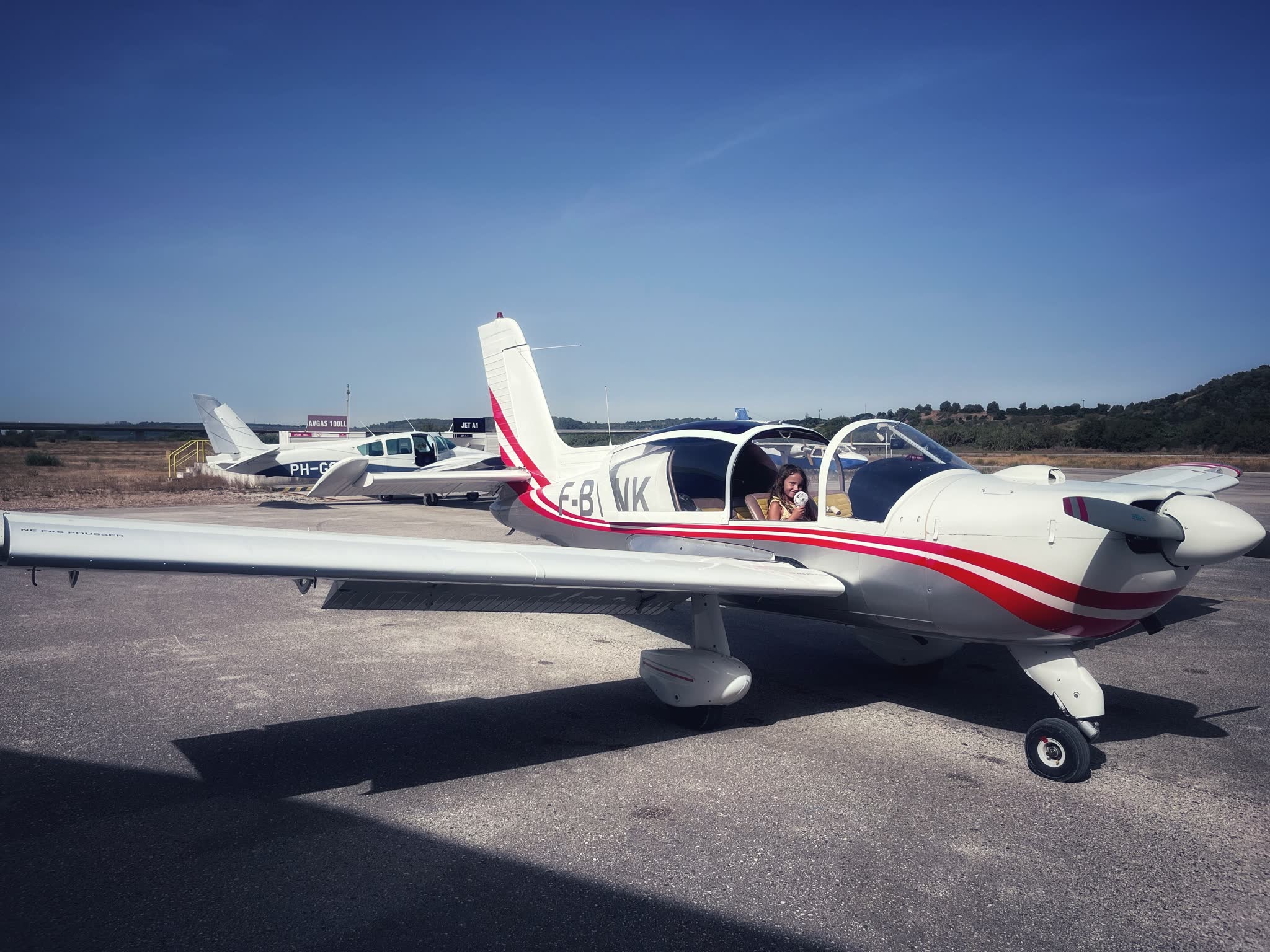
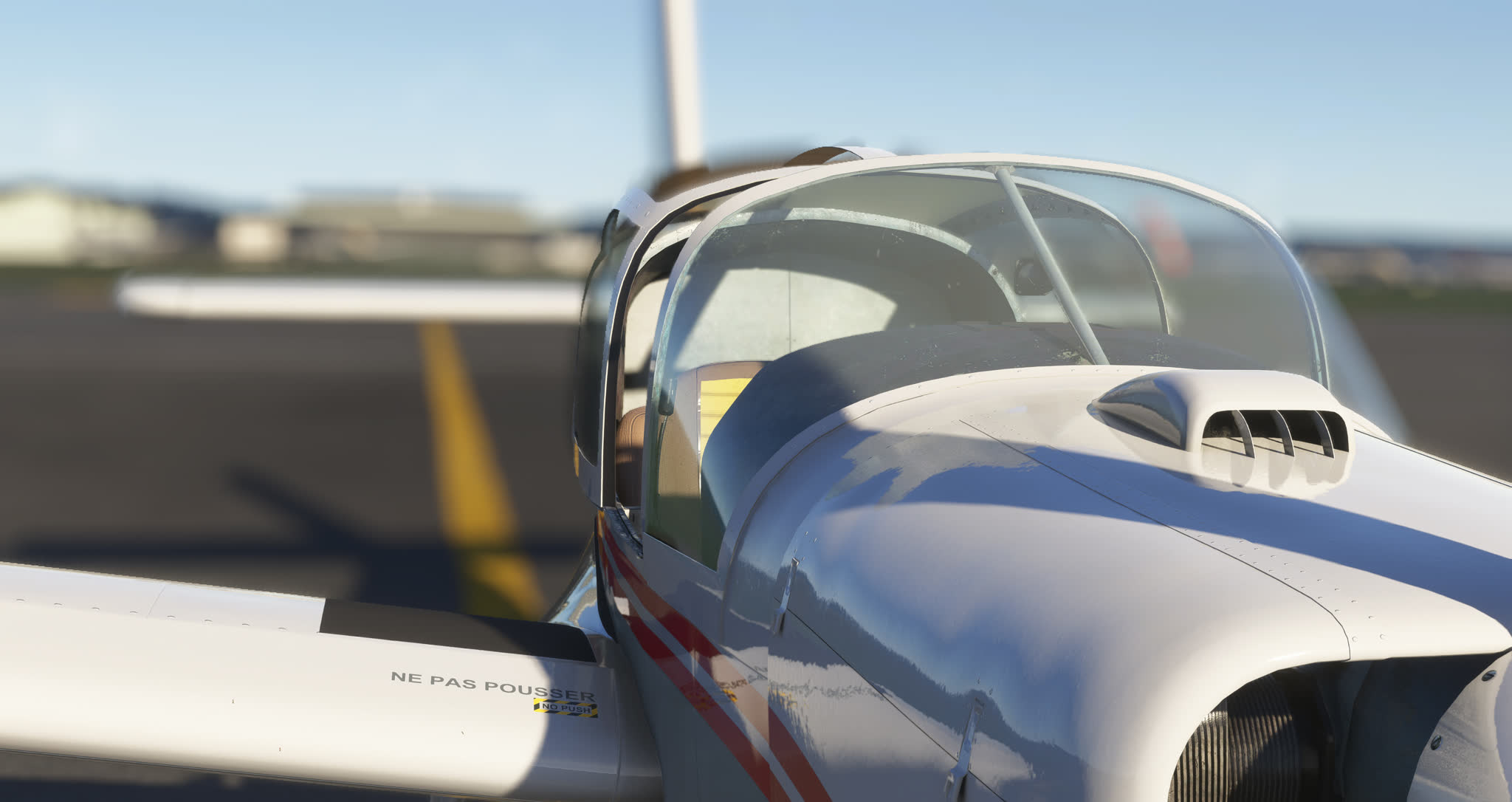
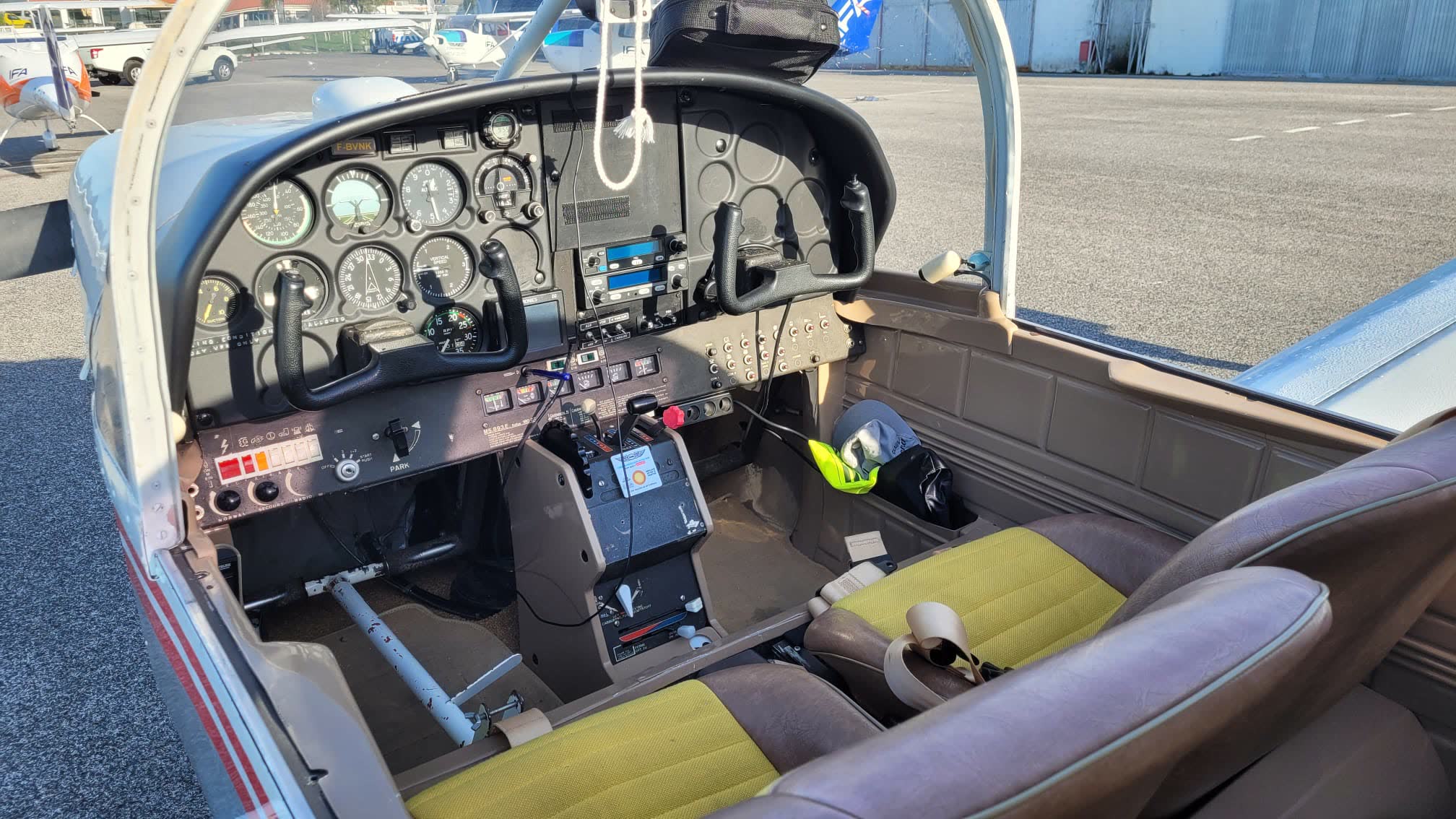
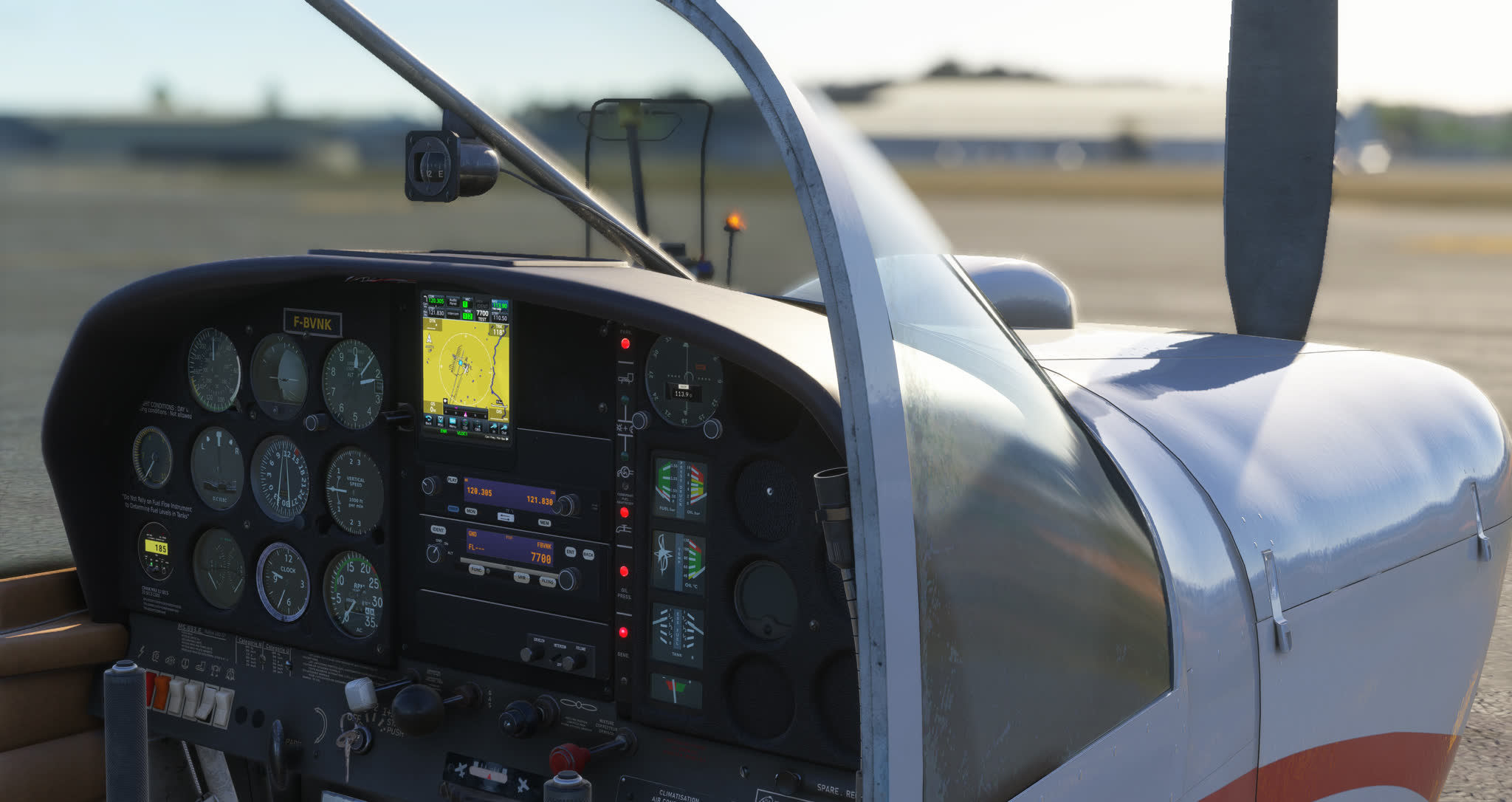
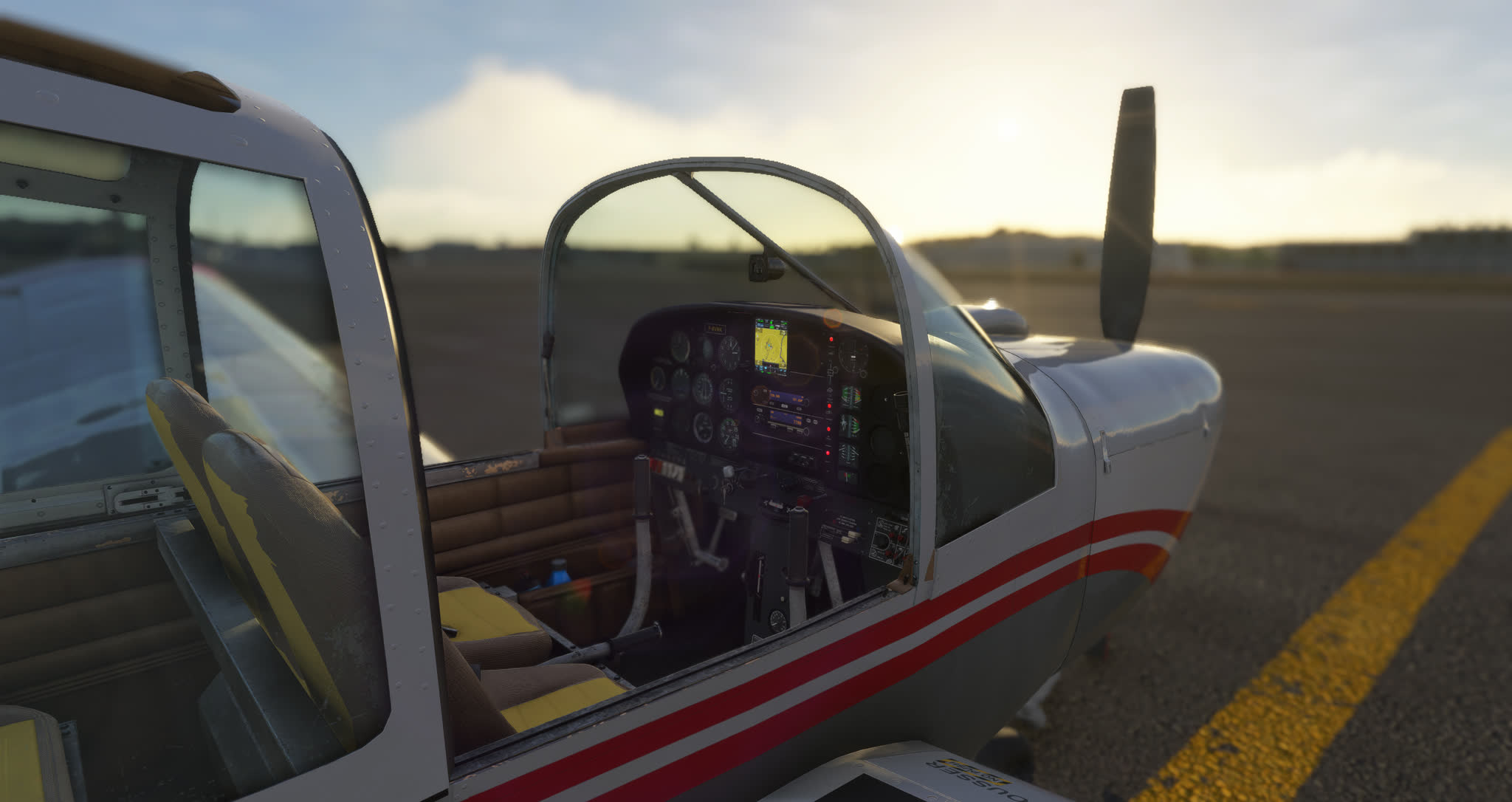
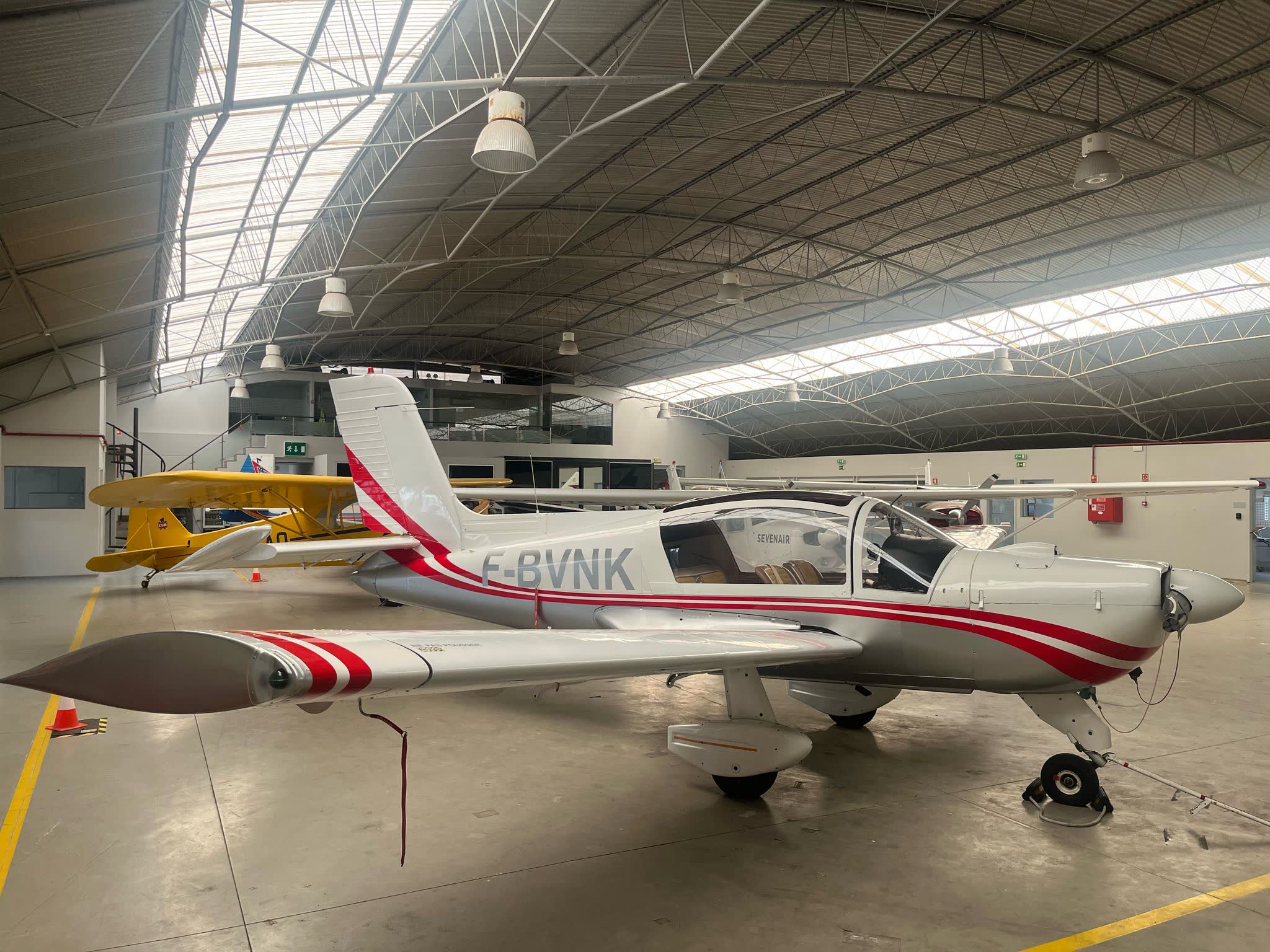
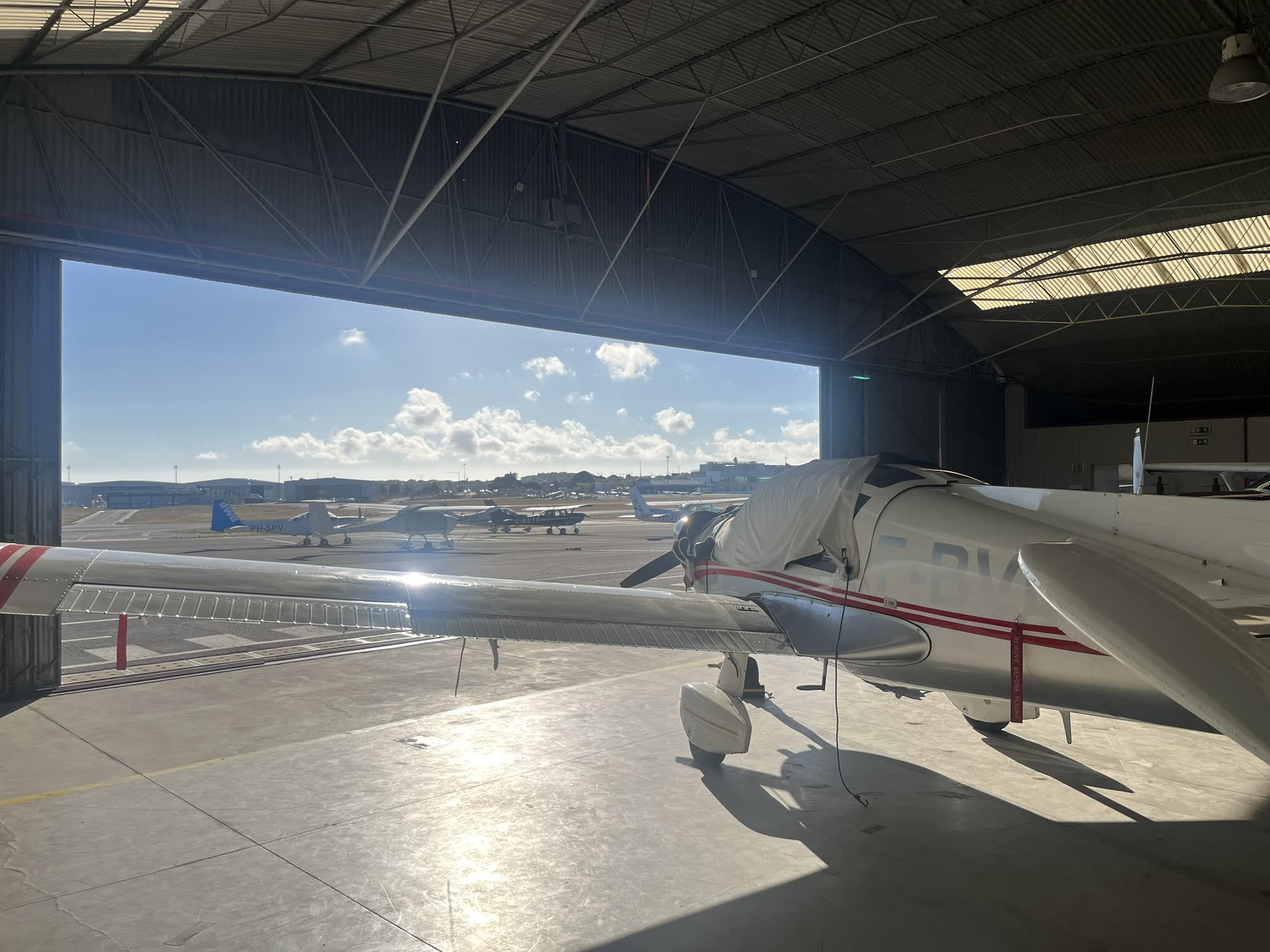
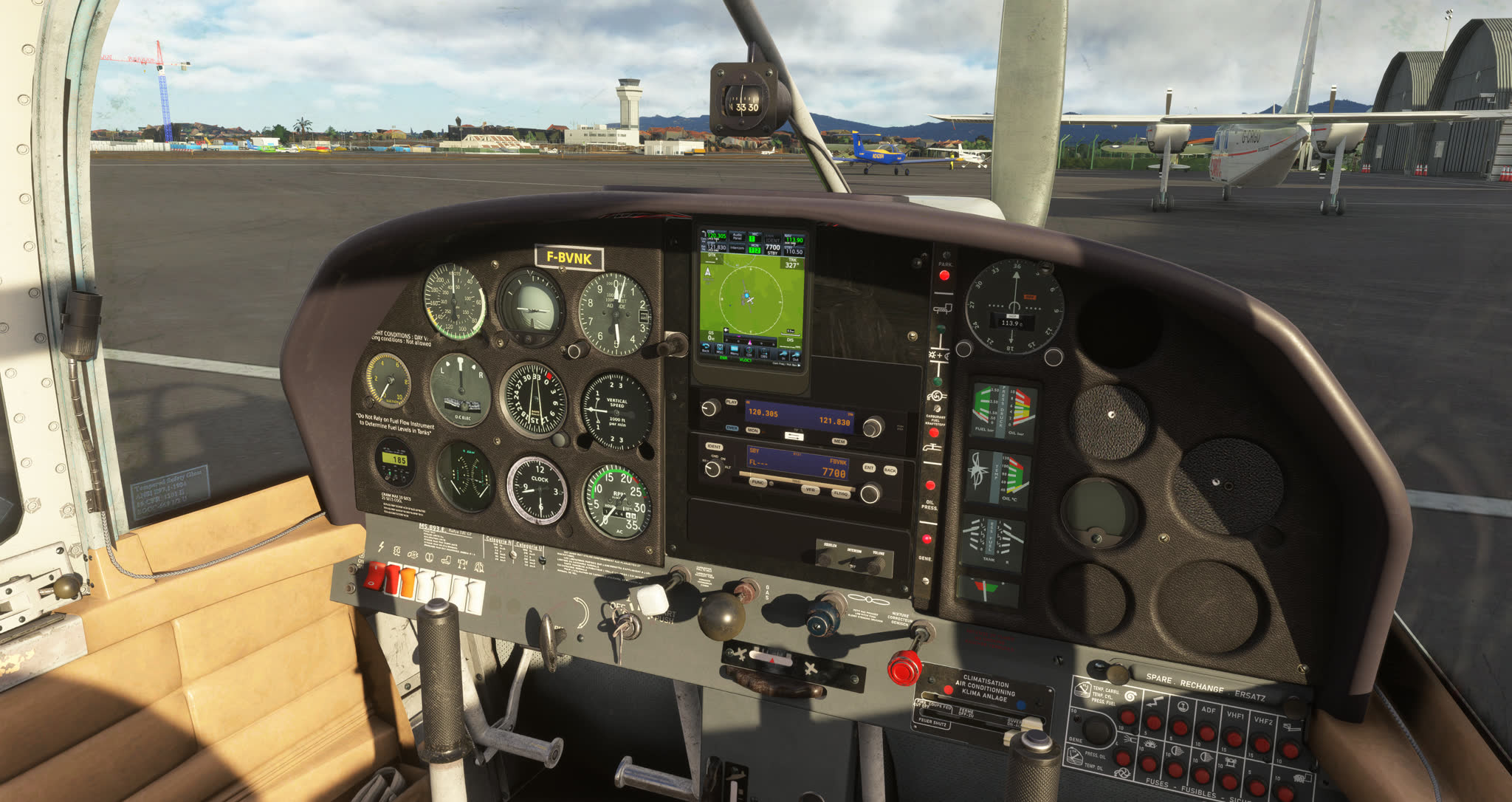
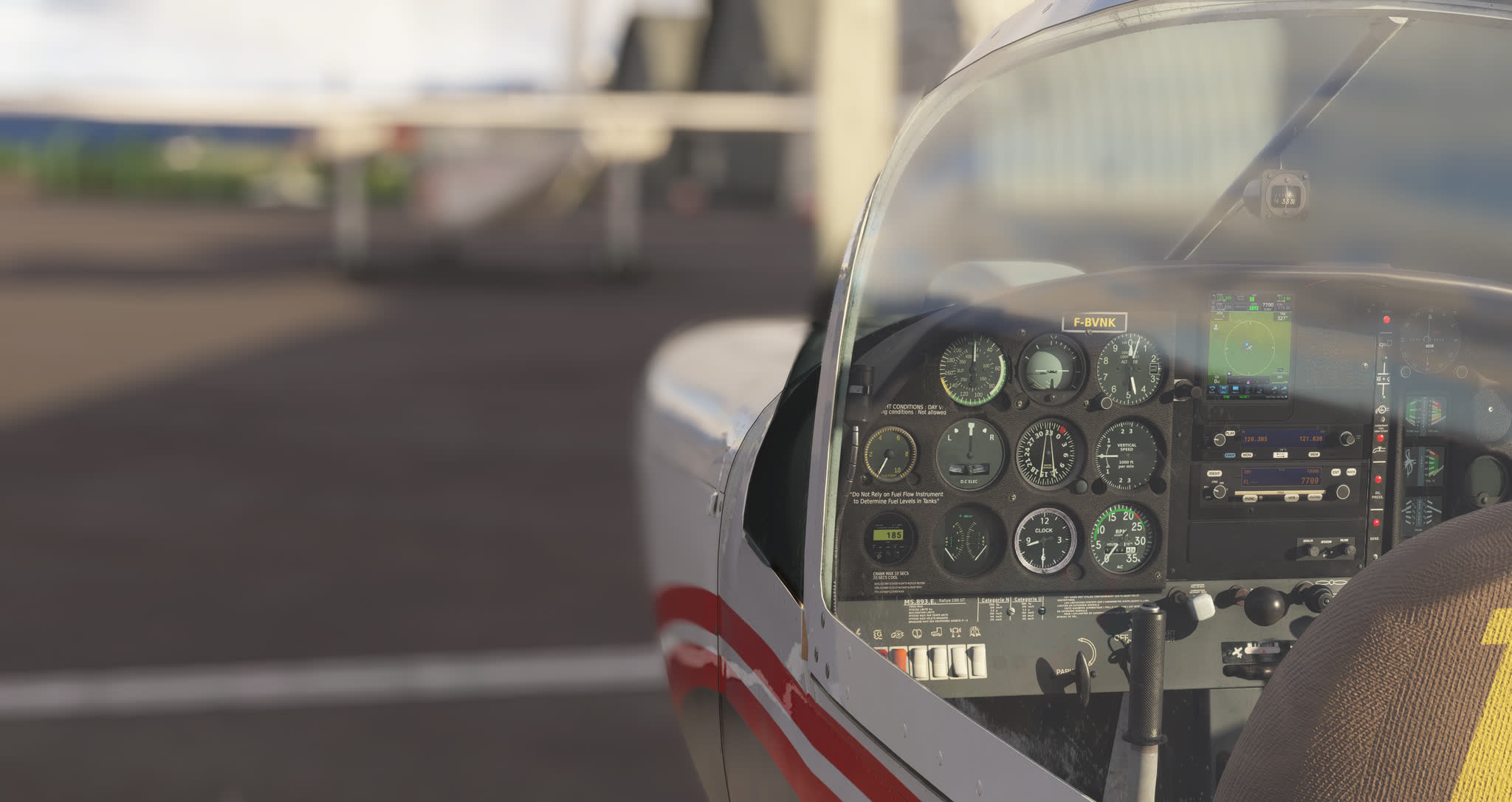
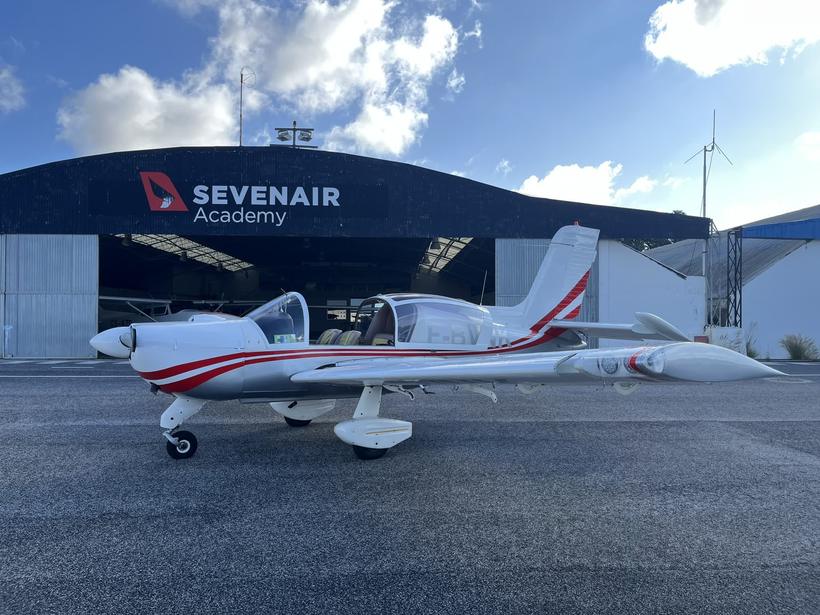
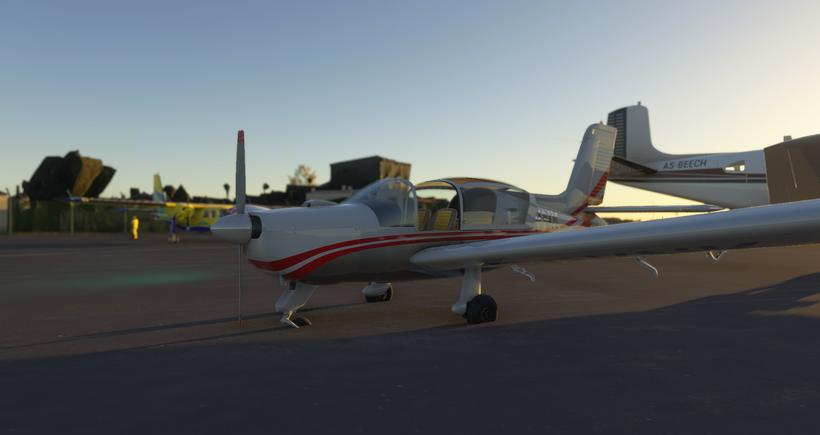
Start with the picture that explains everything. On the left, the stock sim Rallye straight out of the box, a fine aeroplane and nobody's in particular. In the middle, the real F-BVNK over the Cascais coast. On the right, the sim on 30 October 2026, build 559, parked at Cascais: her panel, her placards, her instruments in her holes.
| What makes her F-BVNK | Stock | The replica | |
|---|---|---|---|
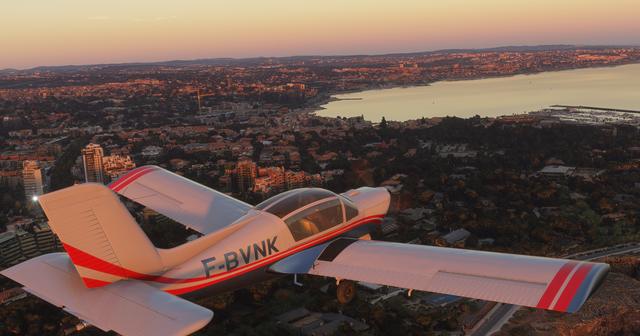 | Her registration, her paint, the cowling stripes that run the way only an owner knows | ○ | ● |
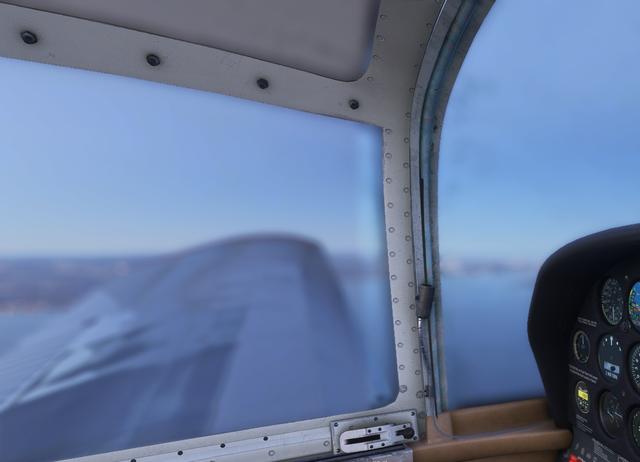 | Fifty-two years on the skin: bug strikes, grime, weathered windows | ○ | ● |
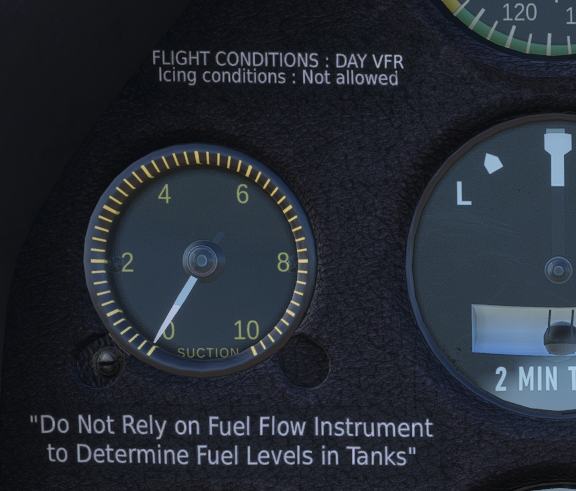 | Her placards, in her places, with her wording | ◐ | ● |
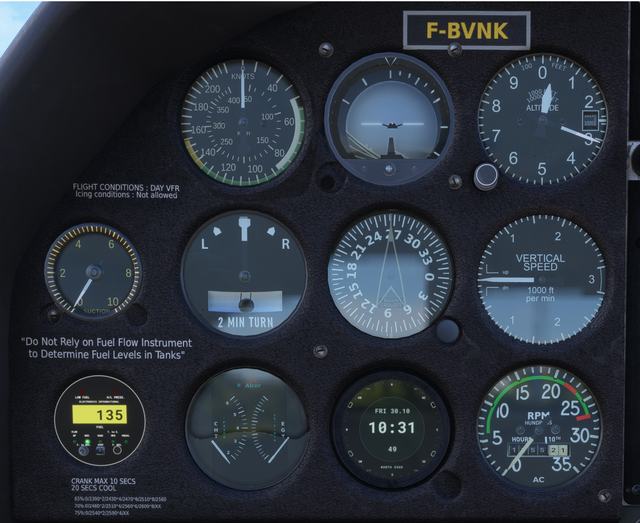 | Every instrument in her hole, faces matched to photographs | ○ | ● |
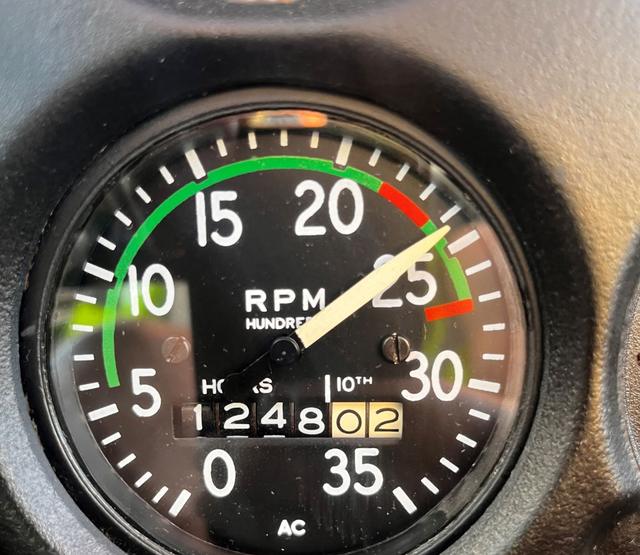 | Her engine: six speed and rpm points flown against her tach and ASI | ○ | ● |
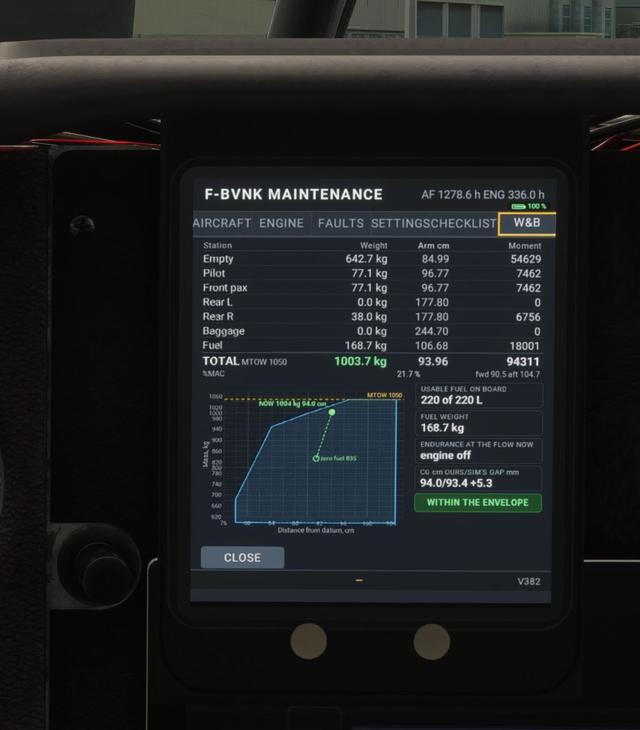 | Her own weighing, CG and loading, on her iPad | ○ | ● |
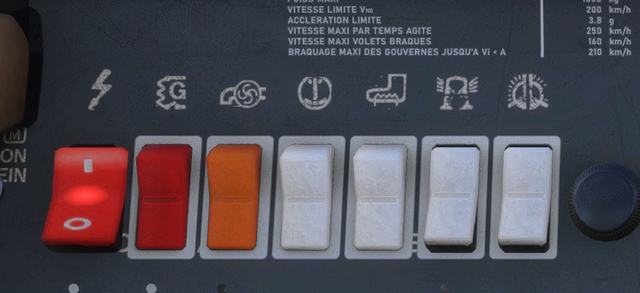 | Her 14-volt electrics, a battery that ages, an alternator that charges above about 1,000 rpm | ○ | ● |
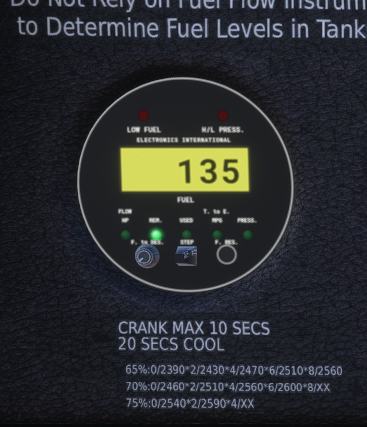 | The FP-5L fuel computer, all eleven modes | ○ | ● |
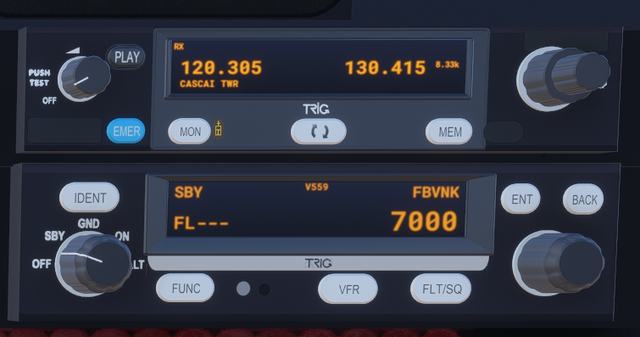 | Trig TY96 and TT31 doing what their manuals say | ◐ | ● |
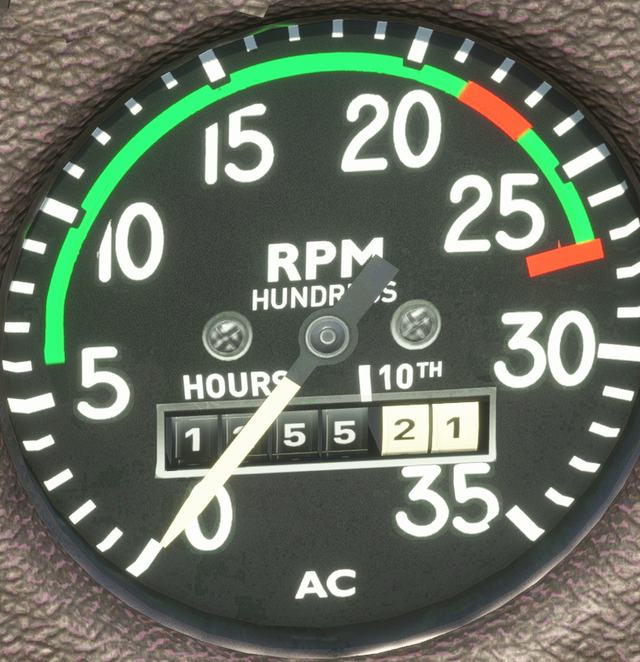 | She remembers: fuel, radios, switches and tach hours, flight after flight | ○ | ● |
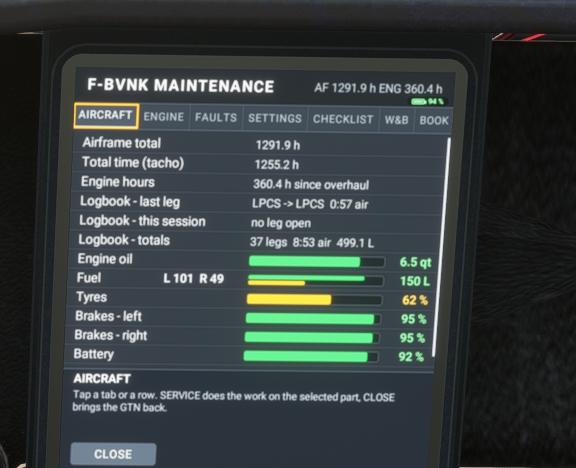 | A logbook and a cost ledger that write themselves | ○ | ● |
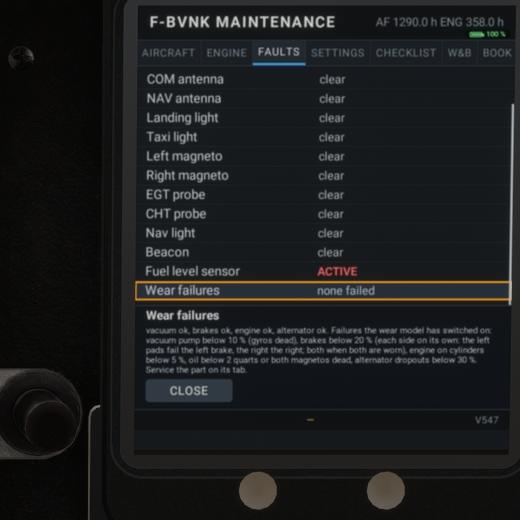 | Wear and faults: starter, battery, the fuel gauge that misreads now and then, fixed from the maintenance pages | ○ | ● |
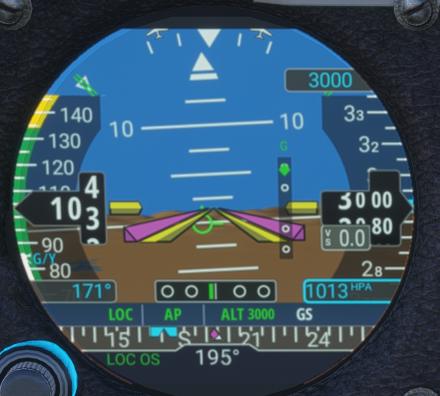 | A Garmin glass panel that behaves like Garmin's own units | ○ | ● |
| Score | 0 of 13, 2 in part | 13 of 13 |
● yes · ◐ in part · ○ no · an owner's scorecard, not a lab test
what the tuning bought, in the seat
A Rallye is not a fast aeroplane and was never meant to be. It is a 180-horsepower four-seater with leading-edge slats that come out by themselves as the wing runs out of speed, which is why the breed spent its life towing gliders, dropping parachutists and using fields other aeroplanes cannot. That is the character the flight model had to have, and every number it was tuned against is F-BVNK's own rather than the type's.
Set 2,550 rpm and she gives 117 knots, which is what Claus reads in the real one. Pull back to 2,100 and she settles at 87. Full throttle level is 127. A climb at 80 knots holds 2,500 rpm, and idle sits at 690, measured and matched. The stalls are the flight manual's, 50 knots with the flaps out and 54 clean, and the manual's climb figure at this weight is about a thousand feet a minute. The slats begin to creep out somewhere around 65 to 70 knots, three knots from first movement to fully out; the sim still lets them retract a little early on the take-off roll, which is written down as an open item rather than smoothed over. On the ground the nose wheel is a free caster, as it is on the aeroplane, so below walking pace you steer with the brakes and not the pedals. The flaps now travel through thirty-one one-degree stages instead of snapping between three, and the engine you hear is the sim's own 180-horsepower Lycoming, borrowed from the 172 and confirmed by ear.
The trim is stock, and honestly so. The real one is famously sensitive, six builds tried to make the sim's match, and every one of them either did nothing or made the wheel flicker. The entry stays in the log.
The other half of the flying is a cockpit that stays where you left it. Shut down, end the flight, come back tomorrow: the fuel is what you burned it down to, the radios and the squawk are as you set them, every switch and light and lever is where your hand left it, the fuel computer still shows what it used, and the hour drums on the RPM gauge have moved on by exactly the time you flew. Thirty-six values, saved every second, written when the flight ends. It is the difference between loading an aeroplane and going back to your aeroplane.
eleven things learned the hard way, all confirmed in the sim · not your end of the hangar? skip to the engine
1974 to 2026, from her own logbooks
She was built at Ossun-Louey in the Pyrenees and first flown on 14 June 1974, still unregistered, on a reception pilot's test sheet with one word against each line: correct. Three months later her first owner had her in Athens. Four owners, six home aerodromes and one logbook later, Yves Cuttat handed her to Claus at Salon-Eyguières on 13 April 2023, and she was ferried to Portugal over three days with NEW OWNER, FIRST FLIGHT! in the observations column. She carries her original 1974 Lycoming O-360-A3A and her original Sensenich propeller, each overhauled once. The fuel computer this page spends longest on went in at her second Portuguese annual, on 28 June 2024.
winter 2025 to 16 august 2026 · engines.cfg, flight_model.cfg and a tuning log
The first pass was paperwork. Control throws from the EASA type certificate for the MS 893 E. Maximum take-off weight 1,050 kg. An empty weight not from a book but from F-BVNK's own weighing at IAC Coimbra on 15 June 2023, 642.80 kg on the flight line with full oil and no fuel. Stall, climb, approach and never-exceed speeds from the flight manual. A free-castering nose wheel, because that is what a Rallye has, and the E model's two electric flap positions with only a half-way mark on the indicator, because that is what F-BVNK has. A community mod had already replaced the constant-speed engine with a fixed-pitch one, which is where this started, but almost none of it survived: the engine file was stripped back to the stock values and rebuilt from F-BVNK's papers and Claus's own measurements.
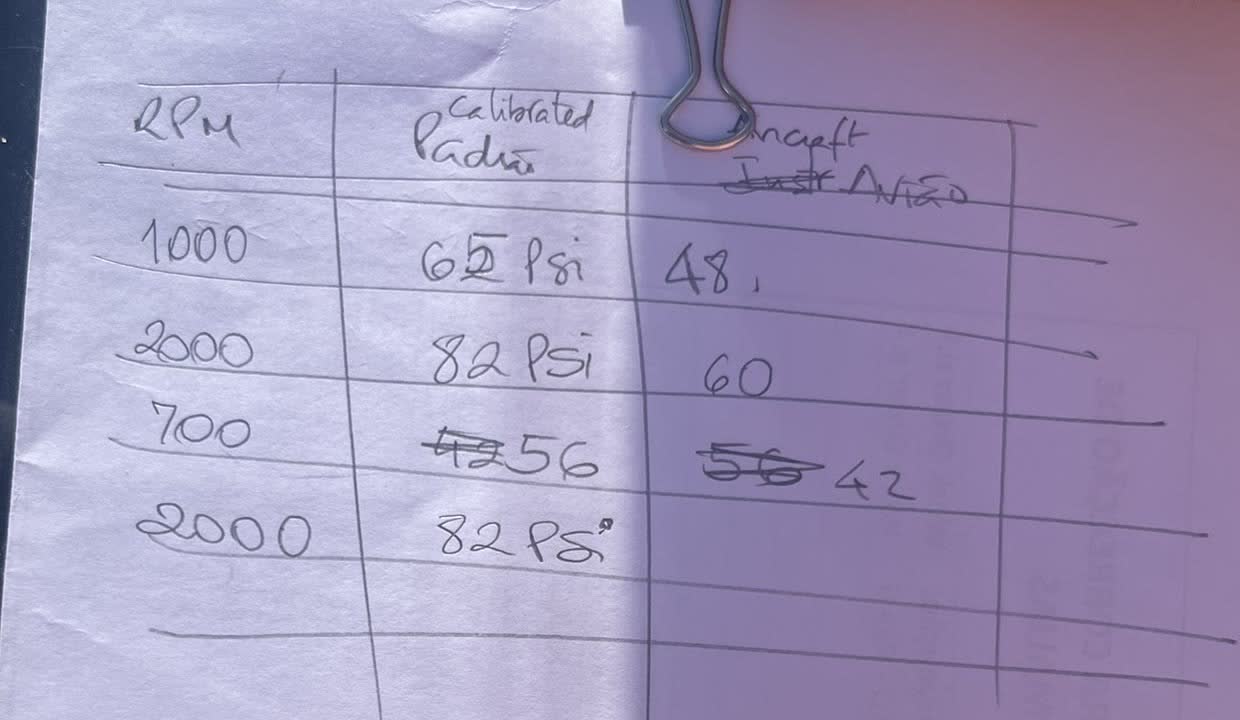
The gauges were calibrated against the aeroplane. At an annual, a reference gauge was put beside the panel's oil pressure gauge and the pairs written down by hand: 65 psi against 48 at 1,000 rpm, 82 against 60 at 2,000. The sim's oil pressure table was built from that card so its needle sits where F-BVNK's sits. Fuel burn came from the real FP-5L, 38 to 39 litres an hour at 75 percent leaned to best power.
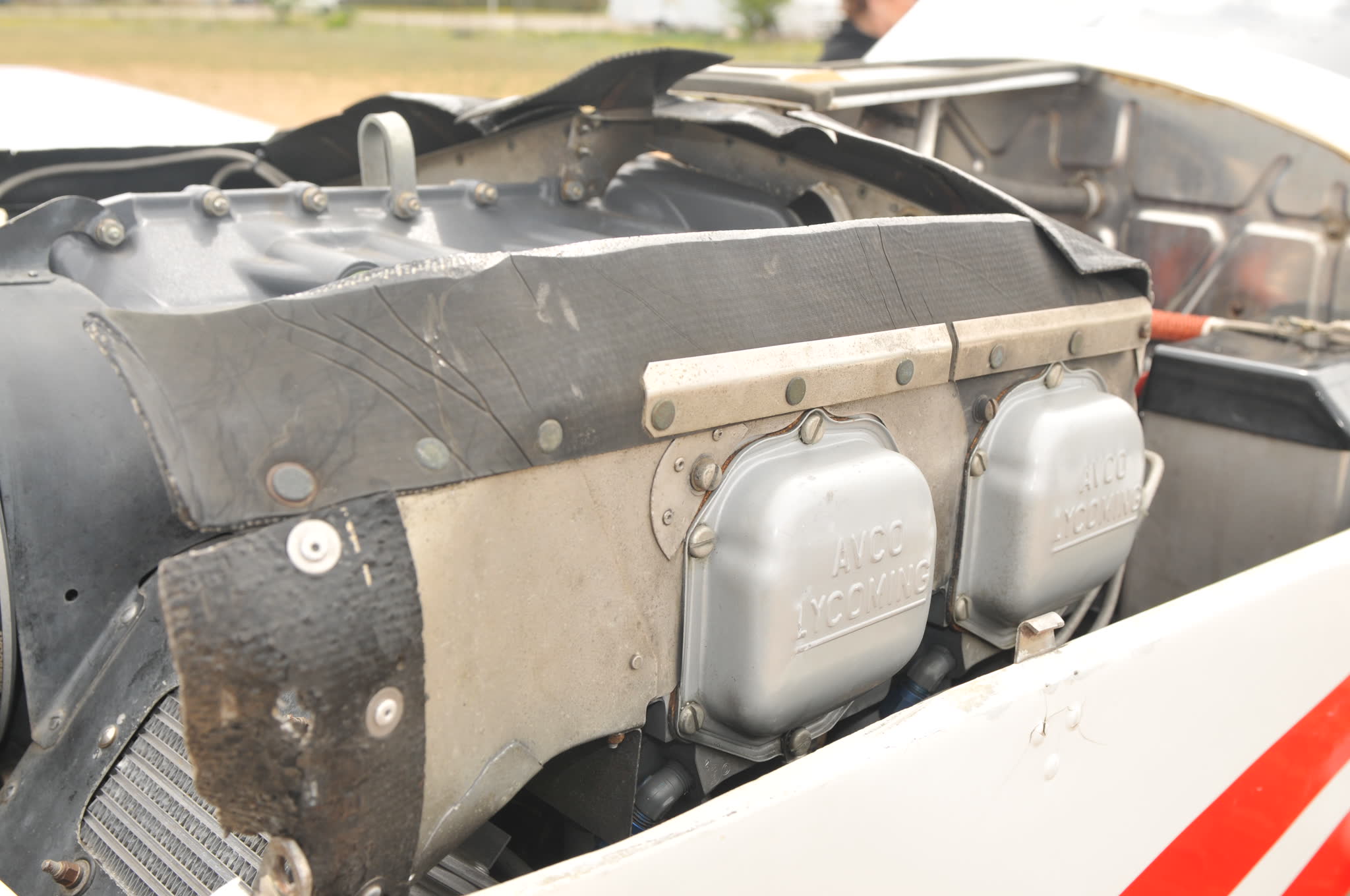
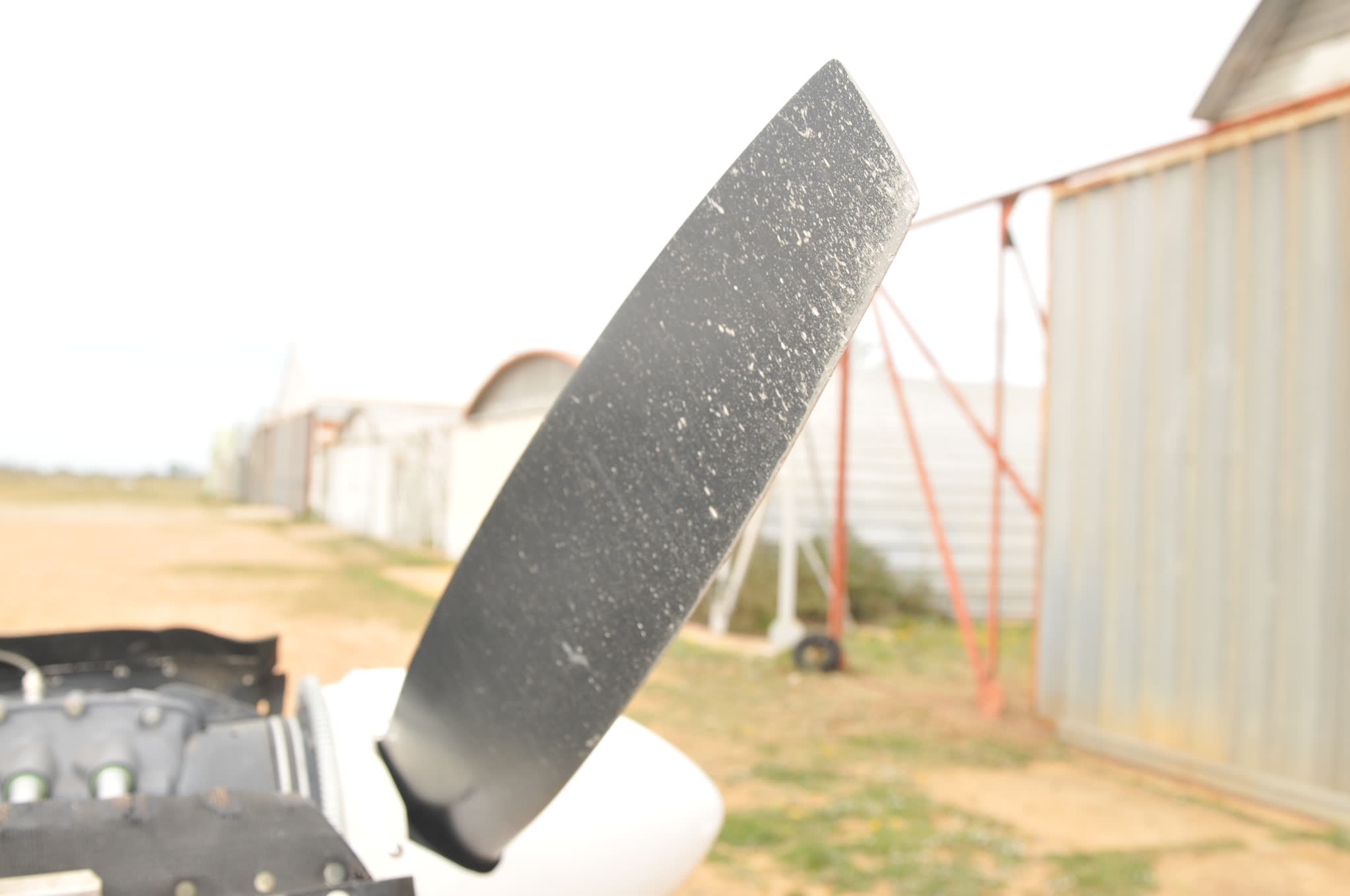
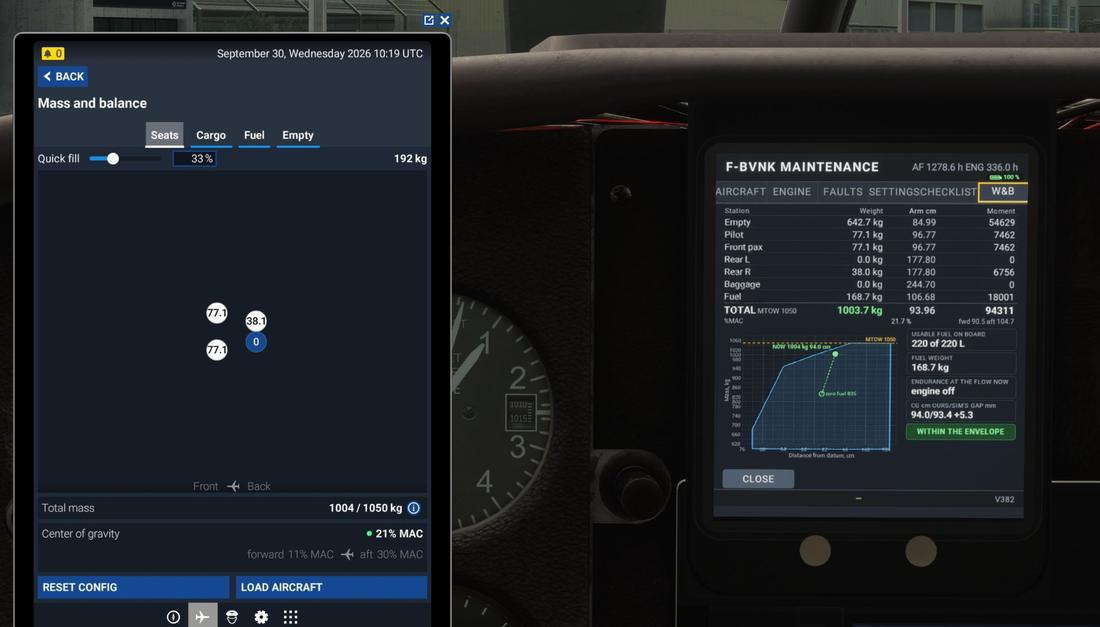
Then the propeller, and a tuning log that records it flight by flight. Its doctrine is three lines: replicate F-BVNK the individual aircraft, not the book MS 893 E; the owner's observed data is the truth standard for performance; the manual's limitations and hardware facts stand, its performance tables are background. The targets were Claus's: static 2,350 rpm, 2,100 rpm giving 87 knots level, a climb at 84 knots holding 2,500 to 2,550, and 75 percent cruise at 117 knots. Thirteen iterations in July, each flown by Claus, ended in his sign-off on 31 July. The same evening the balance was rebuilt from the weighing report and F-BVNK's official weight-and-balance calculator: the empty centre of gravity at 849.94 mm aft of the firewall, every loading station at its real arm, the sim's own loading display measured at three settings to find the conversion, which reproduces the calculator's demonstration load to a tenth of a millimetre.
August was a clean-sheet rebuild: every earlier patch stripped back, the propeller rebuilt with the real Sensenich geometry under the sim's blade-element model, and one instruction for the first flight, characterisation, not targets. A video of F-BVNK taking off from Cascais on 3 August was frame-extracted into an rpm and airspeed trace. Seven phases followed under a fixed discipline, frozen weather, zero wind, 930 kg, full restart between tests, each with a note in the file saying what moved and by how much. The notes are blunt. One phase tried the blade twist parameter and the file records the result in capitals, disaster, with the line deleted and a warning left in its place. Another moved the blade angle from the real 18.53 degrees to 19.5 and found that 2,550 rpm now gave exactly 117 knots; that point was declared sacred and nothing was allowed to move it after. The idle was solved by fitting a cubic to three measured points, 690 rpm within six. On 16 August the baseline was frozen against a six-point card.
| Point | Sim | F-BVNK | Verdict in the log |
|---|---|---|---|
| Idle | 690 | 690 | exact |
| Static, full throttle | 2,364 | 2,350 to 2,360 | pass |
| Climb at 80 kt | 2,500 | about 2,500 | exact |
| Level at 2,100 rpm | 87 kt | 87 to 89 | pass |
| Full throttle, level | 127 kt at 2,650 | 127 kt at 2,730 | speed exact, tach 80 low, an accepted trade |
| Cruise at 2,550 rpm | 117 kt | 117 | exact, the sacred point |
The card did not end the wanting. An attempt in the days after to lift the full-throttle tach toward the real 2,730 went through four rounds that moved nothing and a fifth that moved everything: a 35 percent cut to the top-end friction scalar sent static rpm to 2,700 and the aeroplane racing down the runway. The green-card file was put back byte-identical before the next flight, and the rule that came out of it has held since: probe at a quarter of the size, record the airspeed every time, revert between probes. The 80 rpm at full throttle is logged as a known limitation.
| Set from the aeroplane | Value | Source |
|---|---|---|
| Empty weight | 642.80 kg | IAC Coimbra weighing, 15 June 2023 |
| Empty CG | 849.94 mm aft firewall | Weighing report |
| Maximum take-off weight | 1,050 kg | EASA type certificate |
| Control throws, elevator / aileron / rudder | 25 and 20 / 17 and 13 / 30° | EASA type certificate |
| VNO / VFE / VNE | 135 / 86 / 156 kt | Type certificate, flight manual, placard |
| Propeller | 76 in, fixed pitch | Blade stamp, Sensenich 76EM8-060 |
| Real climb rpm | 2,450 to 2,500 | Claus's take-off video, 3 August 2026 |
| Fuel burn | 38 to 39 L/h at 75% | The real FP-5L |
15 august to 1 september 2026 · textures only, never the model
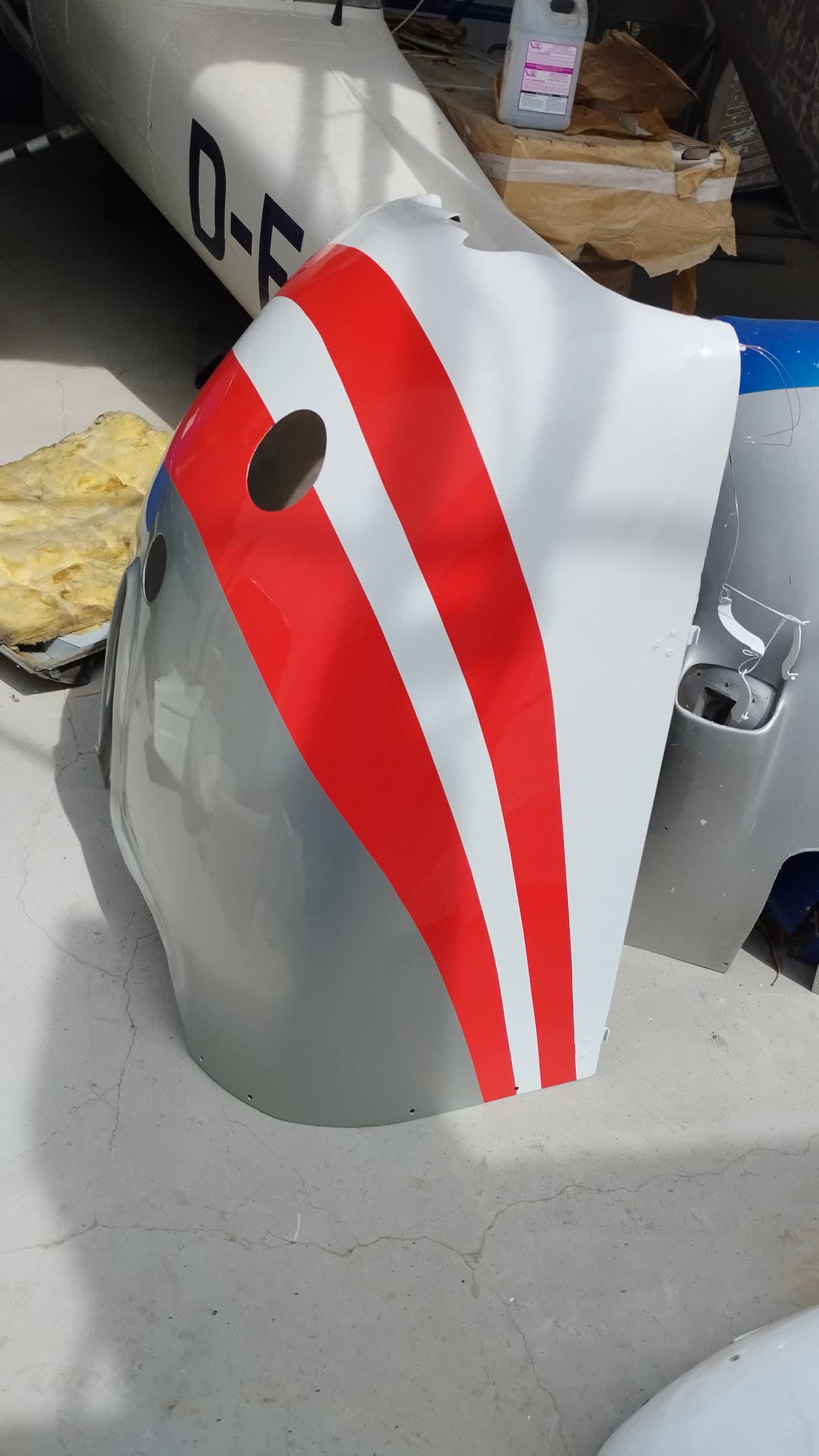
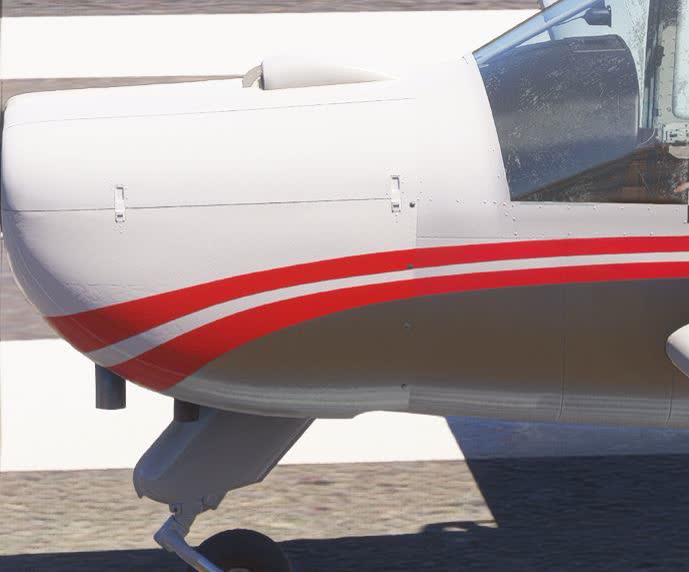
Jeffs's paint gave the sim F-BVNK's registration and cheat lines. What it could not give was the wear of a fifty-two-year-old aeroplane, and one detail only an owner knows: on the real cowling the stripes run differently from the fuselage, which you find out when the cowl panel is off and lying on the hangar floor. The livery became its own project with one rule, textures only, learned the expensive way when a model edit made the glareshield and side panels vanish. Tools were built to decode the sim's compressed texture sheets block by block, edit them, re-encode each mip and splice it back at the original offsets so the package's size table stayed valid, because a sheet compressed the wrong way renders as a pink checkerboard.
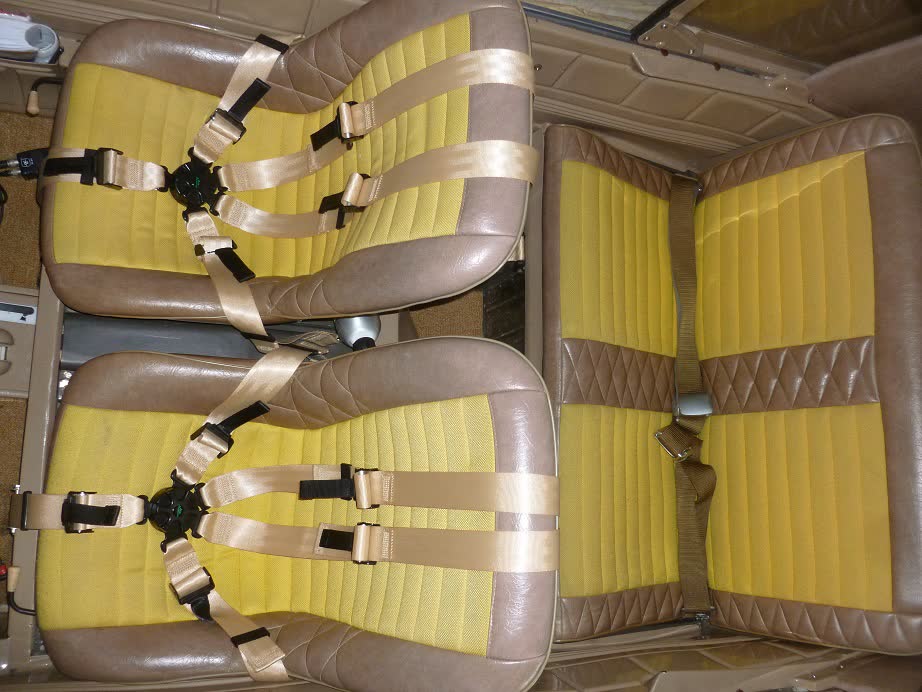
On 15 August the cowling was repainted from the hangar-floor photograph, and the mosquitos arrived the same day: leading-edge bug strikes, first too faint, then visible, then mapped by projecting the model's own triangles onto the texture so they sat on the true leading edge of wing and tailplane, then a fourth version of fine strikes that reached the fin. A week later the gloss came down by 17.5 percent, because the real aeroplane is not shiny; a grime plume went along the belly aft of the exhaust; the seats were matched to photographs, the yellow fabric as a colour ratio and the bolsters as leather; and the quilted side panels went through seven colour versions before the seventh stayed. The canopy was hardest: the overhead's dark maroon-brown, built from joeCRASSY's canopy files and approved on 1 September with real and sim photographs side by side, and the port window's slight milkiness, which took six attempts and ended in the glass finding listed above. It ships as two schemes, F-BVNK with the bugs and grime, and F-BVNK clean.
2 to 4 september 2026 · 131 builds, one label
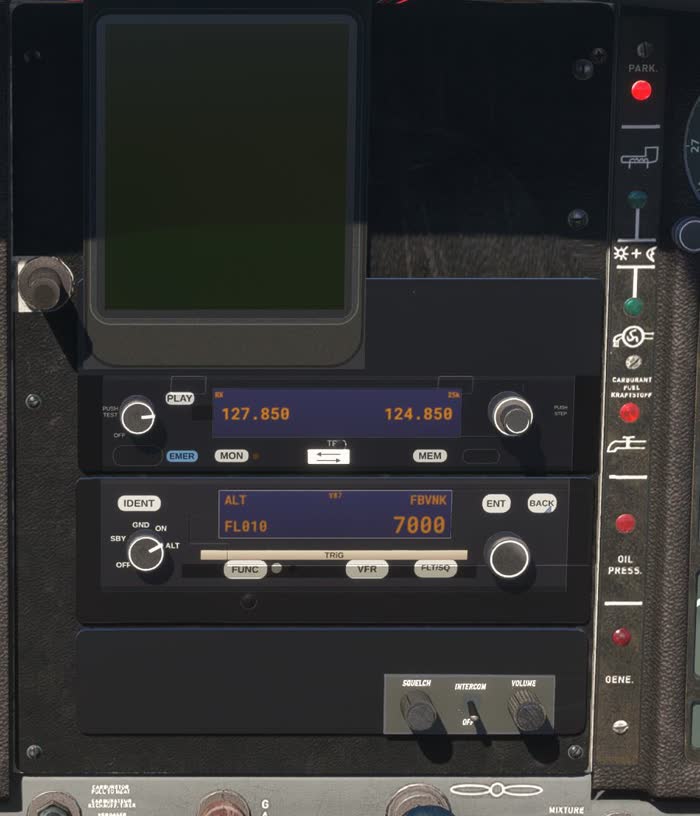
The radios came first and were the easy half: the Trig TY96 com and TT31 transponder drawn by hand-written gauge code on the two screen surfaces the model already had, the NARCO NAV 11 with its dual concentric knob on the old ADF's screen, the iPad running the pms50 GTN750. The hard half was everything made of geometry, because the interior ships as a compiled, optimised model. Two rules came out of twenty-one builds: reshape what is there, never restructure it; and the depth axis runs backwards, a larger z is deeper into the panel. With those, the intercom faceplate came out of the panel where the real one sits, the ADF hole was closed by folding its own rim into its centre, and the airspeed face was pushed back behind its glass. A parallel attempt to build a modular package on top of the original loaded once with the pilot's head in the engine bay and was parked.
Every test costs a full exit to the desktop and a reload, so from build 66 the transponder's display carried the build number, and every screenshot since is a statement about one build and nothing else. Claus's rules were as strict as the label: his order is the specification; if it cannot be done, say so and stop; nothing is done until he has seen it in the sim; the screenshot is believed over the assistant's own account. Twice the assistant claimed success it had not measured, and twice the ledger was corrected.
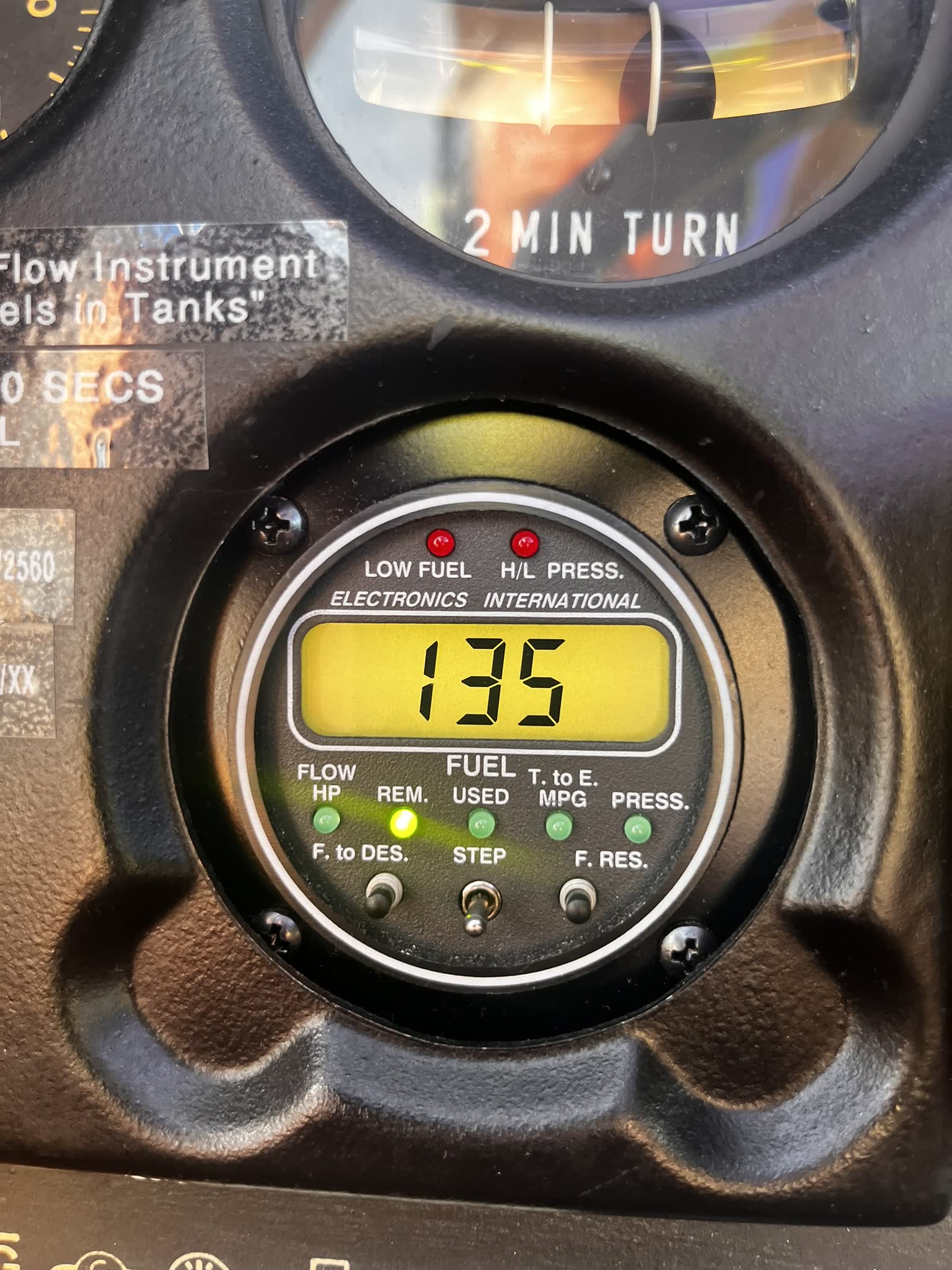
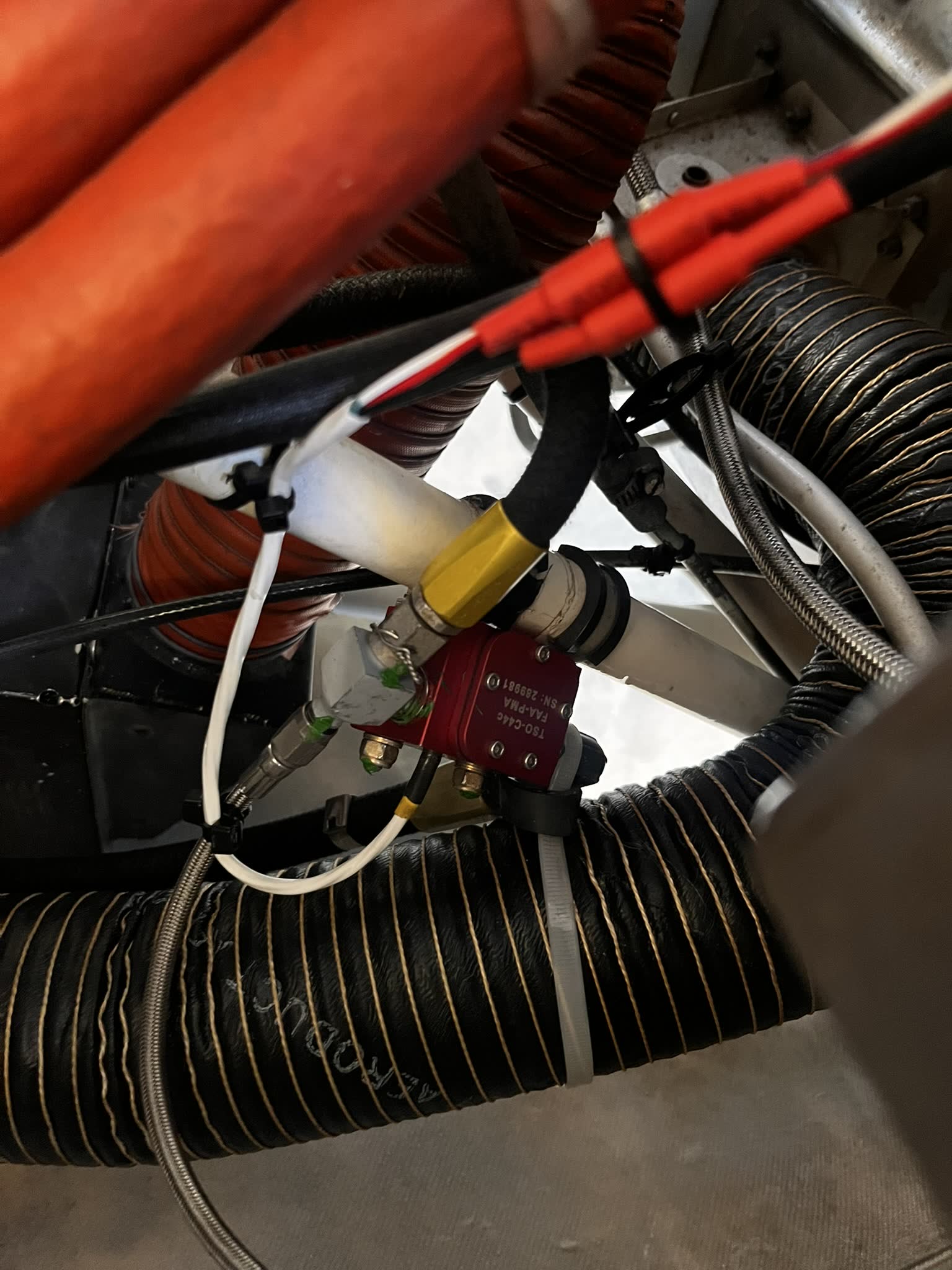
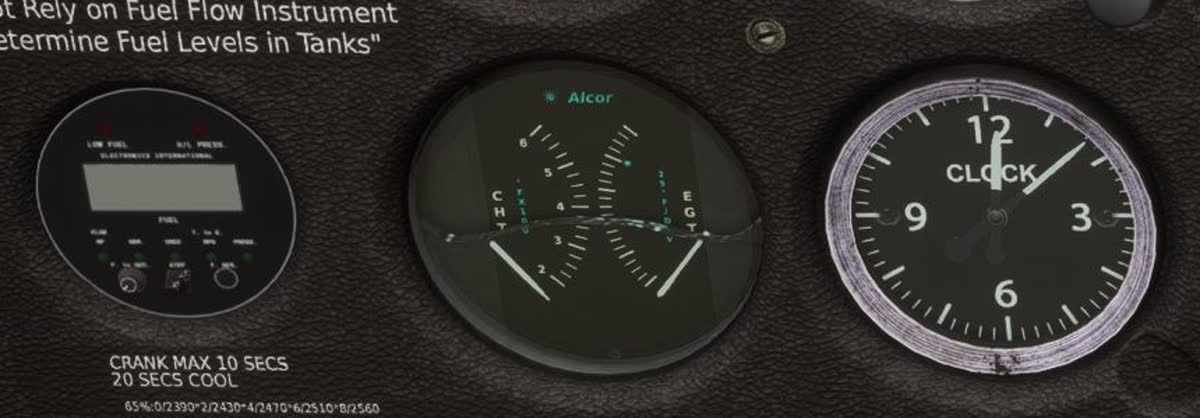
F-BVNK carries an Electronics International FP-5L, a 57 mm instrument with a yellow-green LCD, five mode LEDs, a STEP toggle and two buttons, fed by a red-anodised FT-60 transducer in the fuel line. Claus wanted it functional, not painted. A fifth screen surface proved impossible, so the way through was hiding in the TY96's own screen mesh: twelve of its sixteen vertices had been collapsed to a point when the Bendix King display was replaced, and they still carried the screen material. Four of them were pulled out into a face, the shared display texture was grown so the TY96 and the FP-5L each own a strip of it, and the gauge was written with all eleven modes from the manual, the power-up self test with 8888, and the low-fuel and pressure alarms.
It rendered half, because one triangle was wound backwards. Then it had to be round, which two hexagons rotated thirty degrees against each other can be. Then it had to sit in the hole under the suction gauge where the real one lives, a cone 29 mm across at the face narrowing to 24.4 at the floor; the disc was made slightly larger than the cone at its depth so its twelve points hide inside the plastic and only a true circle shows. The pressure reading was converted through the same scale the panel gauge uses, so it shows 3.9 psi at cruise, inside the flight manual's band, with the alarms at the book's limits. The STEP toggle and the two buttons were rebuilt from three dead ADF knobs, their hidden bases flared wider than their visible caps so they stay easy to hit in VR.
The real F-BVNK is the same aeroplane you left; the sim reset to whatever the menu decided. The simulator does have a mechanism for this, the one the COWS DA40 uses: an aircraft declares variables in its systems file, the sim writes them to a state file at End Flight and reads them back at load. Thirty-six were declared, in slices, each tested the same way, shut down, End Flight, load, photograph: fuel per tank, radios, squawk, altimeter, every switch and light, magnetos, fuel pump and selector, parking brake, pitot heat, mixture, throttle, carb heat, the cabin air levers, the radio volume knob, the FP-5L's own state. The trim came back last and by the only method that held, nudging the sim's own trim-up and trim-down events toward the saved position for a few seconds after the cockpit appears, the way a thumb would; a value written directly fights the sim's trim state the next frame and flickers. The iPad got its own battery on its own bus, as in reality, so it stays lit with the master off.
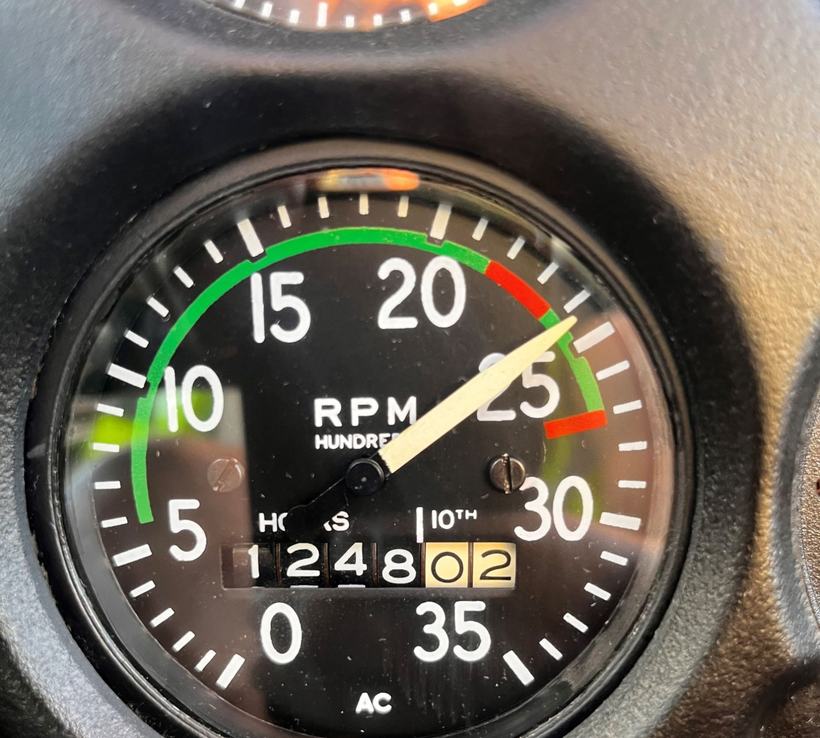
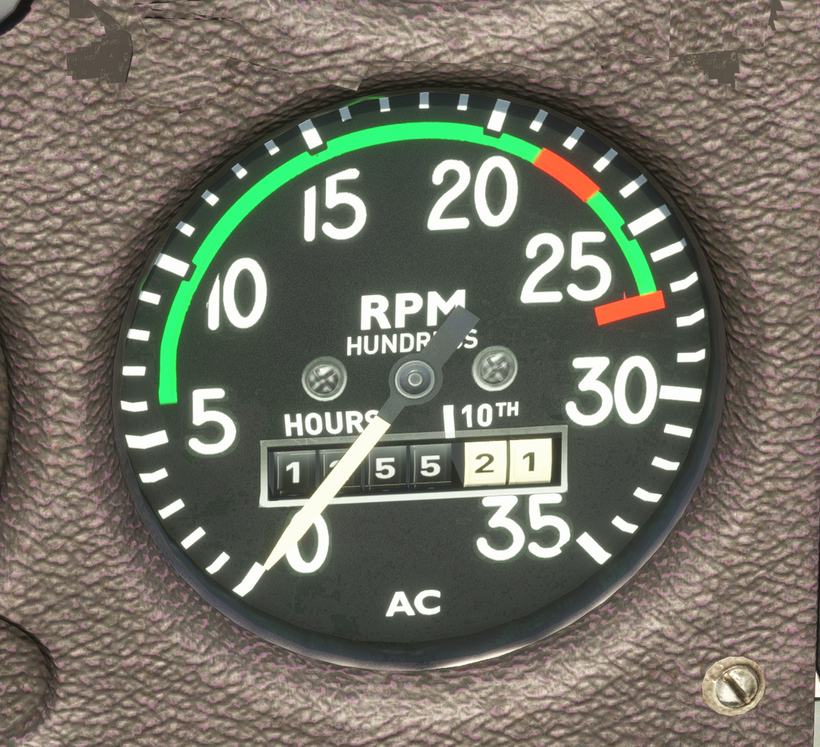
The tach is the detail that says whose aeroplane this is. The sim's own engine counter cannot be set by an aircraft, which is why hour meters are said to be impossible. So the RPM gauge's drums were rebound to a persistent counter of the aircraft's own, seeded at F-BVNK's 1246.58 hours and advanced by engine time. They read between digits until the drum animation was measured at 40 frames a digit, not the 10 the gauge had been drawn with. Claus's verdict on that build was two words: magic!!
The real Rallye's trim is famously sensitive and the sim's felt dead. Six builds multiplied each trim click, two times to sixteen, before anyone measured a click: 10 units in 16,383, about a hundredth of a degree. Sixteen times nothing is nothing. A real multiplier then oscillated, the path was closed, and the trim is stock. The ledger keeps the entry as a lesson: measure before you multiply.
5 to 6 september 2026 · builds 132 to 150, on the laptop
The second week moved to Claus's laptop and went inside the panel. The electrical system is now F-BVNK's: a 14-volt system with a Gill G35 battery and a Hartzell alternator, every circuit at its real wattage, engine gauges dropping out below nine volts, and the ammeter reading the sim's actual battery current, discharge to the left, charge capped the way a real charging curve is. The battery ages. Health, starts, hours, cranking time and deep discharges persist across flights, the starter labours below sixty percent and refuses below fifteen, and a new battery is fitted with three clicks on the ammeter face, master off, engine stopped, after which the needle sweeps for ten seconds and the counters reset.
The Trig TT31 became the whole instrument, not a squawk box: flight timer, airborne timer, stopwatch, altitude monitor with a pointer beside the flight level, a battery page, and the installation manual's seventeen-page setup mode, entered the real way with the knob at OFF, holding F-BVNK's registration and Mode S address. The TY96 gained RX and 25-kilohertz indications, the emergency key, the monitor key, and a low-voltage warning whose threshold rises as the battery ages. Nothing was invented: where the sim has no state for a feature, the transmit icon for instance, the feature is absent and the manual says so. The engine sound was the last piece, and it took a finding of its own, listed above, before the 172's Lycoming would play.
7 to 17 september 2026 · builds V151 to V282, mostly overnight
After the electrics, the work changed pace rather than subject: the same discipline, run for eleven days without a break, on the laptop, much of it while Claus slept. A status board went up, one page with everything open shown red, everything in progress yellow, everything confirmed green, and test cards at the bottom Claus ticks from his phone. An answer tapped there reaches the session working on the aeroplane within about fifteen seconds, and shows, the way a message does, whether it has only been saved or actually been read. It let the two of them work across a Cascais evening without the laptop ever needing to be touched by hand.
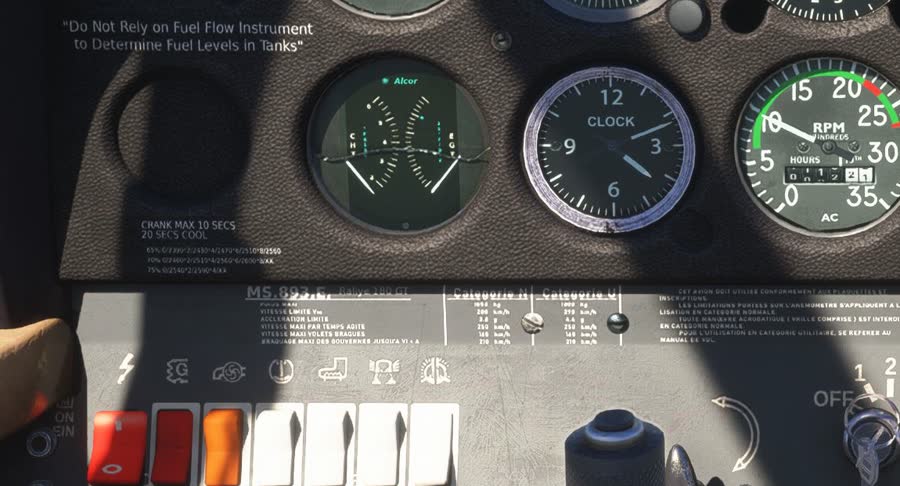
The panel clock turned out not to be a clock. Behind its glass sits a digital watch, and the one clue on file, a photograph, was two years out of date and misidentified besides: it showed a Casio Claus no longer owns. His actual watch, a North Edge APACHE 3, was worked out from its bezel markings, ALTIMETER and BAROMETER either side of a steel ring with four screws, and matched against the maker's own manual. It was rebuilt as a live instrument sharing the display space freed up by re-cutting the FP-5L's own hidden screen from twelve sides to eight: real time and date, a barometric altimeter, a barometer with trend, a compass that tracks the aeroplane's own heading for a minute at a time, and a stopwatch with a lap function, all read off the sim the way the FP-5L is. Its four corner numerals double as buttons, invisible at first, so a second build gave each one a small physical pusher standing proud of the rim, lit for a blink when pressed, and a third added a hover label naming what each one does on the screen showing. Claus's test card came back ten rows out of ten working, and a night check followed once he pointed out the pushers still needed to be found in the dark.
A leg now opens itself three seconds after the engine catches and closes itself at shutdown, timed off the wheels and the engine rather than any button Claus has to press. It stamps the engine and block times, the take-off, every landing with its touchdown rate, the fuel remaining from the FP-5L at both ends and what was burnt, and the tach at both ends, then shows the whole thing on the iPad the moment the leg closes. Only flights count: a ground run of a couple of minutes, engine started and stopped without ever leaving the ground, leaves no entry at all, on Claus's own rule, so the book stays a flying log and not an engine-run log. Switch the master off after a real leg and a cost ledger opens by itself on the laptop with that leg already filled in and priced against Cascais's own 2025 invoices, fuel, landing fees, scheduled inspections and wear, hangar rent and insurance kept out of the flying figure on Claus's instruction, ready for him to check and sign. Every piece of it is proven separately on the ground; his first real flight since it went in is what proves the whole chain, start to signature, at once.
A smaller find is worth telling for what it says about where bugs actually hide. The alternator's own breaker, GENE, kept tripping during engine starts and killing the charge, and it took a telemetry logger sampling five times a second to catch the real cause: the trip lined up not with the starter's current draw but with Claude's own mouse cursor, left resting on the breaker's click zone while an unrelated window-focus fix ran in the background. The fix was not in the aeroplane at all, it was to park the cursor somewhere harmless before switching windows; with that in place the breaker held through a start that spiked to 394 amps and a charge afterwards of 40.
Not everything survived contact with the owner's memory of the real aeroplane. Wing strobes, which the sim had always shown, came out on his word: "I dont want wing strobes i dont have that on NK." Visual chocks, after weeks of trying to make a compiled model draw a wheel wedge it has no mesh for, were dropped outright: "no more presented on ipads or limiting anything." Night navigation-light brightness was walked up and down three times by eye before it read right at midnight. And one small thing is still open: on a fresh load, before any control is touched, the throttle has twice crept past sixty percent and the parking brake released, by itself, for about two minutes, then stopped as suddenly. Nothing has come of it, and the "Ready to fly" screen is now dismissed the instant it appears, but nobody has explained it yet.
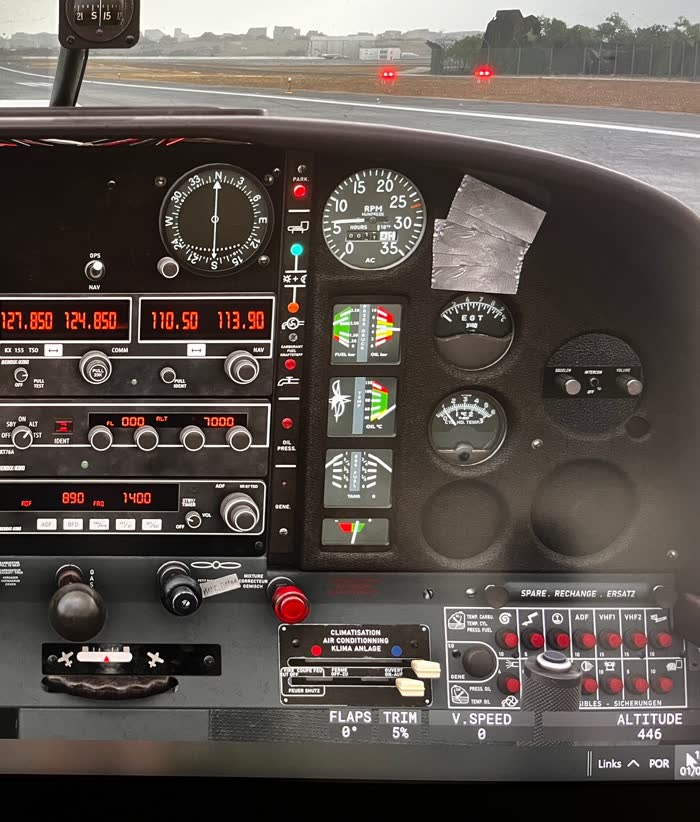
the same three places in the cockpit, days apart
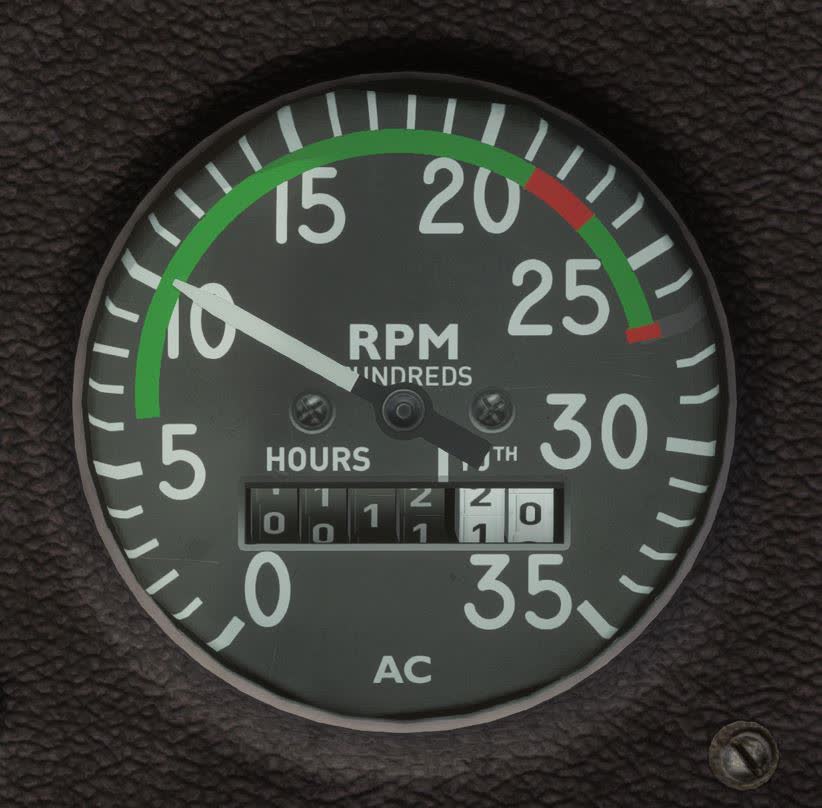
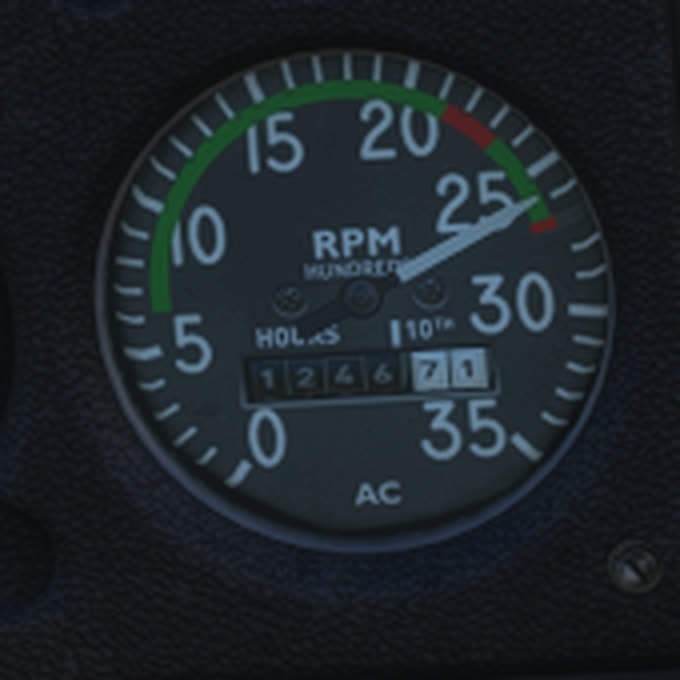
17 September 2026
| Item | State |
|---|---|
| Flight model and engine | Six-point card green against F-BVNK's own figures. Weights, balance, limits and gauges from her papers. Known trade: tach reads 80 low at full throttle. |
| Exterior and cabin | Repainted cowling, bug strikes, gloss and belly grime, photo-matched seats, brown canopy overhead. Two schemes, worn and clean. |
| FP-5L fuel computer | In the real position, all eleven modes live from the sim, litres and psi, alarms, clickable controls. |
| Persistence | Thirty-six variables, everything from fuel to the radio volume knob, saved every second, written at End Flight, restored after load. |
| Tach | F-BVNK's hours on the RPM drums, counting, persistent, on crisp digits. |
| Electrics and ammeter | 14-volt system with F-BVNK's battery and alternator, real circuit loads, ammeter on real current, ageing battery with a new-battery reset. Installed at build 150; the last verdicts on the ammeter face and the reset are pending. |
| Trig TT31 and TY96 | Timers, stopwatch, altitude monitor, battery page and full setup mode on the transponder; RX, 25k, emergency, monitor and low-voltage warning on the radio. Operating notes written from what they do. |
| Sound | The 172's Lycoming for the engine, the original pack for everything else. Confirmed. |
| Radios, NAV 11, intercom, placards, closed ADF hole, iPad on its own battery | Done. |
| The watch | A North Edge APACHE 3 behind the panel clock's glass: live altimeter, barometer, compass and stopwatch, confirmed by Claus's own test card, ten of ten rows working. |
| Automatic logbook and cost ledger | Every leg logs itself off the wheels and the FP-5L, and prices itself against real Cascais invoices. Installed and ground-tested; a real flight has not yet closed the loop end to end. |
| Night lighting and the GENE breaker | Navigation lights re-tuned by eye across several passes; wing strobes removed on Claus's order (the real aircraft has none). The alternator breaker's false trips traced to a stray cursor position, not the aeroplane, and fixed. |
| Next, simplest first | A second, glass-panel variant of the cockpit (in progress, not yet flying), the preflight slat pull, checklists and walk-round, nose-wheel steering, circuit breakers, seat squares and Jaeger faces, flap indicator. |
| Not possible, or dropped by Claus | A working Dynon D2 screen, a visually rotating knob (no re-export). Chocks and gust locks: the model has no mesh for them, and Claus closed the search himself rather than keep hunting for a route. |
| Measure | Value |
|---|---|
| Builds of the cockpit package, 2 to 17 September 2026 | 282 |
| Flight-test iterations on the engine in July, then tuning phases in August | 13, then 7 |
| Persistent variables declared | 36 at build 131, dozens more since (battery, transponder, logbook) |
| Size of one stock trim click | 10 / 16383 = 0.012° |
| Tach time seeded on the drums | 1246.58 h |
| Real F-BVNK, first flight to this page | 14 June 1974 to 17 September 2026 |
| Time from an owner's tap on the board to Claude reading it | about 15 s |
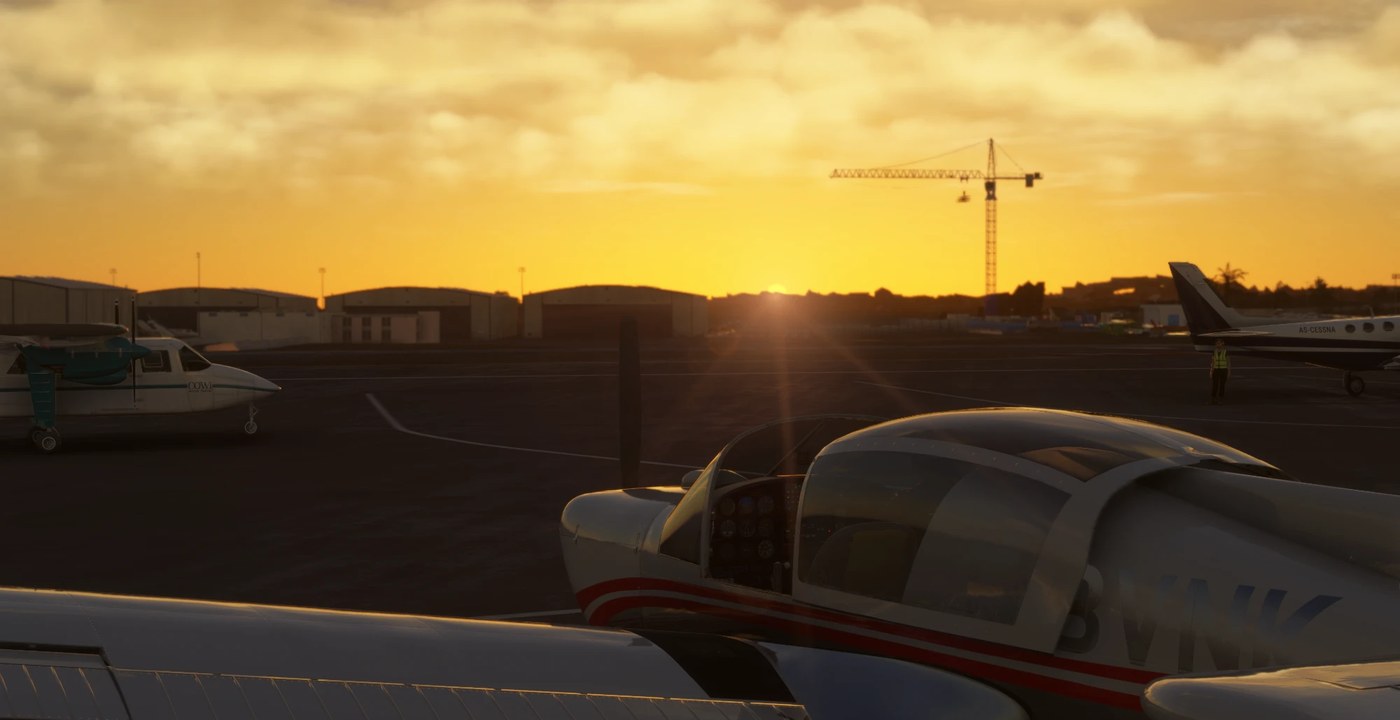
left, F-BVNK · right, the sim on the evening of 4 september 2026
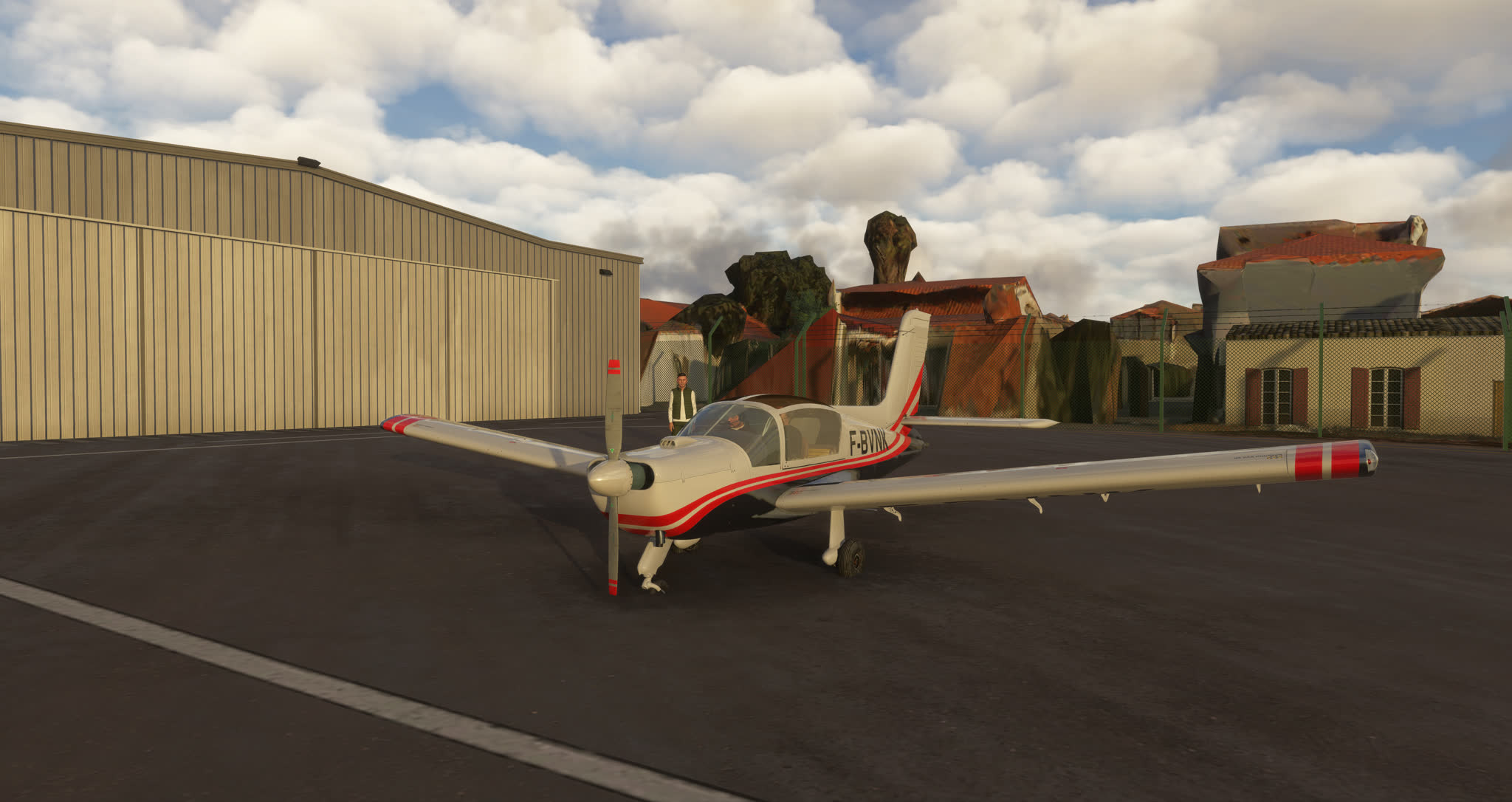
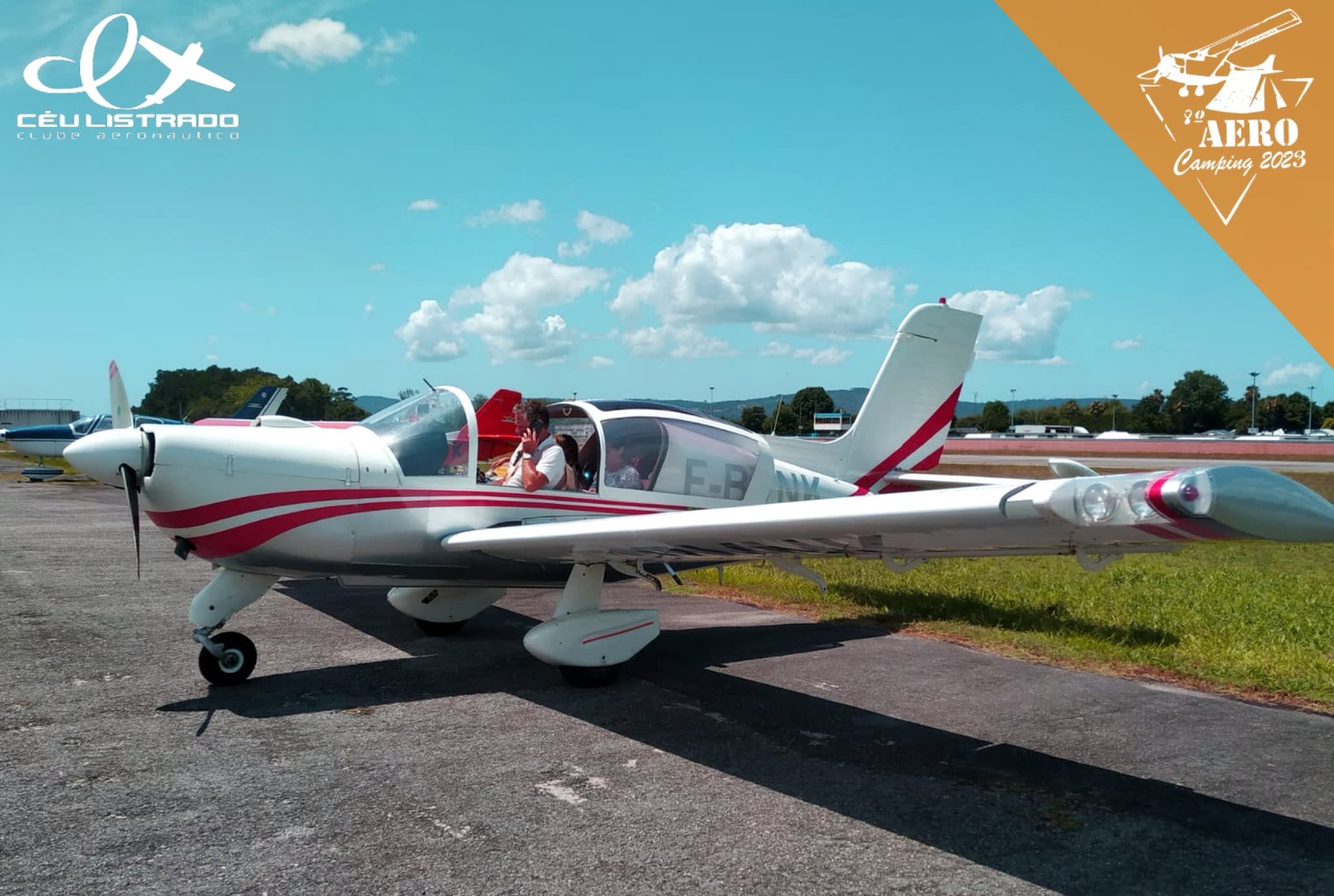
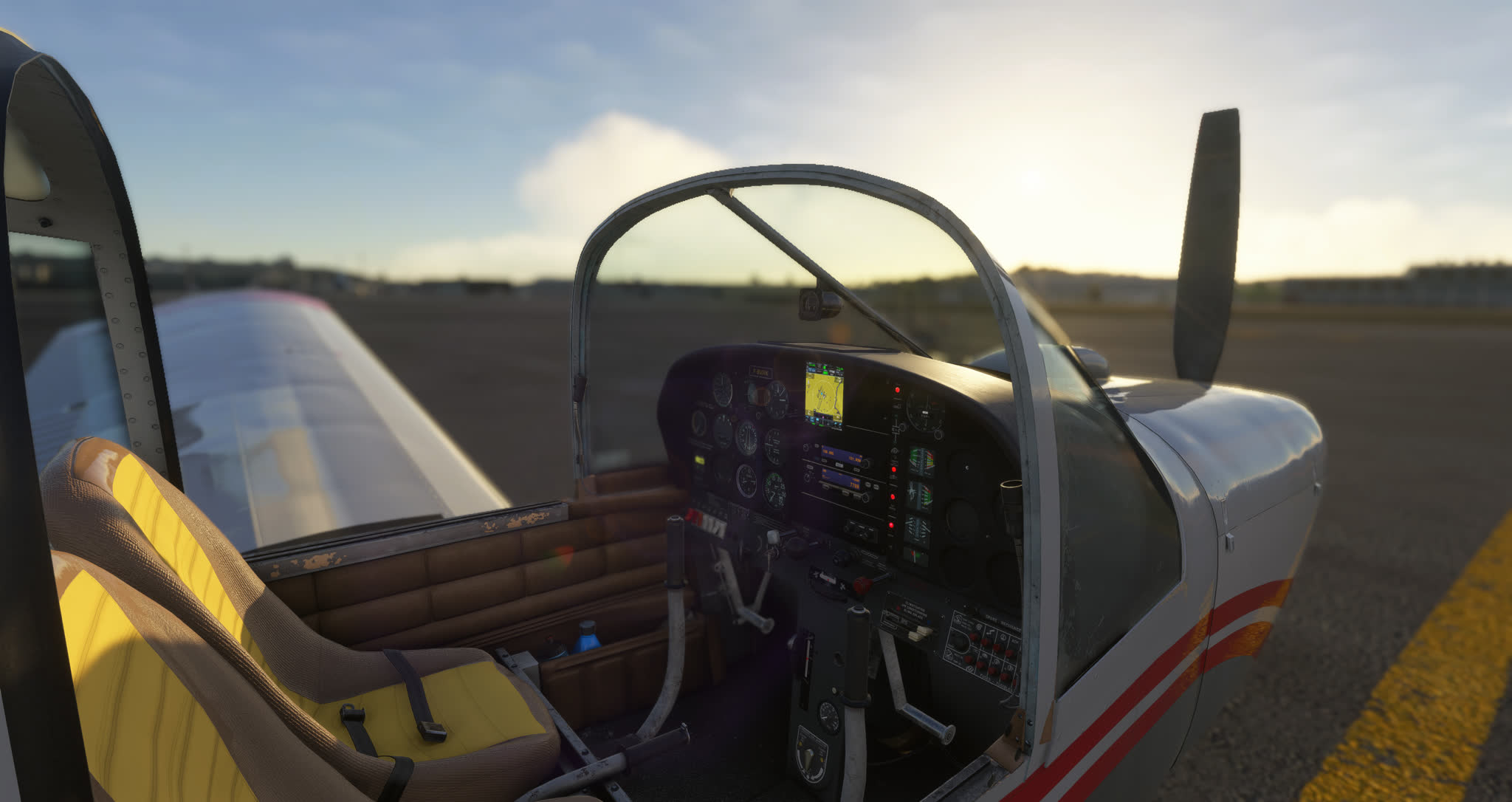
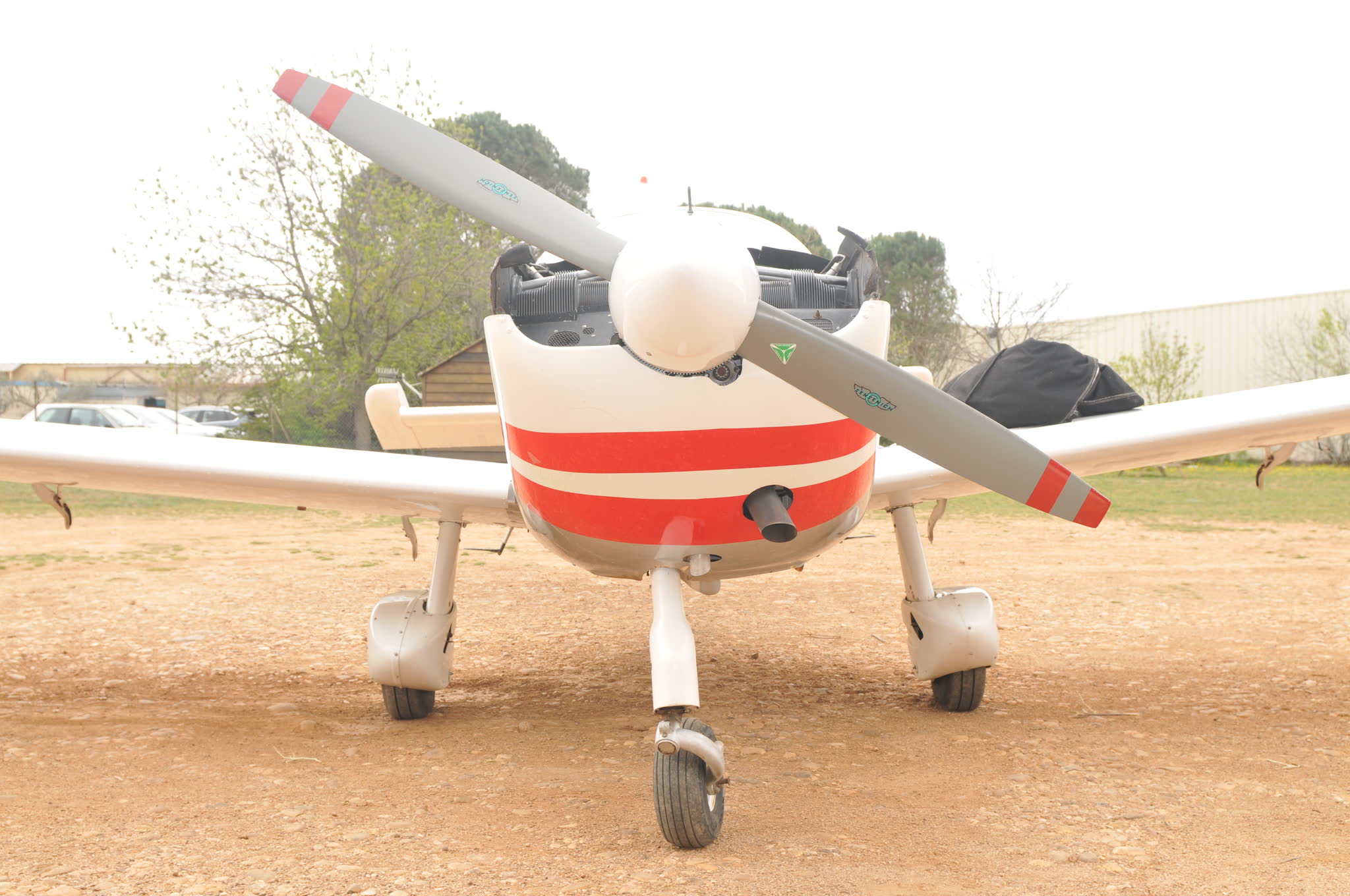
17 september to 30 october 2026 · build 282 to build 559
When this page was first written the replica stood at build 282 and felt nearly finished. It wasn't. Six more weeks and 277 more builds later, F-BVNK has stopped being a sim aeroplane with the right paint and has become a machine with a past: she ages, she wears, she breaks a little, she remembers, and her glass panel argues with the GPS exactly the way Garmin's own boxes do.
The foundations predate this whole cockpit story. Claus worked the first engine and flight-model files with OpenAI's assistants, and the tuning log he kept then is a project charter: replicate F-BVNK the individual aircraft, not a book MS 893 E, with the owner's own figures as the truth standard. On 31 July the weight and balance was rebuilt from her June 2023 weighing report, 642.80 kg empty and the CG at 849.94 mm behind the firewall, with every seat, tank and baggage arm moved into sim coordinates. On 16 August the engine and flight model were frozen on the six-point card further up this page. Not every idea survived. A stronger trim was tried at build 98 and reverted at 99 on one sentence from the owner: "I dont think the trim range should be adjusted." Codex later came back to the project for the 3D radio stack, the synthetic-vision view and the GI 275 menus.
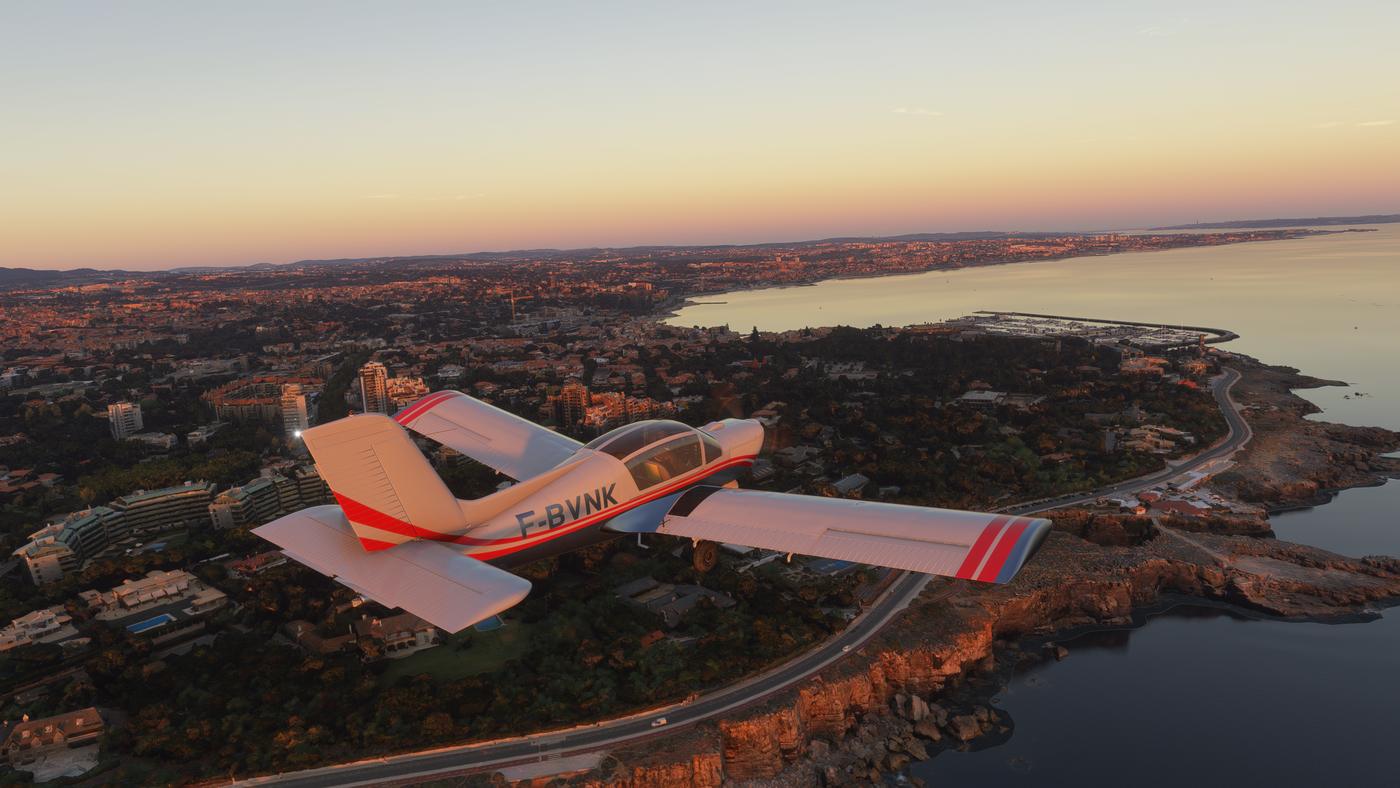
The outside got the same treatment as the panel. Insects are splattered along the leading edges, the windows are weathered and soft, and her placards sit where they sit on the real aeroplane, with the real wording. The newest, on 28 October, was the "Flight conditions: DAY VFR, Icing conditions: Not allowed" plate, redone from the photograph of her left panel. Inside, the seats come from her photographs, not from a texture library.
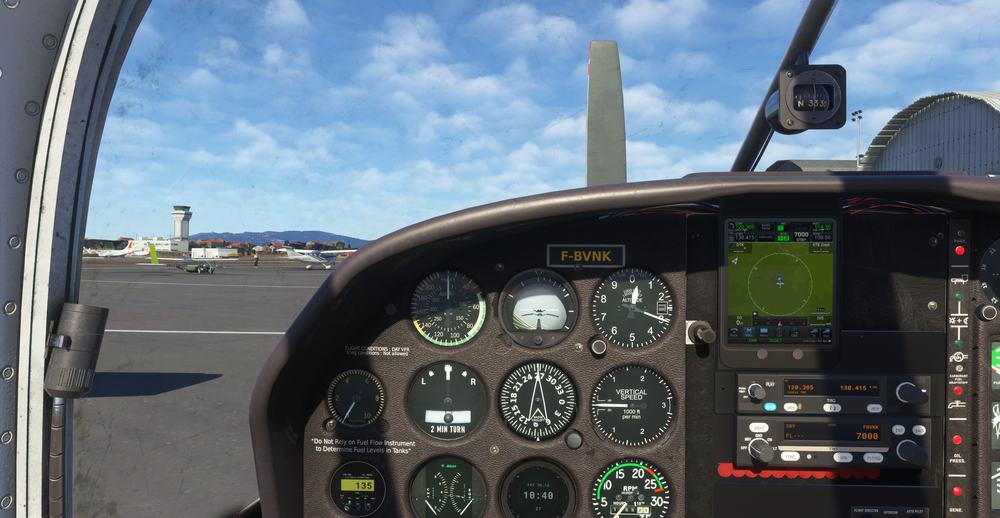
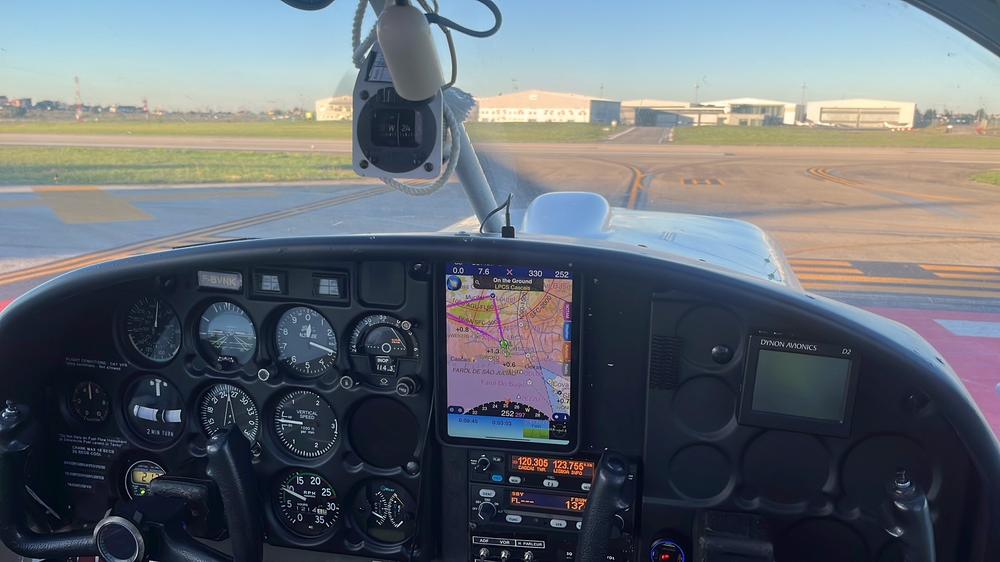
left, F-BVNK · right, the replica at build 559, 30 october 2026
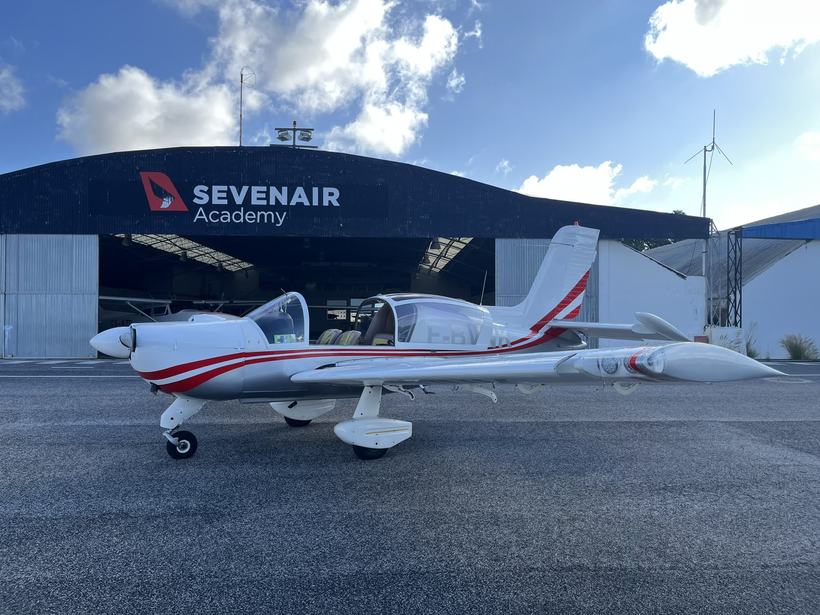
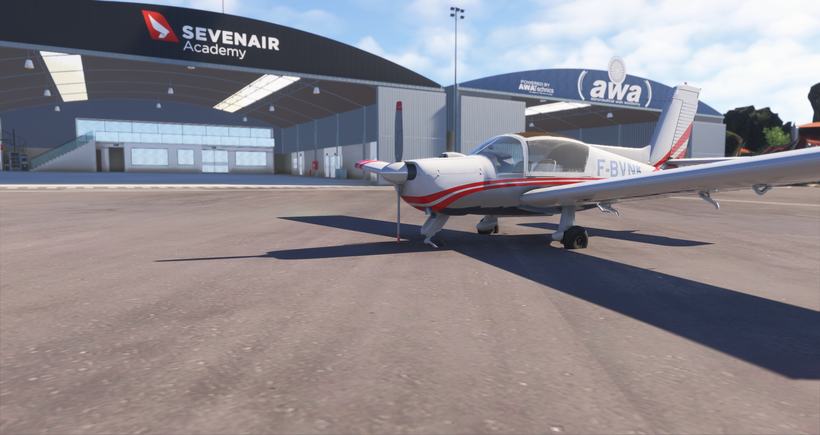
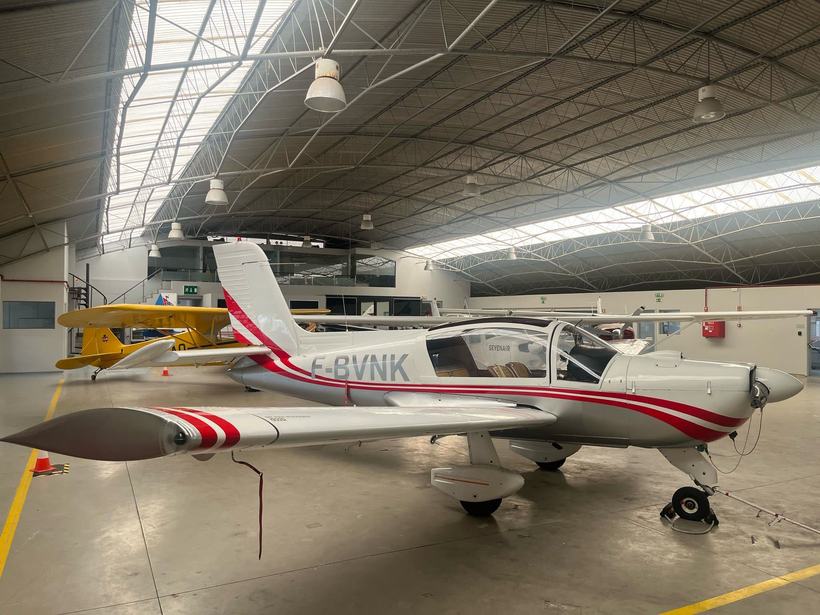
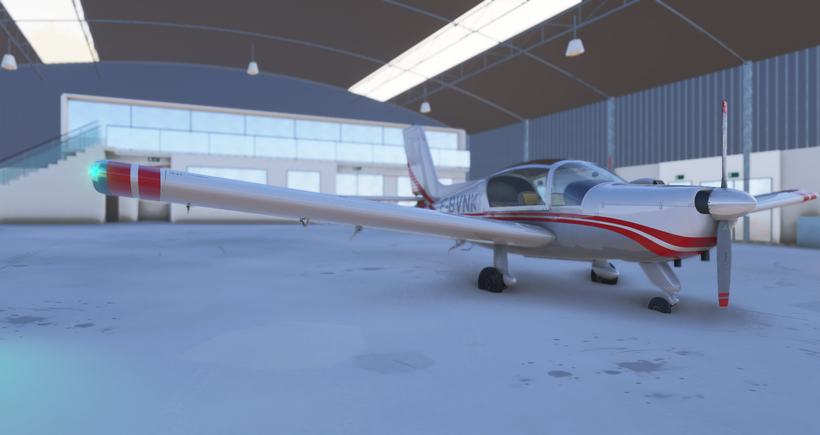
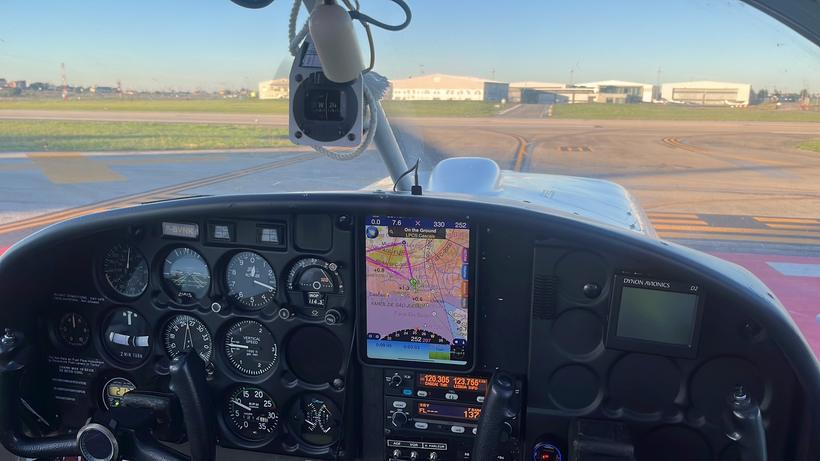
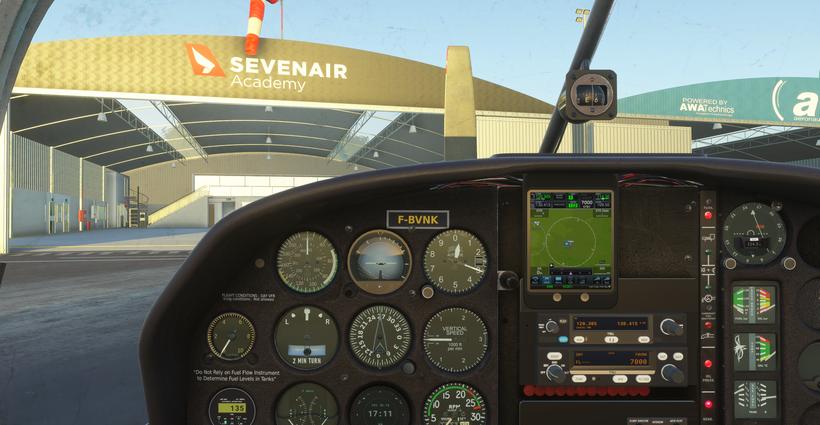
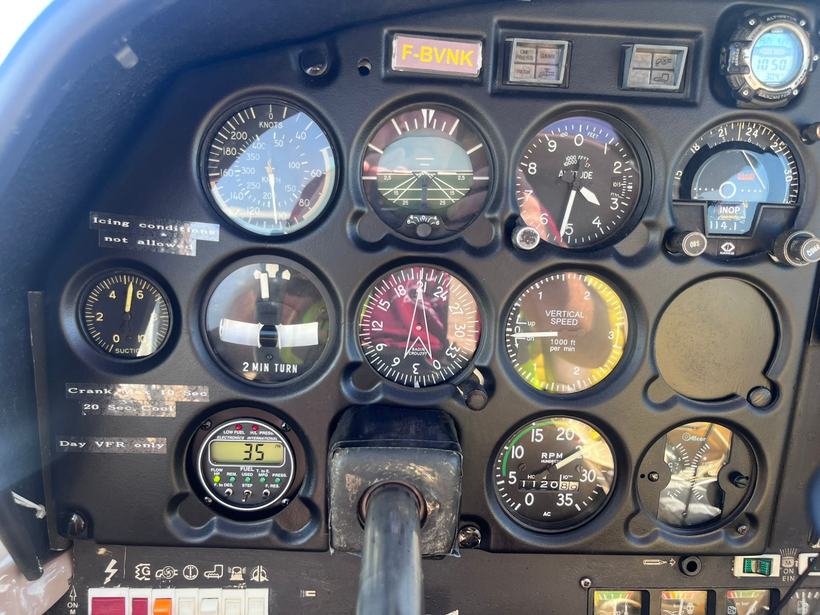
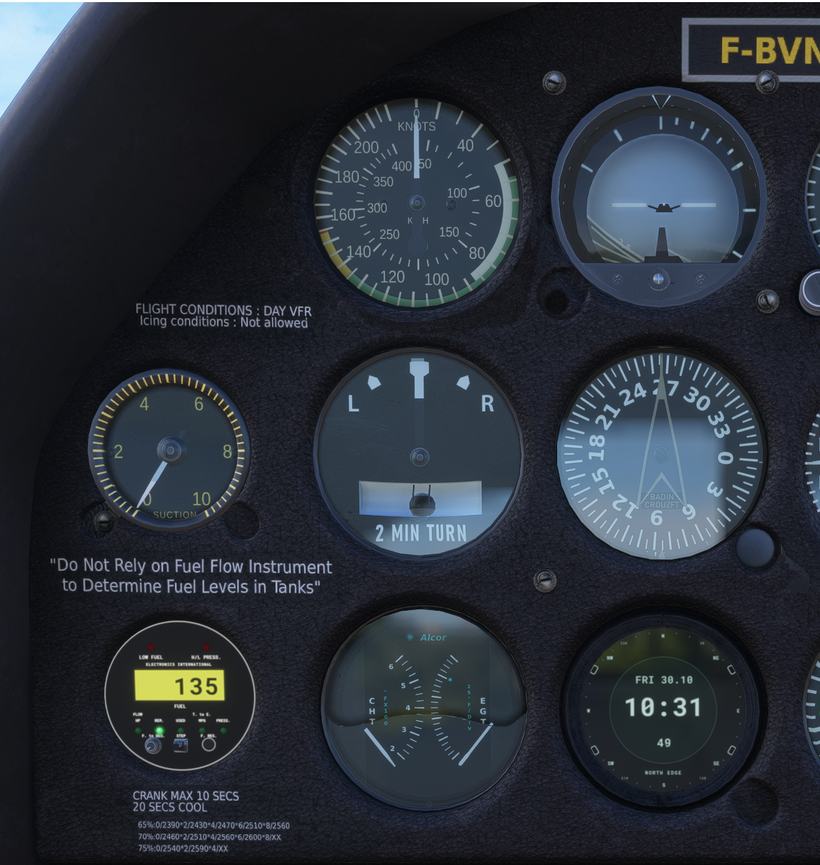
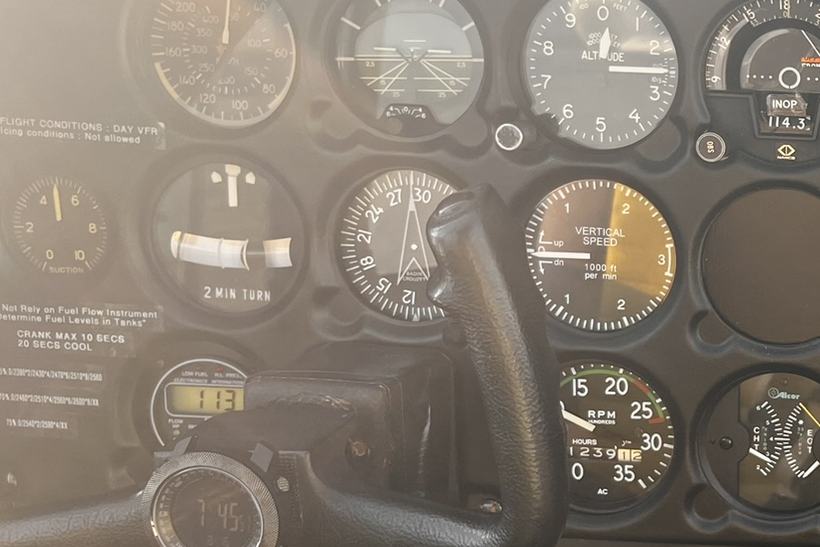
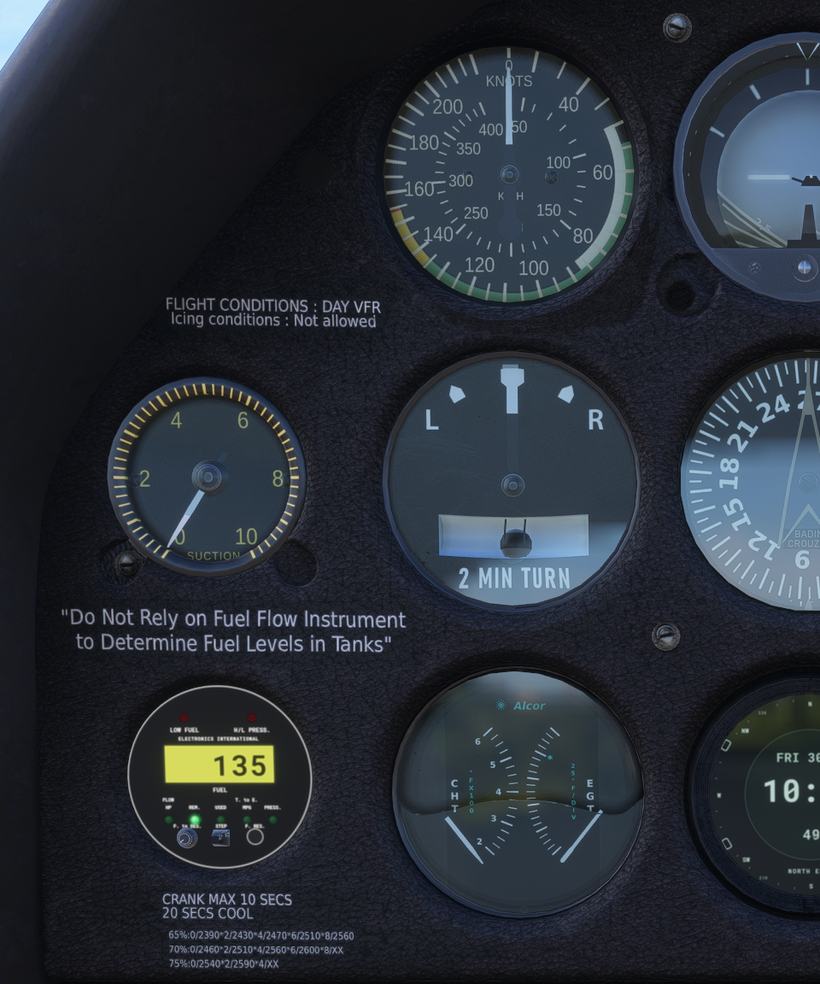
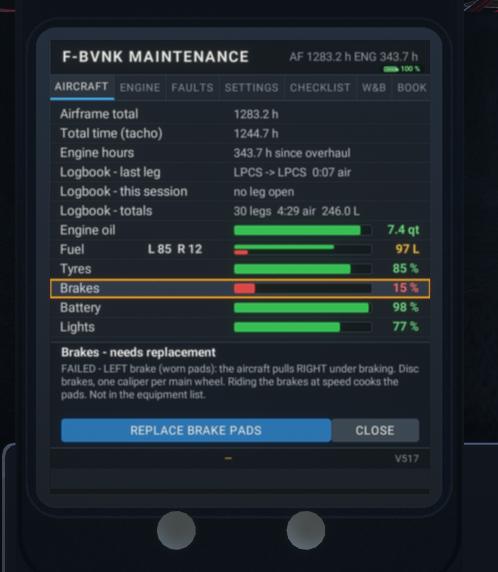
This is where the replica stops being a model and becomes a machine. A tap on the iPad opens F-BVNK's own maintenance app: aircraft, engine, faults, settings, checklist and a weight and balance page that draws her real loading envelope from her real weighing. The screen dims with the cabin lights and comes back up with the flood light, like the real one at night.
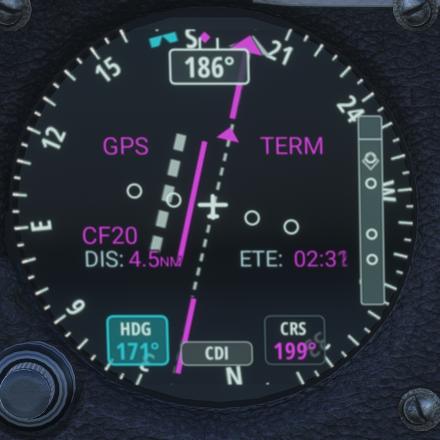
The GI 275 variant was the big October push, under one rule from Claus: "Whatever the garmin has, is what I want." The displays, the autopilot annunciations and the GFC 500 / GMC 507 logic were rebuilt from Garmin's pilot's guides and from Garmin's own code that ships with the GTN. Arm an approach and the glideslope comes up white. The ghost needle shows the localizer before it's captured. The switch from GPS to the localizer happens only when Garmin's own conditions are met, never on NAV alone. The phase label, ENR, TERM, LPV or L/VNAV, is read straight off the GTN 750's own screen, and the needle scales to match. On 29 October the whole thing was flown into Tarbes on the ILS 20 via VAKPI: no switch on NAV, the switch on APR, localizer and glideslope captured, labels right. All passed.
build number against the calendar, 2 september to 29 october 2026
| By the numbers, 30 October 2026 | Value |
|---|---|
| Builds of the package | 559 |
| Rows in the build ledger, each one a change and its verdict | 505 |
| Review reports written before installs | 944 |
| Kits built by the builder chats | 595 |
| Telemetry runs logged from the sim | 179 |
| Installs since 20 October alone | 77 |
| Files in the shared staging folder | 3,334 |
Still on the list: the approach type the GTN briefly forgets after Activate, the last pilot-menu layouts and the maintenance menu (Codex's next job), and a night check of the outside lights. The aeroplane is never quite finished. Neither is the real one.
The base aircraft belongs to its developer and stays theirs; nothing of it is redistributed here. The F-BVNK livery is Claus's own, painted for him by Jeffs, and stays his. The rest, the engine and flight-model files, the cockpit behaviours and gauges, the persistence system and the texture work, exists as a set of changes on top of the purchased aircraft. Claus has offered it to the developer as three folders: the modified package, a clean copy of their original for comparison, and the working folder with the build scripts, the ledger and the tuning log. If they want any of it, it is theirs to use. If the community wants it, the honest route is as a patch on top of the aircraft you have bought from them, and that is a conversation for the developer first. Until then she flies on Claus's laptop and on his YouTube channel. If you fly the same Rallye and something on this page would improve yours, say so on their page: the answer will probably be yes.